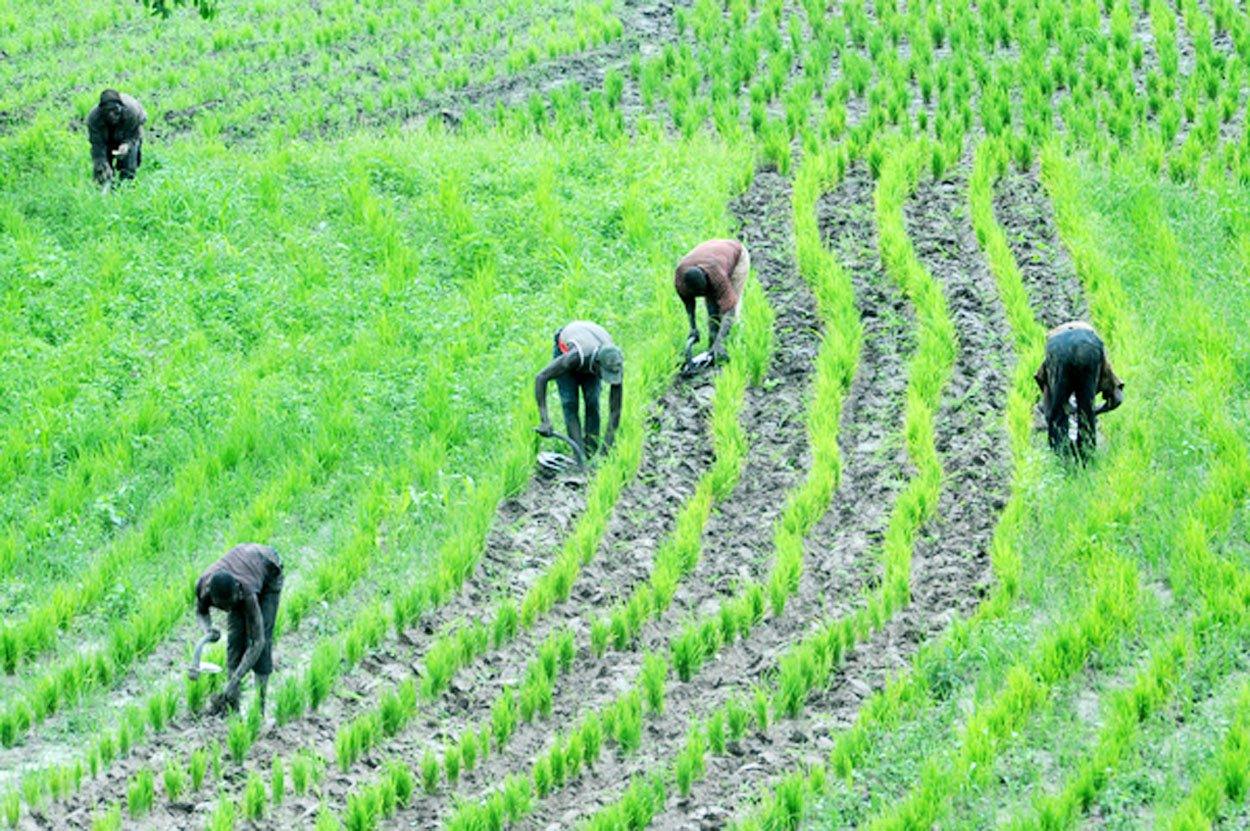
Akwa Ibom State Governor, Umo Eno, has announced that his administration is taking practical steps to address hunger and food shortages in the state through a new mechanised farming programme.

As part of the initiative, the state government has established the Agric Equipment Leasing Company (AELC), which will soon be commissioned.
The facility, located at Ekpri Nsukara in Uyo, is expected to support farmers with modern agricultural equipment to boost productivity.
Speaking with journalists after inspecting the project site, Governor Eno expressed satisfaction with the level of progress made and commended the contractor for the work done so far.
According to him, the project is designed to encourage farmers to embrace large-scale farming, improve their yields, increase income, and strengthen food sufficiency across the state.
The governor disclosed that the government has already secured more than 25 tractors fitted with tracking devices, along with two low-bed trucks, to support the agricultural programme.
These machines, along with other equipment such as ploughs and harvesters, will be leased to farmers across the state at subsidized rates.
Read also:
- Court bars AMAC from regulating food businesses in Abuja, orders ₦1.22 Million refund
- SON issues certificates to 24 companies in Enugu
- Police detain 5,895 suspects for various offences in Enugu
He explained that providing access to modern farm equipment would help farmers improve efficiency and expand their farming operations.
Governor Eno also spoke about the state’s tree-crop revolution programme, noting that it will begin as soon as the rainy season starts.
He revealed that nurseries for oil palm seedlings have already been prepared, and farmers across the state have been enumerated.
He added that within the next two weeks, the seedlings will be distributed to farmers for planting.
The governor urged farmers to take advantage of the government’s agricultural initiatives, stressing that the programmes are designed to promote large-scale farming, increase food production, and improve the livelihoods of farmers in the state.