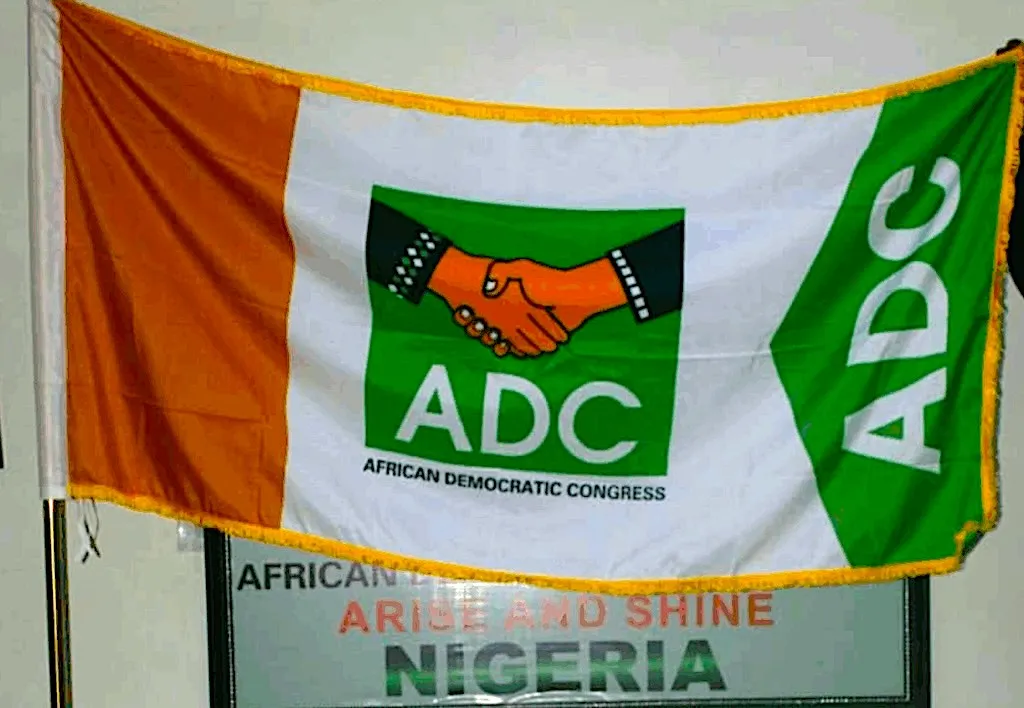
The political landscape in Kano Nigeria’s second most populous state appears to be undergoing a significant shift following the defection of Rabiu Musa Kwankwaso to the African Democratic Congress, a development that could redefine the battle lines ahead of the 2027 general elections.
For years, Kano has been a critical battleground in national politics, with its large voting population making it a decisive factor in presidential contests.

However, recent developments suggest that the dominance of the All Progressives Congress and the New Nigeria Peoples Party in the state may be weakening as the ADC gains momentum.
Kwankwaso’s defection is widely seen as a major boost for the ADC, particularly in northern Nigeria where he commands a loyal grassroots following known for its discipline and mobilization strength.
His supporters often referred to as the “Kwankwasiyya” movement have historically proven decisive in Kano’s electoral outcomes.
Read Also:
- Breaking: Kwankwaso officially joins ADC, picks membership card in Kano
- 2027: ADC presidential ticket uncertain for Obi amid Atiku influence — NDI-ABAT
- 2027: Governor Peter Mba losing ground in Enugu as core support group switches allegiance to Obi, ADC
Political observers say the movement of this bloc into the ADC effectively transforms the party from a fringe player into a formidable contender, especially in Kano and neighbouring states.
“The arithmetic is simple,” said a political analyst based in Abuja. “If Kwankwaso delivers Kano, the ADC instantly becomes a national force.”
For President Bola Ahmed Tinubu, the emerging dynamics present a potential setback. Tinubu’s victory in 2023 relied in part on fragmented opposition votes across key northern states, including Kano.
With Kwankwaso now aligned with the ADC, analysts warn that a more consolidated opposition could significantly reduce the president’s chances of replicating that success in 2027.
“Kano is too big to ignore,” another analyst noted. “Losing it or even splitting votes unfavourably puts Tinubu’s path to re-election in serious jeopardy.”
There are also indications that internal challenges within the APC in Kano could further weaken the party’s standing, compounding the impact of Kwankwaso’s exit from the NNPP.
The development is also being viewed as a potential boost for former Vice President Atiku Abubakar, who is widely speculated to be positioning himself as a leading presidential aspirant within the ADC.
Atiku, a veteran of Nigerian politics with a strong northern base, could benefit significantly from Kwankwaso’s structure if both leaders align strategically within the party.
“The possibility of an Atiku-Kwankwaso understanding within the ADC changes everything,” said a senior political strategist. “It creates a coalition that could rival or even surpass the APC’s reach.”
However, questions remain about how such an alliance would be negotiated, given the ambitions and influence of both figures.
The ADC, once considered a minor political platform, is rapidly gaining attention as a potential coalition vehicle for opposition forces seeking to unseat the APC in 2027.
The party’s National Chairman, David Mark, has already signaled openness to broader alliances, emphasizing unity among opposition leaders as critical to national progress.
Insiders suggest that ongoing consultations are aimed at bringing together key political heavyweights under one umbrella to avoid the vote-splitting that has previously benefited the ruling party.
Despite the apparent momentum, several uncertainties remain. Chief among them is whether the ADC can successfully manage the ambitions of its high-profile entrants and present a united front.
For Tinubu, the coming months may require strategic recalibration, including efforts to rebuild alliances in Kano and across the North.
For Atiku and Kwankwaso, the challenge will be converting political goodwill into a cohesive electoral strategy capable of securing nationwide support.
As the countdown to 2027 gradually begins, one thing is clear: Kano is once again at the centre of Nigeria’s political chessboard and the rise of the ADC may prove to be one of the most consequential developments in the race for power.