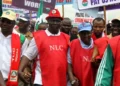

The Nigeria Labour Congress (NLC) and the Trade Union Congress of Nigeria (TUC) have placed their affiliates, state councils and civil society allies on red alert for possible nationwide industrial action following the failure of talks with the federal government to resolve workers’ demands.
Key Highlights
- NLC and TUC talks with the federal government in Abuja end in deadlock.
- Labour gives government until Tuesday, October 27, to make concrete commitments.
- Affiliates, state councils and civil society allies told to mobilise for possible nationwide action.
- Demands include lower petrol prices, new minimum wage talks and tax relief.
- Unions also want the JOHESU settlement and JPSNC demands implemented.
The meeting, held on Thursday at the Federal Ministry of Labour and Employment in Abuja, ended in a deadlock, prompting organised labour to give the government until Tuesday, October 27, to make concrete commitments on outstanding issues affecting Nigerian workers.

In a joint statement signed by the NLC acting General Secretary, Benson Upah, and the TUC Secretary General, Nuhu Toro, the unions expressed disappointment over the outcome of the meeting, alleging that the government’s delegation lacked the necessary mandate to negotiate substantive solutions.
According to the unions, no concrete commitments were secured, leaving workers’ demands unresolved.
The statement said the minister of labour and employment requested an adjournment until October 27 to enable the government to assemble relevant ministers and heads of departments and agencies for a more productive engagement.
However, the labour centres warned that the postponement must not become another avenue for delaying action on their demands.
The unions said they remained committed to dialogue but would not accept indefinite delays, adding that the outcome of Tuesday’s meeting would determine their next course of action.
They urged their affiliates, state councils and civil society allies to begin mobilising for possible nationwide industrial action while expressing hope that the government would address their concerns.
Organised labour also appealed to Nigerian workers and the general public to remain calm, assuring them that it would continue to pursue their interests through legitimate means.
Labour’s Demands: Petrol Prices, Minimum Wage, Tax Relief
At the centre of the dispute are demands for a reduction in petrol prices, fresh negotiations on the national minimum wage, implementation of agreed tax relief measures and the fulfilment of outstanding agreements with public-sector and health workers.
The unions are seeking a reduction in petrol prices to the levels prevailing when the current national minimum wage was signed into law in 2024, arguing that rising fuel costs have continued to erode workers’ purchasing power.
They are also demanding the commencement of negotiations for a new national minimum wage and the implementation of agreed tax relief measures to ease the financial burden on workers.
Other outstanding issues include the implementation of the February 5, 2026, Terms of Settlement involving the Joint Health Sector Unions and Assembly of Healthcare Professionals (JOHESU).
The unions are equally pressing for the resolution of demands by the Joint Public Sector Negotiating Council (JPSNC), particularly those concerning peculiar allowances, wage awards and hazard allowances.
According to organised labour, the government must honour existing agreements and introduce concrete measures to address the declining purchasing power of Nigerian workers amid rising living costs.
Read also:
- NLC Gives FG Two Weeks to Cut Petrol Prices, Demands Minimum Wage Talks
- Atiku Accuses Tinubu of Copying His Fuel Subsidy Plan as Keyamo Fires Back, NLC Maintains 14-Day Ultimatum
- PETROAN Seeks Wider Distribution as NNPC Extends ₦66 Petrol Discount to October 31
Rising Tension Over Fuel Prices, Wages
Thursday’s deadlock comes amid growing tensions between organised labour and the federal government over fuel prices, wages and the cost of living.
Earlier in October, the NLC issued a two-week ultimatum to the government, demanding action on petrol prices, minimum wage negotiations, tax relief and outstanding agreements affecting workers.
The ultimatum, which commenced on October 9, also covered the implementation of the JOHESU settlement, JPSNC demands and wage awards intended to cushion the impact of rising living costs.
The labour unions maintained that the current minimum wage had lost substantial purchasing power amid the depreciation of the naira and increasing prices of essential goods and services.
With negotiations now adjourned until October 27, organised labour’s next move will depend largely on whether the government presents proposals capable of addressing the unions’ concerns.
Although the NLC and TUC have not declared a nationwide strike, their directive for affiliates and state councils to prepare for possible industrial action signals an escalation of pressure on the government ahead of the next meeting.
For updates on the labour talks, follow us on X.