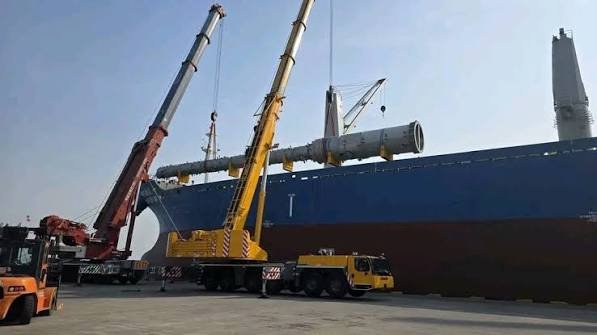
The Azikel Refinery in Obunagha, Yenagoa Local Government Area of Bayelsa State, has reached a major construction milestone with the reported commencement of the erection of its Crude Distillation Unit (CDU), a key processing component that signals progress towards completing the facility.
The development marks a shift towards major equipment installation and subsequent testing and commissioning, although the refinery’s operational timeline will depend on the completion of outstanding construction works, safety checks and regulatory requirements.

Key Highlights
- CDU installation begins: The Azikel Refinery has reportedly started erecting its Crude Distillation Unit in Obunagha, Bayelsa State.
- 12,000 barrels per day capacity: The refinery’s first phase is designed to process 12,000 barrels of crude oil daily.
- Expansion plans: The project is expected to scale up to a planned capacity of 45,000 barrels per day.
- Economic prospects: The refinery could create jobs, support local businesses and strengthen petroleum product supply in Bayelsa and neighbouring states.
- Next construction stages: Piping, instrumentation, safety systems, testing and commissioning remain important steps towards operations.
- Regulatory oversight: The facility will need to satisfy applicable regulatory requirements before commencing operations.
Azikel Refinery Begins Crude Distillation Unit Installation
The Azikel Refinery project has reportedly entered a significant phase with the erection of its Crude Distillation Unit, the primary processing unit used to separate crude oil into different fractions.
Project updates indicate that large CDU components are being lifted into position at the refinery site in Obunagha, Yenagoa LGA. Images and videos said to show the installation have also circulated on social media and industry platforms.
The CDU is central to the refining process. It heats crude oil and separates it into fractions that can be processed further into products such as petrol, diesel, kerosene and naphtha.
The installation therefore represents an important step towards completing the refinery’s main processing infrastructure. However, erecting the unit does not by itself mean the facility is ready to begin commercial operations.
Further mechanical and electrical work, connections to other plant systems, safety checks and commissioning will be required before the refinery can operate.
Azikel Refinery Targets 12,000 Barrels Per Day in First Phase
The Azikel Refinery, being developed by Azikel Petroleum Limited, is designed to begin with a processing capacity of 12,000 barrels per day, with plans to expand to 45,000 barrels per day.
The project is expected to contribute to Nigeria’s domestic refining capacity and support the supply of petroleum products to Bayelsa and other parts of the Niger Delta.
If completed and operated successfully, the facility could help diversify regional fuel supply sources, create employment opportunities and stimulate demand for local services and businesses.
The refinery could also provide opportunities for technical training and local participation in engineering, maintenance, logistics and other activities associated with the petroleum industry.
However, the extent of these benefits will depend on the project’s completion, operational performance, product distribution arrangements and the level of local participation.
Bayelsa Refinery Project Raises Hopes for Jobs and Investment
The progress at the refinery has generated expectations among residents of Obunagha and surrounding communities, where stakeholders hope the project will deliver employment, infrastructure and wider economic benefits.
A functioning refinery could create direct jobs for engineers, technicians, operators and administrative personnel. Indirect opportunities could also emerge for transporters, contractors, suppliers and small businesses serving the facility.
The project may also contribute to the development of technical skills within Bayelsa State and the wider Niger Delta.
Community expectations, however, will depend on the refinery moving beyond construction to sustained operations and delivering on employment and local development commitments.
Read also:
- Tompolo Hails Azikel Refinery, Calls Eruani Azibapu Leader of Niger Delta’s New Industrialisation
- Niger Delta Deserves More Than 13% Derivation, Declares Obasanjo
- NNPC Retail Discount: Who Pays, Who Benefits?
Construction Progress and Regulatory Requirements
The Azikel Refinery project has been under development for several years, with large-scale energy projects typically facing challenges involving financing, logistics, equipment delivery and construction coordination.
With the CDU erection reportedly under way, the remaining work is expected to include connecting process equipment, installing piping and instrumentation, completing safety systems and conducting mechanical inspections.
The refinery will also need to meet the relevant requirements of the Nigerian Midstream and Downstream Petroleum Regulatory Authority (NMDPRA) and obtain the necessary approvals before commencing operations.
Testing and commissioning will be critical to confirming that the plant’s equipment and systems function safely and as designed.
Although project management is reported to be targeting mechanical completion of the CDU and other units in the coming months, the specific timetable for commissioning and commercial start-up has not been independently confirmed.
Azikel, Dangote and Port Harcourt Refineries in Nigeria’s Refining Sector
The development of the Azikel Refinery comes amid broader efforts to strengthen Nigeria’s domestic petroleum refining capacity.
Nigeria has historically relied heavily on imported refined petroleum products, exposing the market to international supply conditions, foreign exchange pressures and other cost factors.
Additional functioning domestic refineries could expand local processing capacity and provide more options for supplying the Nigerian market. Their actual impact on fuel availability and prices, however, will depend on production levels, operating costs, crude supply, distribution infrastructure and market conditions.
The Azikel project could complement larger refining facilities, including the Dangote Refinery and the Port Harcourt Refinery, if it reaches commercial operations and sustains production.
What Comes Next for the Azikel Refinery?
The immediate priorities are expected to include completing the CDU installation, integrating it with other processing units, finishing outstanding construction work and carrying out testing and commissioning.
The refinery’s progress will ultimately be measured by its ability to complete these stages, secure the required approvals and begin safe, reliable operations.
For residents of Obunagha and the wider Bayelsa community, the reported erection of the CDU offers a visible sign of progress on a project expected to bring industrial investment and employment opportunities to the area.
For more updates on Nigeria’s oil and gas sector, follow us on X.