Delta State has renewed its push to attract investment to its 3,200-hectare Special Economic Zone in Koko and Kwale as part of its drive to reduce dependence on oil. However, a briefing by officials on Thursday, October 8, 2026, left key questions unanswered, including which investors have signed agreements, how much has been invested and what progress has been made since former Governor Ifeanyi Okowa initiated the project.
Key Highlights
- Delta State is promoting a 3,200-hectare Special Economic Zone covering Koko and Kwale.
- The zone comprises 2,200 hectares at Koko and 1,000 hectares at Kwale.
- Officials say the project could attract investment in manufacturing, petrochemicals, gas and agro-processing.
- A proposal for up to 120 agro-processing factories around Kwale remains a future prospect.
- Phoenix Gas is reportedly preparing to begin operations inside the zone.
- Previous reports mentioned six operating companies but did not identify them.
- Questions remain over actual investment commitments, public spending, signed agreements and job creation.
Delta Special Economic Zone Covers Koko and Kwale
Brigadier-General Mike Ndubisi (retd.), chairman of the Delta Special Economic Zone Management Company, that the project covers 2,200 hectares in Koko and 1,000 hectares in Kwale, with both locations designated as free trade zones.

The project began under former Governor Ifeanyi Okowa, who expanded an earlier Kwale Industrial Park initiative to include Koko. His successor, Governor Sheriff Oborevwori, has continued promoting the project under the “Delta Beyond Oil” vision and the M.O.R.E agenda.
The Koko section is being positioned for petrochemicals, steel, refining, logistics and agro-processing, with its proximity to Koko Port presented as a potential advantage.
Kwale, meanwhile, is being promoted for gas-related businesses, agriculture and agro-industrial activities, particularly because of its proximity to the OB3 gas pipeline corridor.
The incentives being offered to prospective investors include tax concessions, duty exemptions, profit repatriation and a one-stop service for business-related procedures.
However, the scale of the land available and the range of proposed industries do not, by themselves, establish how much investment has entered the project.
120 Agro-Processing Factories Remain a Proposal
Director of Zones Ofunne Emmanuel said internal roads were nearing completion in parts of the zone and that about 60,000 hectares had been identified for cassava, fish and other agricultural value chains.
Emmanuel also said discussions with potential partners had raised the prospect of as many as 120 agro-processing factories around Kwale within five years.
The African Development Bank was named as a partner in an agro-industrial development model, according to the briefing.
The proposed factories could support local processing of agricultural products, create jobs and expand opportunities for farmers and businesses. However, the 120-factory figure remains a projection rather than confirmation that the facilities have been financed, approved for construction or commissioned.
The reference to 60,000 hectares also requires clarification on the relationship between the identified agricultural land and the 3,200-hectare Special Economic Zone itself.
Phoenix Gas Expected to Begin Operations
Officials said Phoenix Gas was preparing to commence operations inside the zone, with surplus electricity expected to supply factories and nearby communities.
Ndubisi said the sites were already attracting investor interest in energy, manufacturing, petrochemicals and agro-processing.
The availability of gas and electricity could help make the proposed industrial facilities more attractive to businesses that require reliable energy supplies.
However, investor interest is different from a signed investment agreement. The briefing did not provide details of capital commitments, construction schedules or expected production dates for the proposed operations.
The company’s reported preparations to begin work could mark a step forward, but further information is needed to establish its operational timeline and the scale of its planned investment.
Reports of Six Operating Companies Raise Questions
A separate report published by a pro-government outlet in September said Oborevwori had approved the renewal of the zone’s licensing and regulatory fees with the Central Bank of Nigeria. It also reported that six companies were operating in the zone, with others expressing interest.
However, the report did not identify the six companies or disclose the scale of their operations.
Without the names of the businesses, details of their activities and information about their investment commitments, it is difficult to assess how much commercial activity the zone has generated.
The distinction matters because an operating company, a prospective investor and a business that has signed a formal agreement represent different stages of investment.
Publishing an updated list of tenants, investment amounts and project timelines would provide a clearer picture of the zone’s progress.
Brazilian and Malaysian Investors Show Interest
The investment drive gained further attention during Delta State’s investment summit in August, when a Brazilian delegation led by Ricardo Giannetti da Fonseca visited the Kwale zone, the Kwale Gas Gathering Hub, Phoenix and farms at Oleh and Oyede.
Brazilian firms were reportedly exploring opportunities in gas-fired power generation and cassava processing, while Malaysian firms were said to be interested in oil palm.
Deputy Governor Monday Onyeme described the visits as evidence of an enabling investment environment in Delta State.
The visits could help develop international partnerships, particularly in energy and agro-processing. However, no signed contracts, investment amounts, land allocations or commencement dates arising from the discussions have been disclosed.
A delegation’s visit and expressions of interest can be useful early steps, but they do not necessarily translate into completed investments.
Read also:
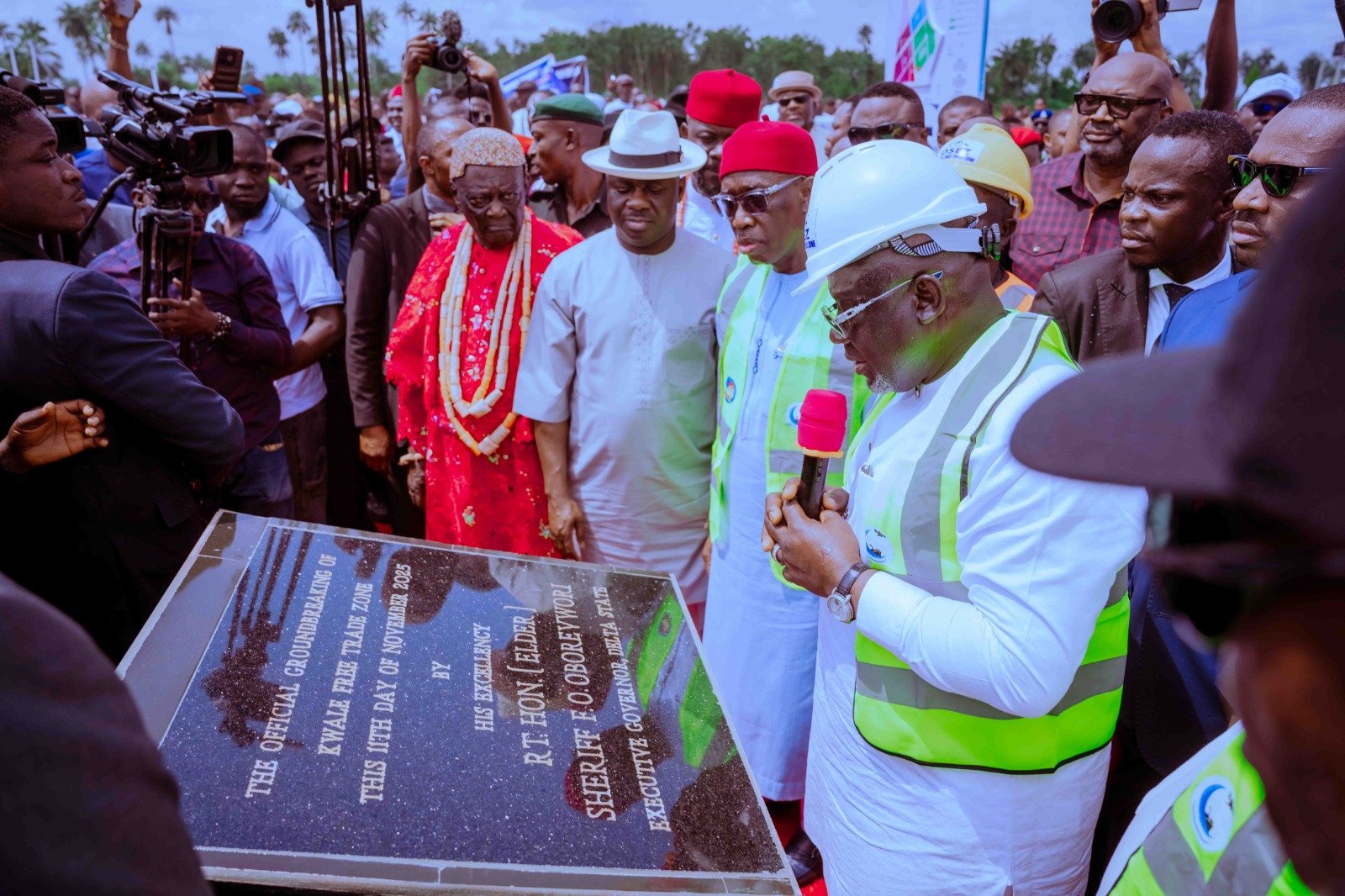
- Gov. Oborevwori breaks ground for Kwale Free Trade Zone, promises thousands of jobs
- Otiti Faults Delta’s Economic Summit, Says State Must Account For Outcomes Of Previous Investment Drives
- Gov. Oborevwori woos Brazilian investors, showcases Delta’s economic potentials in São Paulo
Koko and Kwale Project Faces Accountability Questions
The central question surrounding the Delta Special Economic Zone is how much progress has been made since the project began under Okowa and continued under Oborevwori.
At the October 8 briefing, officials discussed infrastructure, potential investors, proposed factories and expected energy supply. However, no overall figure was provided for state spending, federal contributions or private-sector investment.
The briefing also did not identify the investors that had signed binding agreements or provide a consolidated timeline for completing the zone’s infrastructure.
These gaps make it difficult to compare the project’s current status with the expectations previously attached to the industrial park and the state’s wider diversification plans.
A public progress report detailing spending, completed infrastructure, signed tenants, jobs created and expected revenue would help residents assess the project’s performance.
Residents Question Earlier Job-Creation Promises
The project has also generated contrasting reactions on social media.
In September, an X user identified as @OgbaruDiUto questioned what had happened to the earlier Kwale Industrial Park proposal, asking: “Where’s the Kwale Industrial Park? Where are the 70k jobs?”
The post reflects concerns over whether earlier promises associated with the project have translated into measurable results.
Another user, @SirOrikeze, highlighted Koko’s industrial potential, pointing to its port, tank farms, modular refining activities, LPG terminal and free trade zone.
The official @investindelta account also shared information about the Brazilian delegation’s visit to Kwale during the August investment summit. Meanwhile, @OnomeGabriel2 supported the argument that agricultural products should be processed locally rather than exported in their raw form.
The contrasting views capture the central debate: supporters see the zone as an opportunity to develop industries and diversify the state’s economy, while critics want evidence that previous promises are producing jobs and investment.
Delta’s Post-Oil Strategy Needs Verifiable Results
The Special Economic Zone in Koko and Kwale remains an important part of Delta State’s strategy to expand beyond oil and attract investment in manufacturing, energy and agro-processing.
The proposed factories, anticipated Phoenix Gas operations and reported interest from foreign investors point to possible areas of growth. However, the long-term impact will depend on whether those prospects become funded projects, operating businesses and sustainable jobs.
For now, the key unanswered questions concern the amount already spent, the identities of confirmed investors, the status of infrastructure and the number of jobs created.
Until the state publishes clearer figures and verifiable milestones, the 3,200-hectare zone remains a major investment proposition whose economic results are yet to be fully established.
For more on Delta State’s economy and investment projects, follow us on X.