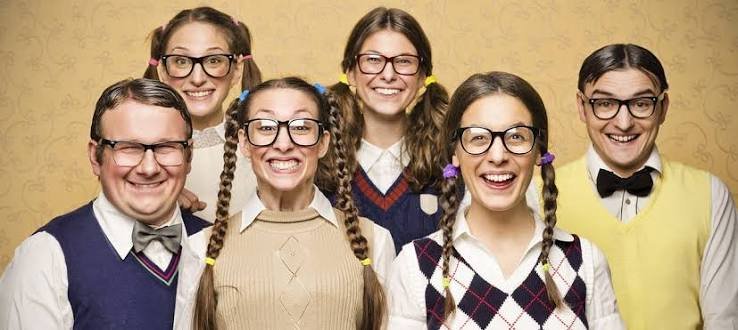
The word “nerd” appears to be undergoing a cultural makeover, with a new nerd survey 2026 finding that 83 percent of 1,000 adults surveyed would now regard being called a nerd as a compliment rather than an insult.
The survey, conducted by knowledge app Nibble in August 2026, also found that 69 percent of respondents considered themselves at least somewhat nerdy, while 95 percent said they would date someone significantly smarter than themselves. The findings were published by Nibble and later highlighted by outlets including VICE.

Key Highlights
- 83% of respondents said being called a nerd is now a compliment.
- 69% described themselves as at least somewhat nerdy.
- 95% said they would date someone significantly smarter than themselves.
- 60% said knowing a lot about history makes a partner more attractive.
- 58% said showing off history or science knowledge on a date is attractive.
- 39% admitted using AI to look up a historical fact to impress someone.
- 21% said they had memorised history or science facts to impress a date.
- The survey was conducted among 1,000 adults in August 2026.
- The findings suggest that intellectual interests are increasingly being presented as socially desirable, particularly in dating and online culture.
Nerd Survey 2026 Shows Changing Attitudes
The Nibble survey provides a snapshot of how adults view the word “nerd” and the characteristics traditionally associated with it.
According to the findings, 83 percent of respondents would accept the label as a compliment, while 69 percent considered themselves at least somewhat nerdy.
The results point to a shift from the traditional image of the nerd as socially awkward or isolated toward a broader understanding associated with knowledge, curiosity and specialised interests.
However, Nibble’s findings represent the views of the 1,000 adults surveyed and should not automatically be treated as representative of all adults globally.
Intelligence Becomes a Dating Attraction
The survey also examined the relationship between knowledge and dating.
Nibble reported that 95 percent of respondents would date someone significantly smarter than themselves. Sixty percent said they would find a partner more attractive if that person knew a lot about history.
Another 58 percent said showing off history or science knowledge during a date was attractive.
The findings suggest that, among the surveyed group, intellectual curiosity and specialised knowledge can contribute to perceptions of attractiveness.
AI Joins the ‘Nerd’ Dating Strategy
The survey also highlighted how artificial intelligence is becoming part of the way people prepare for social interactions.
Thirty-nine percent of respondents said they had used AI to look up a historical fact specifically to impress someone, while 21 percent said they had memorised history or science facts for the same purpose.
The findings were also highlighted by VICE in its report on the survey, which focused on the growing appeal of intelligence in dating.
The figures offer an unusual glimpse into how AI tools are being incorporated into everyday social behaviour, even in situations where people are attempting to appear knowledgeable without necessarily having extensive prior knowledge of a subject.
How ‘Nerd’ Became a Positive Label
The changing perception of the word “nerd” has developed alongside the mainstream popularity of interests once considered niche.
Comic books, science fiction, gaming, technology, collectibles and online fandoms have become major parts of popular culture, while social platforms have created new spaces for people to openly display specialised interests.
The result is that describing oneself as a “nerd” can now refer to enthusiasm or expertise rather than simply a negative social stereotype.
Nibble’s survey reflects this broader cultural shift, although the study itself does not establish that the change is permanent or universal.
Read also:
- How You Smell Can Boost or Break Relationships: insights on fragrance, Mood
- Why Millennials Need to Save Twice as Much as Boomers Did
‘You Need to Nerd Out’ Trend Adds to Cultural Shift
Social media has also helped normalise the public display of specialised interests.
The TikTok trend known as “You Need to Nerd Out” encouraged users to showcase hobbies, collections, fandoms and other interests through videos and photo collages. The trend originated from content by YouTuber The Zurkie Show and gained significant traction on TikTok in 2025.
Kapwing reported in August 2025 that more than 198,000 creators had posted using the trend’s sound at the time.
Although the trend’s peak occurred in 2025, its central message — openly embracing personal interests — reflects the wider cultural movement behind the changing meaning of “nerd.”
History and Science Become ‘Nerdy’ Dating Assets
The Nibble survey found that history and science knowledge featured prominently among the intellectual interests respondents associated with attractiveness.
Sixty percent said they found a partner more attractive if the person knew a lot about history, while 58 percent considered displaying history or science knowledge on a date attractive.
The findings do not mean that intelligence has replaced other qualities in dating. In Nibble’s own breakdown, kindness and humour ranked higher than curiosity among the qualities respondents identified as attractive.
Instead, the results suggest that specialised knowledge can form part of how people perceive personality and attraction.
Is the Nerd Renaissance Here to Stay?
The nerd survey 2026 offers evidence of a changing attitude toward intellectual interests, but it is only one survey and should be viewed within that limitation.
Nibble surveyed 1,000 adults in August 2026, and its published methodology does not provide enough detail to establish that the percentages represent every demographic or population.
What the findings do show is that, among those surveyed, the word “nerd” has largely lost its traditional negative association. Knowledge, curiosity and specialised interests are increasingly being presented as qualities that can carry social and even dating appeal.
Whether that amounts to a lasting cultural transformation or another temporary internet trend remains to be seen.
For more updates, follow us on X.