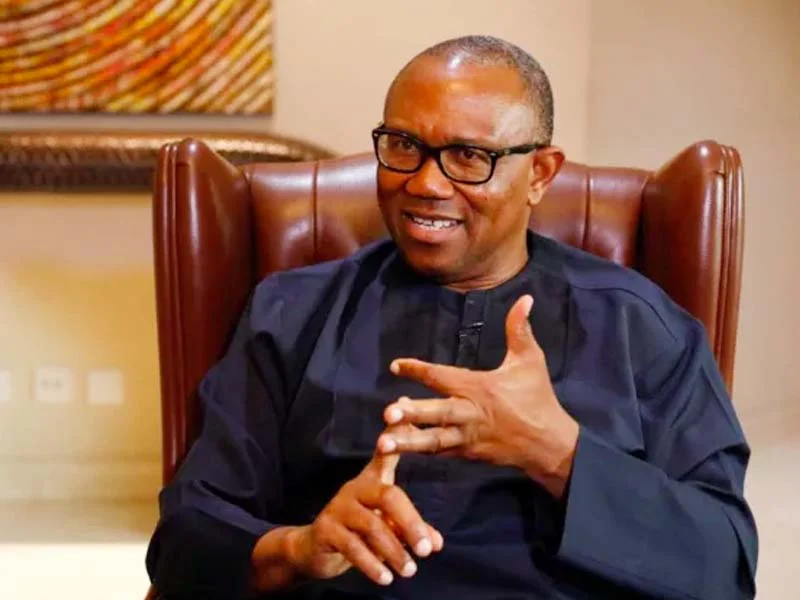
Peter Obi’s promise that Nigerians would begin to see the tangible impact of his leadership within one year if elected president has sparked mixed reactions online, with supporters describing the timeline as a clear accountability benchmark while critics question whether Nigeria’s security and economic challenges can be substantially addressed within a year.
Obi, the Nigeria Democratic Congress (NDC) presidential candidate, made the pledge in his Independence Day address on October 1, 2026, saying his proposed administration would make governance measurable, accountable and focused on the welfare and productivity of Nigerians.

Key Highlights
- Peter Obi’s one-year promise has generated different reactions online.
- Obi said Nigerians would begin to see tangible results within his first year if elected.
- He promised to make governance measurable and accountable.
- Insecurity, education, healthcare, agriculture and job creation featured prominently in his address.
- Obi pledged to enable farmers to return to their farms and displaced Nigerians to return safely to their communities.
- Supporters have presented the one-year timeline as a measurable accountability target.
- Critics have questioned whether Nigeria’s security and economic challenges can be substantially addressed within 12 months.
- Obi proposed moving Nigeria from a consumption-driven economy towards a production-oriented economy.
- He also said he would spend his presidential holidays in different parts of Nigeria if elected.
Peter Obi’s One-Year Promise Triggers Debate
The central issue generating reactions is Obi’s pledge that Nigerians would see the impact of his proposed leadership within the first year of his presidency.
In his October 1 Independence Day address, Obi said governance under his administration would be measurable, accountable and centred on citizens’ welfare and productivity.
“Within the first year, Nigerians will begin to see the tangible impact of purposeful and effective leadership,” Obi said.
The statement has since become a major talking point around his 2027 campaign, with online reactions focusing on whether the proposed timeline is achievable and how such progress would be measured.
Supporters See One-Year Timeline as Accountability Test
Supporters of Obi’s proposal have treated the one-year timeframe as a commitment against which an administration could be assessed.
Their reactions have focused on the value of setting a defined period for visible results rather than making broad promises without a timeline.
Some supporters have also referenced Obi’s record as Anambra State governor when discussing his emphasis on measurable governance and fiscal management. Such comparisons remain part of the political debate and do not independently establish that similar results would necessarily occur at the federal level.
Critics Question Feasibility of One-Year Target
Critics have raised questions about whether the scale of Nigeria’s security, economic and social challenges makes substantial nationwide improvements possible within a single year.
Some commentary has pointed to the complexity of tackling armed groups, insecurity, unemployment, weak institutions and other structural problems.
Others have questioned how the proposed results would be measured and whether the one-year pledge includes specific benchmarks for security, employment, education and economic growth.
These criticisms concern the feasibility and implementation of Obi’s campaign pledge rather than a finding that the proposed timeline cannot be achieved.
Obi Puts Insecurity at Centre of Agenda
In his Independence Day address, Obi placed insecurity among the issues he said would receive immediate attention under his proposed administration.
He pledged to confront insecurity so that farmers could return to their farms, children could return to school and businesses could operate without fear.
He also said no Nigerian should be forced to remain in an internally displaced persons camp because of a failure to provide security.
“My administration will work to ensure that Nigerians displaced by insecurity can begin to return safely and with dignity to their communities,” Obi said.
Obi Proposes Production-Focused Economy
Beyond security, Obi said his proposed government would seek to move Nigeria away from what he described as a consumption-driven economy towards a productive economy.
His priorities included agriculture, manufacturing, education, healthcare, human capital development and job creation.
He argued that Nigeria’s challenge was not simply a lack of resources but the failure to translate available resources into human development, productivity, security and shared prosperity. Peter Obi, a former Anambra governor, has made measurable governance a recurring theme of his public statements.
Read also:
- Gov Diri Says Abacha Freed Ijaws From Oppression With Bayelsa Creation
- Peter Obi Reacts to Arrest of Supporters in Akwa Ibom, Says Independence Means Little Without Freedom
- Abuja Independence Day Festival Disrupted As Video Shows Clash At Monoliza Sports Centre
Sokoto IDP Camp Visit Shapes Obi’s Message
Obi also referred to his recent visit to Sokoto State with Senator Rabiu Kwankwaso, saying their visit to an internally displaced persons camp at Ramin Kura exposed difficult conditions facing displaced women and children.
He argued that people displaced by insecurity should instead be living in their communities, farming, attending school and participating in economic activities.
The experience was presented by Obi as an example of the security and humanitarian challenges he said his administration would seek to address.
Obi Promises to Spend Holidays in Nigeria
The NDC candidate also made a personal commitment concerning his approach to governance.
Obi said that if elected president, he would spend his holidays within Nigeria rather than travelling abroad.
He listed Zamfara, Borno, Kwara, Ebonyi, Edo and Ekiti among states he intended to visit.
According to Obi, the visits would allow him to interact directly with Nigerians, understand their challenges and observe conditions across the country.
2027 Campaign Debate Intensifies
Obi’s Independence Day address comes as political parties and presidential candidates prepare for the 2027 election.
His message centred on measurable governance, insecurity, economic productivity, education, healthcare and job creation.
The one-year promise has consequently become a focal point of discussion because it provides a specific timeframe for evaluating the results Obi says Nigerians would begin to experience under his proposed administration.
Whether that timeframe can be translated into measurable outcomes remains a matter of political debate, with supporters and critics offering different assessments.
What Nigerians May Watch Ahead of 2027
As the 2027 campaign progresses, attention is likely to focus not only on Obi’s one-year promise but also on the specific policies, funding arrangements and implementation plans behind his proposals.
Questions around how quickly insecurity can be reduced, how displaced Nigerians can return home, how jobs can be created and how agriculture and manufacturing can be expanded are likely to feature in scrutiny of the various presidential platforms.
For Obi, the one-year pledge has established a specific benchmark in his campaign message. His supporters see it as an accountability commitment, while critics continue to question its feasibility given the scale of Nigeria’s challenges.
For more political coverage, follow us on X.