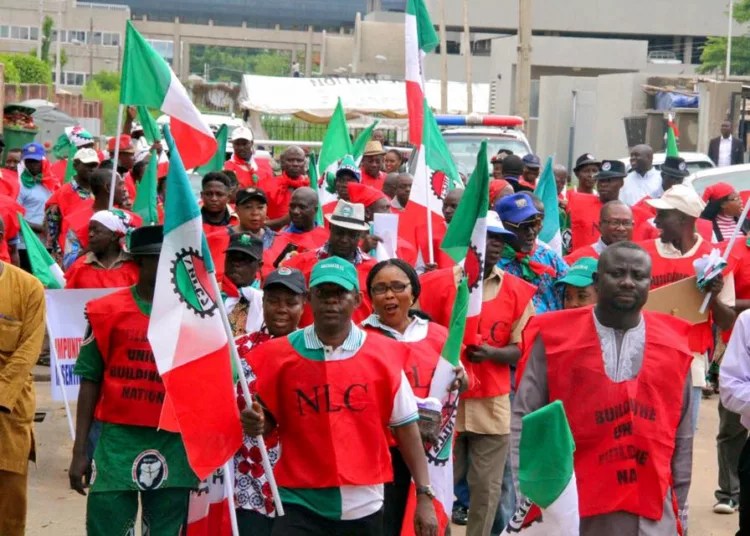
Public servants across Nigeria’s federal, state and local governments have begun a three-day warning strike over demands for a reduction in petrol prices, an immediate wage award and negotiations for a new national minimum wage of at least ₦500,000 from 2027. The industrial action began at midnight on Friday, October 2, 2026, and is scheduled to end on Sunday, October 4.
Key Highlights
- Public servants under the Joint National Public Service Negotiating Council (JNPSNC) began a three-day warning strike on October 2.
- The strike is scheduled to run until Sunday, October 4, 2026.
- The council wants petrol reduced to ₦500 per litre.
- Workers are demanding an immediate wage award to cushion economic pressures.
- The JNPSNC wants negotiations for a new national minimum wage of at least ₦500,000 from 2027.
- The council said it wrote to President Bola Tinubu on September 21 and set September 30 as its deadline for action.
- The warning strike covers public servants in federal, state and local government services.
- The JNPSNC said the action followed the Federal Government’s failure to address its demands before the deadline.
Why Public Servants Began the Three-Day Warning Strike
The industrial action was ordered by the Joint National Public Service Negotiating Council (JNPSNC) in a circular dated October 1 and signed by its National Secretary, Olowoyo Gbenga.

The council directed its national and state leadership structures to mobilise public servants for the action, which commenced at midnight on Friday and will continue through Sunday.
According to the JNPSNC, the decision followed what it described as the Federal Government’s failure to address requests contained in a September 21 letter to President Bola Tinubu.
The council said workers, their dependants and vulnerable Nigerians were experiencing severe economic hardship and argued that urgent intervention was required.
Workers Demand Petrol Price Cut to ₦500
One of the major demands behind the public servants three-day warning strike is a reduction in the price of petrol to ₦500 per litre.
The JNPSNC had previously warned that rising fuel costs were putting pressure on workers and households.
The council said the Federal Government should take measures to reduce the cost of petrol and ease the economic pressure on public servants and other Nigerians.
The demand formed part of the issues the council expected the government to address before its September 30 deadline.
Public Servants Demand Immediate Wage Award
The JNPSNC is also demanding an immediate wage award for Nigerian workers.
The council said the payment would help cushion the effects of prevailing economic pressures on workers, their dependants and vulnerable Nigerians.
It argued that action on the wage demand would also support the ability of public servants to maintain their productivity and commitment to government services.
Workers Seek ₦500,000 Minimum Wage Negotiations
Another major demand is the establishment of a tripartite committee to negotiate a new national minimum wage ahead of 2027.
The JNPSNC has called for negotiations to begin early enough to prevent delays in reaching an agreement and implementing any new minimum wage that may eventually be approved by the National Assembly.
The council’s demand is for a new national minimum wage of not less than ₦500,000 from 2027.
Strike Covers Federal, State and Local Government Workers
The JNPSNC directed public servants across the three tiers of government to participate in the warning strike.
The council’s directive covers workers in federal, state and local government services, including staff within ministries, departments and agencies.
The practical effect of the industrial action will depend on compliance across the various public-sector institutions and the operation of services during the weekend.
Strike Scheduled to End Sunday
The JNPSNC has described the action as a three-day warning strike, rather than an indefinite industrial action.
The circular states that the strike began at midnight on Friday, October 2, and is scheduled to continue until Sunday, October 4, 2026.
The council had earlier warned that workers would proceed with the action if its demands were not addressed by September 30.
As the strike begins, the JNPSNC’s stated position is that the Federal Government failed to meet the deadline, prompting the unions to activate the planned warning action. For more updates, follow us on X.