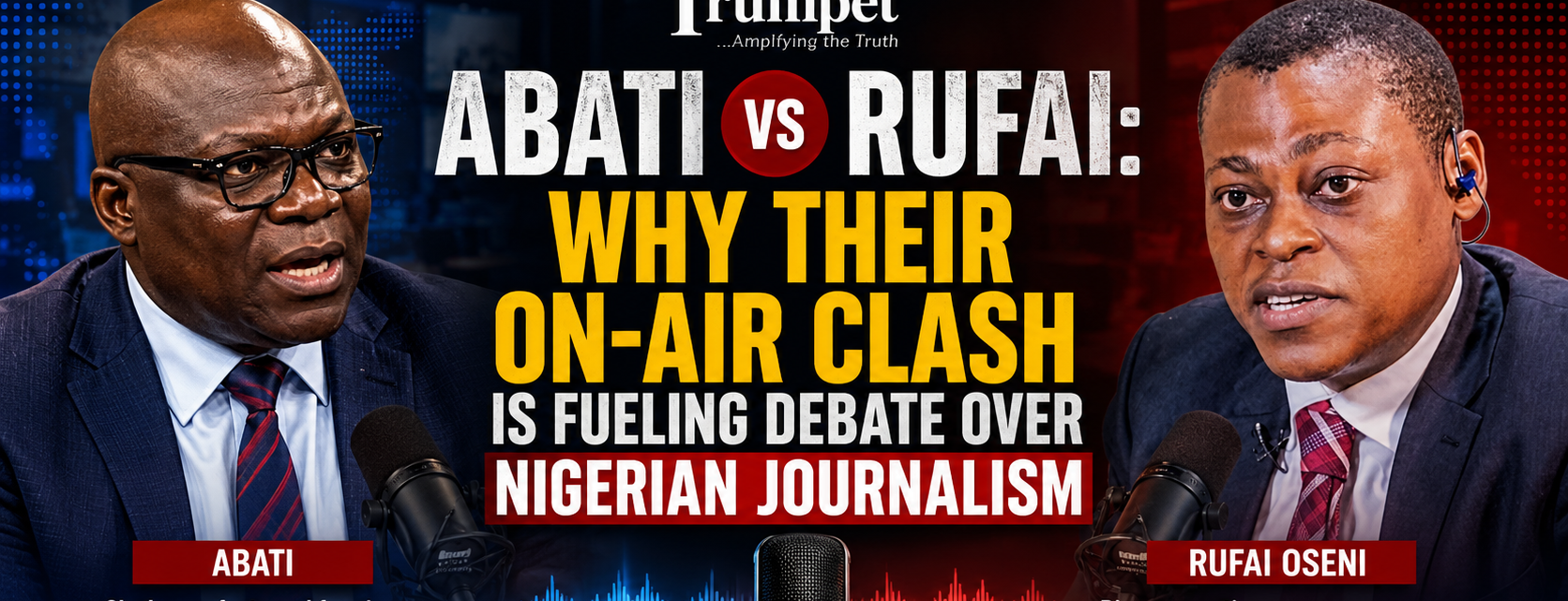
The latest on-air clash between veteran journalist Reuben Abati and fellow Arise TV anchor Rufai Oseni has reignited debate over whether their contrasting styles strengthen The Morning Show or expose growing friction between two of Nigeria’s most prominent television personalities.
Key Highlights
- Reuben Abati and Rufai Oseni clashed during a discussion on September 3, 2026.
- The disagreement centred on political comments involving FCT Minister Nyesom Wike and the 2027 elections.
- Abati warned against statements that could expose the station to defamation lawsuits.
- Rufai pushed back, arguing that Abati frequently raises legal concerns when they disagree.
- Social media reactions have divided viewers between supporters of both anchors.
- Daniel Bwala criticised Rufai Oseni amid the controversy.
- Their contrasting styles have made the duo a major attraction on The Morning Show.
- The dispute has renewed questions about professionalism, free expression and editorial responsibility in Nigerian broadcasting.
What Triggered the Abati-Rufai Clash?
The latest disagreement occurred during a discussion about FCT Minister Nyesom Wike’s comments concerning the 2027 elections and his political support.

Rufai Oseni criticised Wike over his reported position and questioned the implications of supporting a candidate from another political platform while remaining associated with the Peoples Democratic Party (PDP).
During the discussion, Oseni also used the expression “Gbewudani” while referring to Senator Sandy Onor, in comments about the political dynamics surrounding the PDP and its candidates.
Abati intervened, warning that some of the language being used could expose both the journalist and the television station to legal action.
He cautioned that statements capable of damaging individuals’ reputations could create serious consequences for the broadcaster.
Oseni subsequently challenged Abati’s intervention, suggesting that the veteran journalist tends to raise the possibility of lawsuits when their positions differ.
The exchange quickly became a subject of discussion online after clips from the programme circulated across social media platforms.
Social Media Takes Sides
The Abati-Rufai dispute generated sharply divided reactions among viewers and commentators.
Some users praised Abati for what they viewed as professional caution and an awareness of the legal responsibilities associated with live broadcasting.
Others sided with Oseni, arguing that journalists should be able to challenge political actors directly and use strong language when interrogating issues of public interest.
The controversy was further amplified by comments from presidential Special Adviser on Policy Communication Daniel Bwala, who criticised Oseni and described him in disparaging terms.
Bwala’s intervention added a political dimension to an argument that began as an on-air disagreement between two journalists.
Abati and Rufai: Different Styles, Same Platform
The continuing debate over Abati vs Rufai is partly driven by their very different approaches to journalism.
Abati brings decades of experience in print and broadcast journalism, alongside experience as a former presidential spokesman. His approach generally emphasises context, institutional experience, historical perspective and caution around potentially contentious claims.
Rufai, by contrast, has developed a more confrontational and conversational broadcasting style. He frequently presses politicians and public officials aggressively and uses direct, colloquial language when discussing issues that affect ordinary Nigerians.
Supporters regard his approach as fearless and relatable, while critics argue that his style can sometimes cross the boundaries of professional restraint.
The differences can create tension, but they can also make the programme more engaging by forcing competing perspectives into the same discussion.
Complementary Anchors or Parallel Personalities?
The central question is whether Abati and Rufai are fundamentally complementary anchors or two parallel personalities whose rivalry occasionally overshadows the programme.
There is a strong argument for the complementary view.
Abati provides experience, institutional memory and an awareness of the legal and professional risks associated with broadcasting. Rufai brings urgency, energy and a willingness to confront controversial issues.
When balanced effectively, the combination can produce robust political discussions in which arguments are challenged rather than simply presented to viewers.
However, repeated public disagreements can also create the impression of personal rivalry. When exchanges become focused on the personalities of the anchors rather than the issues being debated, the journalistic value of the programme can be weakened.
Read also:
- Arise TV Interview Sparks Heated Debate As X Users Weigh In On Rufai Oseni, Lere Olayinka Clash
- Abati Fires Back At Lere Olayinka Over Allegations On Arise TV, Says I Never Begged Wike For Money
- Big Brother Naija Fame Is Not What You Think, Danboskid Breaks Silence On Struggles As Uriel, Frodd React
- VDM Apologises to Security Officers Over ‘Unknown Gunmen’ Remarks at NBA Conference
- Court Restrains Lizzy Anjorin From Sharing Priscilla Ojo’s Son’s Photos Amid Family Feud
- How I Signed 2 Biggest Artistes In Nigeria – Mark Angel
What the Dispute Says About Nigerian Journalism
The Abati-Rufai relationship reflects a broader tension within contemporary Nigerian journalism.
Broadcasters must balance the public’s demand for aggressive scrutiny of political leaders with their responsibility to ensure that claims are accurate, fair and legally defensible.
Social media has further complicated the situation. A brief exchange on live television can now be clipped, shared and debated nationally within minutes, often without the full context of the original discussion.
For television journalists, this creates pressure to remain both compelling and professionally disciplined.
Abati’s emphasis on legal caution and Rufai’s demand for stronger confrontation represent two legitimate impulses within journalism. The challenge is finding a balance that protects editorial credibility without weakening the media’s responsibility to hold powerful individuals accountable.
The Debate Is Likely to Continue
The latest Abati vs Rufai confrontation is unlikely to end the wider debate about their working relationship.
Their contrasting personalities remain a major part of the appeal of The Morning Show, and their disagreements frequently generate significant public discussion.
Rather than viewing the two journalists simply as rivals, their partnership can be understood as a combination of experience and youthful energy, caution and confrontation, institutional awareness and populist communication.
The key challenge is ensuring that disagreement remains focused on issues and does not undermine the credibility of the journalists, the programme or the wider profession.