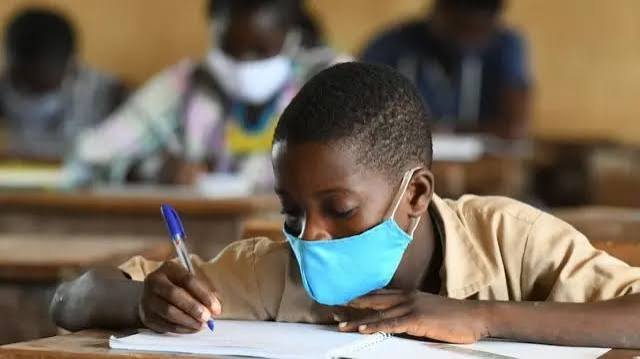
As schools across several states prepare to reopen for the 2026/2027 academic session from September 14, concerns are mounting over the safety of pupils, students and teachers, with attention now turning to whether Nigerian schools are adequately prepared to receive them.

Lagos has officially fixed September 14, 2026, for the resumption of public and private primary and secondary schools for the 2026/2027 academic session. Under the state’s harmonised academic calendar, the first term will run from September 14 to December 21, 2026. Delta, Ogun and Oyo states have also been reported to be adopting the same date, although school calendars remain a state responsibility and September 14 is not a uniform resumption date nationwide.
That distinction is important because the security situation facing schools differs considerably from one part of the country to another.
In some states, the beginning of a new academic session is largely a question of preparing classrooms, teachers and learning materials. In others, reopening schools also means determining whether roads, communities and school compounds are sufficiently secure for children to return.
The concern is not theoretical.
In June, 36 students and a staff member were still reported missing after gunmen attacked Government Day Secondary School in Lassa, Borno State, while students were sitting examinations. Eight people, including the school’s vice principal, had been rescued at the time of the report.
The Lassa incident came only weeks after a separate mass abduction in Oyo State demonstrated that school security is no longer exclusively a northern Nigeria problem.
On May 15, armed men abducted children and teachers from schools in the Oriire area of Oyo State. The victims were eventually rescued in July after spending almost two months in captivity. One teacher was killed during the ordeal, according to reports, while security forces arrested eight suspected kidnappers during the rescue operation.
Read Also:
- FG, Borno Intensify Efforts To Rescue 44 Abducted Mussa Schoolchildren
- Fubara Hails Team Rivers for Winning Tinubu Inter-Schools Debate Championship
- Ondo Announces Cut-Off Marks For 2026/2027 Public Secondary School Admission
The incident was particularly significant because Oyo is in the South-West, a region that had generally been less associated with the type of mass school kidnappings that have repeatedly occurred in parts of northern Nigeria.
It therefore changed the question surrounding school safety.
The issue is no longer simply whether schools in traditionally affected states are ready to reopen. It is whether the country’s security architecture can adequately protect schools as criminal and militant networks change their areas of operation.
Recent findings indicate that the problem remains substantial.
A report published in August found that at least 65 primary and secondary schools across northern Nigeria had been shut or rendered non-functional because of insecurity. The affected schools were reported across Sokoto, Benue, Plateau, Borno, Kaduna and Kebbi, with disruptions also recorded in Katsina, Adamawa and other areas. The closures were linked to attacks, abductions, displacement and fears over the safety of pupils, students and teachers.
That figure is significant, but it should not be treated as a complete national count. Earlier investigations had identified 188 public schools shut because of insecurity across Katsina, Benue, Zamfara, Niger, Sokoto and Kaduna alone, while noting that the figure excluded Borno, Yobe and Adamawa and could therefore have understated the actual scale of the problem.
For communities affected by such closures, the consequences go beyond lost classroom hours.
The United Nations Children’s Fund has warned that insecurity in states such as Katsina, Zamfara and Niger has disrupted education, displaced communities and restricted access to basic services. Its assessment of the three states described armed violence, banditry, abductions and communal conflict as major obstacles to children’s access to education.
When schools remain closed for prolonged periods, children can lose more than academic time. They become more vulnerable to child labour, early marriage, displacement and other social pressures, while teachers may also be unwilling to remain in communities considered unsafe.
The Federal Government is not unaware of the challenge.
Over the years, Nigeria has invested in the Safe Schools Initiative, established to protect educational institutions and children from attacks and allow learning to continue in conflict-affected areas. The federal government previously outlined a 2023–2026 Safe Schools financing plan with an investment size of about N144.86 billion.
But the existence of funding and policy does not automatically translate into a safe classroom.
In June, an investigation reported that more than 600 pupils and teachers had been abducted in seven mass school abductions between March 2024 and May 2026, despite the Safe Schools investment. The report cited concerns about implementation, infrastructure and the availability of adequate security around schools.
The continued attacks have also triggered questions within government itself.
In July, the Senate extended the mandate of its ad hoc committee investigating the Safe Schools Initiative and broadened the inquiry to include funding, implementation and accountability.
That investigation is important because one of the biggest questions surrounding school safety is not whether Nigeria has policies, but whether those policies are reaching the schools and communities that need them most.
There are, however, signs of a more coordinated security response.
In February, the Federal Government announced a Smart School Protection Strategy following an engagement between the Federal Ministry of Education and the Nigeria Security and Civil Defence Corps. The government described the protection of learners as a national priority and said the initiative was intended to strengthen security around schools.
The NSCDC has also been positioned as a lead agency in school protection. The corps says it has a National Safe Schools Response Coordination Centre and has conducted vulnerability assessments of schools. In February, the Federal Government reaffirmed its confidence in the NSCDC’s role in securing schools and students nationwide.
The Nigeria Police Force has similarly established a 24-hour Schools Protection Squad Command and Control Centre at its Force Headquarters in Abuja, intended to facilitate rapid responses to threats affecting schools and educational communities.
The National Senior Secondary Education Commission has also developed a Safe School Programme covering the 36 states and the Federal Capital Territory. Its stated measures include perimeter fencing, CCTV, controlled access, emergency plans, first-aid and fire-drill training, evacuation procedures, security-agency collaboration and psychosocial support.
The commission’s validated minimum standards go further, requiring schools to establish safety and security committees, maintain comprehensive plans for preventing and responding to violence, provide perimeter fencing and trained security guards, install safety equipment and regularly report on their security and emergency preparedness.
The challenge is implementation.
A school may have a security policy but lack a functional perimeter fence. It may have a gate but no trained guard. It may have an emergency plan that teachers and students have never practised. It may be located in a community where the nearest security response is too far away to prevent an attack.
This is where the September 14 resumption becomes a test of preparedness.
In Lagos, for example, the approved calendar provides a clear administrative framework for schools, including staff professional development in the week preceding resumption. But the existence of a calendar does not, by itself, establish that every school has completed a security assessment or that every school community has a functioning emergency-response mechanism.
The same question applies elsewhere.
Before children return, parents need more than assurances that schools are reopening. They need to know whether school authorities have assessed vulnerabilities, established emergency communication channels and coordinated with security agencies.
Teachers also need confidence that they will not be placed in environments where they are expected to protect children against armed attackers without adequate institutional support.
For boarding schools, the security question is even more sensitive. Students spend nights within school compounds, making perimeter security, access control, lighting, surveillance and rapid response particularly important.
The experience of previous attacks suggests that simply stationing security personnel at the front gate may not be enough.
Schools can be located close to forests, ungoverned spaces, highways or communities affected by armed criminal activity. In such environments, security has to extend beyond the school fence to the surrounding community and access routes.
This is why community involvement has become an important part of the national school-safety framework.
The NSSEC’s Safe School Programme explicitly includes community participation, while its advocacy work involves state education authorities, traditional leaders, school administrators, development partners and civil society organisations.
The approach recognises a basic reality: a school cannot be completely secure if the community around it is not secure.
That reality was dramatically demonstrated by the Oyo experience.
The attack in Oriire was a reminder that geographical assumptions can be dangerous. Communities that previously considered mass school abductions a problem of the distant North suddenly found themselves confronting the same threat. The successful rescue of the victims brought relief, but it did not remove the underlying question of how the attackers were able to reach vulnerable schools in the first place.
The situation in Borno is even more difficult. As of August 21, families were still protesting over children abducted from classrooms in May, while another group of students and a staff member abducted in June remained missing, according to Reuters.
For families in such communities, September 14 is not merely a date on an academic calendar.
It is a decision about whether sending a child back to school is worth the perceived risk.
That fear can itself undermine education.
Parents who are afraid to send their children to school may keep them at home even when schools officially reopen. Teachers may request transfers from high-risk areas. School proprietors may reduce boarding capacity. Communities may relocate educational activities to safer areas, while children in remote communities may simply lose access to formal education.
The government therefore faces two connected challenges: protecting schools from attacks and restoring public confidence that schools can operate safely.
The first requires security.
The second requires evidence.
As September 14 approaches, the most meaningful measure of preparedness will not be the number of statements issued by government agencies. It will be whether vulnerable schools have been identified, whether security assessments have been carried out, whether identified weaknesses have been addressed and whether there is a credible plan for responding to an attack or other emergency.
It will also be whether parents, teachers and communities know what to do when something goes wrong.
Nigeria has already developed many of the institutions and policies needed to improve school safety. The Federal Ministry of Education has a dedicated Safe Schools structure; the NSCDC has a national coordination mechanism; the police have a schools protection command and control centre; and the NSSEC has established safety standards and a Safe School Programme.
What remains difficult is ensuring that these systems work consistently at the point where they matter most: the individual school.
The coming academic session will therefore provide another opportunity to test the gap between policy and practice.
For schools in relatively secure parts of the country, September 14 may pass largely as an ordinary resumption day.
For schools in communities already affected by kidnapping, terrorism, banditry or displacement, however, reopening without adequate protection could carry a much greater risk.
And for Nigeria as a whole, the stakes are larger than one academic session.
Every school that closes because of insecurity represents children losing access to learning. Every teacher who leaves a dangerous community weakens the education system. Every parent who keeps a child at home because of fear adds to the country’s already difficult education challenge.
The question ahead of September 14, therefore, is not simply whether Nigerian schools will reopen.
It is whether the country has done enough to make sure that when the school gates open, children can enter them with a reasonable expectation of returning home safely.
That is the standard against which the 2026/2027 resumption should ultimately be judged.