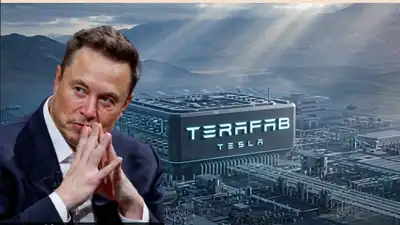
In early August 2026, Elon Musk, Tesla, and SpaceX formally confirmed plans for Terafab, a massive joint semiconductor manufacturing facility in Grimes County, Texas. Positioned roughly an hour northwest of Houston near College Station, the project aims to create what Musk has described as the largest and most valuable building on Earth, designed to address an anticipated shortfall in global chip supply for the companies’ ambitious AI, robotics, autonomous vehicle, and space-based computing initiatives.

The announcement, made via posts from Tesla and SpaceX on X as well as statements from company websites and Texas Governor Greg Abbott, locks in the site after months of planning, local negotiations, and earlier teases. An initial investment of $16.8 billion has been committed for the first phase. Full build-out could eventually involve substantially higher spending; earlier SpaceX filings referenced figures as high as $55 billion for an initial phase and up to $119 billion across multiple phases, though the confirmed starting number is lower. The completed facility is projected to encompass more than 100 million square feet of manufacturing space, a scale Musk has compared to roughly 50 times the size of the Pentagon.
Why Terafab?
Musk and the companies have repeatedly stressed that Tesla and SpaceX (along with related efforts involving xAI) will require far more advanced chips than existing global production can deliver. The target is production supporting over 1 terawatt of AI compute capacity per year.
Current global and U.S. semiconductor output falls well short of the projected demand for edge-inference processors powering Tesla’s Optimus humanoid robots and Cybercab robotaxis, as well as high-power chips intended for SpaceX’s planned orbital data centers.
Terafab is envisioned as a vertically integrated operation combining logic, memory, advanced packaging, and testing under one roof. This approach is intended to enable faster iteration and recursive improvements in chip design and production. Intel is involved as a partner, with plans to leverage its 14A process technology. A smaller research or precursor fab broke ground in April 2026 on the North Campus of Giga Texas near Austin to prototype ideas and processes ahead of the full-scale Grimes County complex.
Musk has roughly estimated that about 25% of Terafab’s AI compute output could support Tesla’s Optimus and related products, with the remaining majority directed toward SpaceX’s space-based systems.
Scale, Jobs, and Local Impact
The site is expected to span thousands of acres and employ at least 3,000 people, with a significant portion drawn from Grimes County and neighboring Brazos County. Local incentives include property tax abatements (approved by county commissioners earlier in 2026) and a $30 million grant from the Texas Enterprise Fund. SpaceX has already made initial payments tied to those agreements. Construction of the first phase is slated to ramp up soon after the confirmation, with multi-phase expansion potentially continuing into the early 2030s.
Musk has emphasized the aesthetic and engineering ambition, calling the project “the most epic chip-building effort” and stating that Terafab “will be stunningly beautiful.” Concept videos and renderings released alongside the announcement depict a vast, futuristic campus.
Read also:
- EU investigates Elon Musk’s X over Grok AI sexual deepfakes
- Global backlash forces Elon Musk’s X to clamp down on Grok after surge in sexualised AI images
- Ofcom investigates Elon Musk’s X over Grok AI sexual deepfakes
- Meta plans 8,000 job cuts amid massive AI spending push
- AI Startup Pit raises $16 Million led by Andreessen Horowitz to transform enterprise operations
- Kimi K2: Moonshot AI’s Open-Weight Powerhouse Challenging ChatGPT
- Apple To Revise iPhone Ad-Tracking Consent Rules After German Antitrust Probe
- Google Completes August 2026 Spam Update After Three-Day Rollout
- SpaceX Seeks $40 Billion Financing to Buy Nvidia Chips for AI Expansion
The project fits into Musk’s pattern of vertical integration across his companies to control critical supply chains for AI and autonomy. It also aligns with broader U.S. efforts to expand domestic semiconductor manufacturing capacity. Power plans appear to rely on natural gas generation paired with large battery arrays rather than solely renewable sources, according to local discussions.
Challenges remain substantial. Building a cutting-edge fab of this magnitude involves enormous technical, capital, and logistical hurdles, including process technology maturity, supply-chain coordination, water and energy demands in a rural area, and the realities of semiconductor manufacturing timelines. Earlier filings described aspects of the venture as a “general framework” without fully binding long-term obligations between the parties. Investment figures have shifted multiple times since the project was first publicly outlined in March 2026.
Nonetheless, the formal site confirmation, capital commitment, local approvals, and precursor work at Giga Texas mark a concrete step forward. For Texas, it represents another major high-tech manufacturing investment tied to Musk’s companies. For Tesla and SpaceX, Terafab is positioned as essential infrastructure for scaling Optimus, Cybercab fleets, and orbital compute ambitions that would otherwise be constrained by external chip availability.
As of mid-August 2026, the project is moving from concept and negotiations into active development in Grimes County, with the companies framing it as a foundational bet on producing the silicon needed for the next era of AI-driven hardware, on Earth and beyond.