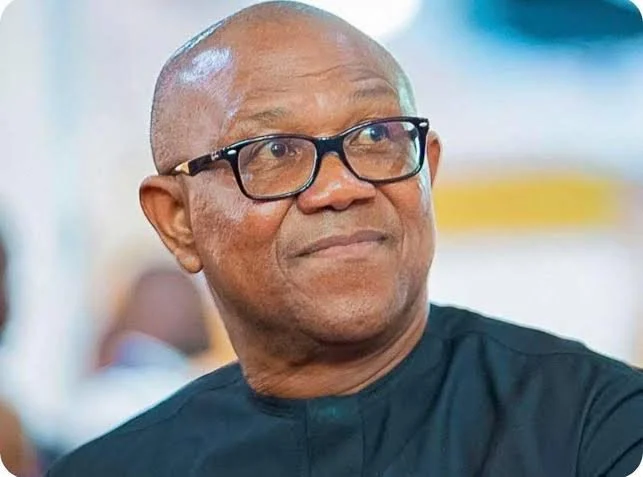
Peter Obi’s latest appearance on Channels Television’s Sunday Politics was more than another opposition interview. It was a carefully constructed presentation of a leadership philosophy that sought to distinguish him from both the incumbent administration and the political establishment that has dominated Nigeria for decades.

For nearly two hours, the presidential candidate of the Nigeria Democratic Congress (NDC) discussed governance, electricity, corruption, the cost of government, economic reforms, coalition politics and even the limits of what he believes a president can realistically achieve within a four-year term. Unlike many campaign appearances where politicians promise sweeping transformation, Obi repeatedly insisted that some expectations—such as providing uninterrupted electricity nationwide within four years—are simply unrealistic.
That admission became one of the interview’s defining moments because it departed from the familiar tradition of expansive political promises that rarely survive the realities of governance.
Read Also:
- Ownership Tussle Over Ikeja Property: Court documents name Deborah Oluwalogbon as legal owner, not Peter Obi’s brother
- Protests: Peter Obi’s support put Ndigbo in danger- Isiguzoro
- Peter Obi’s 2023 Presidency driven by vision, new Nigeria- Ohanaeze
Yet the interview also revealed the contradictions, limitations and unanswered questions surrounding Obi’s political project. While his emphasis on prudent leadership, transparency and fiscal discipline continues to resonate with many Nigerians frustrated by economic hardship, critics argue that governing Africa’s largest democracy requires far more than personal integrity and good intentions.
The interview therefore provides a useful lens through which to examine not only Obi as a presidential contender but also the broader question of what Nigerians increasingly expect from political leadership.
A campaign centred on leadership, not ideology
Perhaps the most striking feature of Obi’s interview was his insistence that Nigeria’s greatest challenge is leadership. This has become the central pillar of his political identity since the 2023 elections. Rather than presenting himself primarily as a socialist, capitalist or conservative politician, Obi consistently frames governance as a question of character.
Throughout the interview, he returned repeatedly to four qualities he considers indispensable for leadership—competence, capacity, compassion and integrity.
It is a simple framework but one that reflects a deeper argument: Nigeria’s problems are not primarily caused by a lack of resources but by the inability or unwillingness of leaders to deploy those resources effectively. The message is politically attractive because it resonates with widespread public frustration.
Nigeria possesses abundant oil reserves, a large population, enormous agricultural potential and one of Africa’s biggest consumer markets. Yet the country continues to struggle with inflation, unemployment, insecurity, poor infrastructure, weak healthcare and inadequate education.
For many citizens, the contrast between national potential and lived reality naturally fuels the belief that leadership is the missing ingredient. Obi’s interview reinforced that narrative.
Instead of proposing an entirely new ideological model for Nigeria, he argued that existing institutions could perform far better under disciplined leadership.
The politics of realistic promises
One of the interview’s most widely discussed moments came when Obi refused to promise Nigerians uninterrupted electricity within four years. In a political culture where campaign promises often become increasingly ambitious during election seasons, his response stood out.
He argued that building new power plants requires several years, while upgrading transmission infrastructure is equally time-consuming. Rather than promising 24-hour electricity nationwide, he pledged to increase the country’s ability to generate, transmit and distribute electricity more efficiently, targeting consistent delivery of over 10,000 megawatts.
From a governance perspective, this reflects an important shift. Rather than defining success through absolute outcomes, Obi appeared to define it through measurable improvements.
Political scientists have long argued that democracies function better when leaders make promises that can realistically be evaluated instead of offering grand but unattainable visions. Whether Nigerians reward such realism remains uncertain.
Historically, Nigerian elections have often rewarded optimism more than caution. Candidates who promise immediate transformation frequently attract greater public attention than those who carefully explain institutional constraints. Obi therefore faces a political dilemma.
Honesty may strengthen his credibility among some voters while simultaneously making his message appear less inspiring to others.
Austerity as political philosophy
Another major theme of the interview was the cost of governance. Obi returned repeatedly to what he described as unnecessary government expenditure. He criticised spending on presidential aircraft, questioned the bureaucratic structure surrounding the Office of the First Lady, advocated reducing official privileges and argued that resources should instead be redirected towards education, healthcare and productive investment.
His argument was not entirely new. As governor of Anambra State, Obi cultivated an image of fiscal conservatism, often highlighting modest government spending and savings. The interview suggested that he intends to scale that philosophy to the federal level.
His statement that “leaders must fast when citizens are fasting” encapsulated this philosophy. It was less about symbolism than about legitimacy. According to Obi, governments cannot credibly demand sacrifice from citizens while political office holders continue to enjoy extravagant privileges.
The argument is likely to resonate in a country where public perception of political excess remains widespread. Successive administrations have faced criticism over the size of government convoys, foreign travel, official residences and recurrent expenditure.
However, critics also note that reducing the cost of governance, while symbolically significant, may not by itself resolve Nigeria’s structural economic problems.
Federal personnel costs, debt servicing, subsidy policies, exchange rate pressures and security spending represent far larger fiscal challenges than the expenses associated with presidential privileges.
Consequently, while cutting government waste may improve public confidence, its direct economic impact could be more limited than political rhetoric sometimes suggests.
Leadership through personal example
One consistent thread throughout Obi’s political messaging is the idea that leaders must embody the values they advocate. During the interview, he argued that anti-corruption campaigns become ineffective when political leaders themselves appear extravagant.
This philosophy aligns with broader theories of transformational leadership, which emphasise leading by example rather than relying solely on institutional enforcement.
Many Nigerians have historically expressed frustration over the perceived disconnect between official appeals for sacrifice and the lifestyles of political elites.
Fuel subsidy removals, tax increases and economic reforms often generate resistance partly because citizens question whether leaders are sharing the burden. Obi’s emphasis on personal discipline attempts to address that credibility gap.
Whether personal example alone can transform public institutions, however, remains open to debate.
Political systems ultimately depend not only on ethical leaders but also on strong institutions capable of enforcing accountability regardless of who occupies public office.
The single-term argument
Perhaps Obi’s most unconventional proposal remains his commitment to serving only one four-year term if elected. He argued that focused leadership should accomplish significant reforms within 48 months rather than becoming consumed by preparations for re-election.
The proposal challenges one of the defining features of Nigeria’s presidential system. Second-term ambitions frequently shape policy decisions, appointments and political alliances from the beginning of a president’s first tenure.
Obi argues that removing re-election incentives would encourage greater focus on governance. The idea has generated considerable public discussion. Supporters believe it demonstrates selflessness and urgency.
Critics question whether four years would be sufficient to implement major reforms requiring legislative support, institutional restructuring and long-term infrastructure investment.
History offers evidence for both perspectives. Some governments have introduced significant reforms within a single term, while others have struggled to consolidate policy changes even after eight years.
Ultimately, effectiveness depends less on tenure alone than on political consensus, administrative competence and institutional capacity.
His criticism of President Tinubu
Like most opposition figures, Obi devoted considerable attention to criticising the current administration. He argued that Nigeria faces worsening economic hardship and insecurity while questioning whether President Bola Tinubu still possesses the energy required to govern effectively.
His suggestion that the president should “retire” before the 2027 election was among the interview’s most provocative remarks. Such criticism reflects the broader opposition strategy ahead of the next presidential election.
Economic reforms introduced by the Tinubu administration—including fuel subsidy removal and foreign exchange reforms—have generated intense debate. Supporters argue they were painful but necessary corrections to longstanding structural distortions.
Critics contend that implementation has imposed severe hardship without sufficient social protection. Obi clearly positioned himself within the latter camp.
Yet fairness requires acknowledging that the administration’s supporters attribute many current difficulties to inherited structural weaknesses accumulated over several administrations.
Government officials have repeatedly argued that reforms require time before their benefits become visible. Consequently, voters in 2027 will likely judge not only current economic pain but also whether they believe those reforms are beginning to produce sustainable results.
Where Obi’s proposals invite scrutiny
While Obi’s interview projected confidence and coherence, it also exposed areas that deserve closer examination. For instance, his emphasis on reducing waste enjoys broad public support, but questions remain about implementation.
How much can actually be saved by eliminating perceived luxuries? Would those savings substantially transform healthcare, education or infrastructure?
Similarly, while he emphasised embedded electricity generation and cited examples such as Geometric Power in Aba, scaling such models nationwide would require substantial regulatory reforms, investment confidence and collaboration with state governments. These challenges extend beyond presidential determination.
There is also the question of coalition-building. Modern Nigerian politics depends heavily on alliances among governors, legislators, regional leaders and political parties.
Obi’s departure from both the Labour Party and later the African Democratic Congress before emerging as NDC candidate has led critics to question his ability to build and sustain complex political organisations.
Supporters argue that his departures reflected principled disagreements rather than political weakness.
Opponents interpret them differently, suggesting that managing political institutions is itself an essential test of leadership. The truth probably lies somewhere between these positions.
Political parties in Nigeria are frequently affected by internal disputes that extend far beyond the influence of individual leaders.
Nevertheless, successful presidents must demonstrate an ability to negotiate competing interests across diverse political constituencies.
Beyond personality politics
Perhaps the greatest challenge facing Obi is converting personal popularity into institutional strength. His political appeal remains unusually personal.
The Obidient Movement has transformed him into one of Nigeria’s most recognisable political figures, particularly among urban professionals, students and younger voters.
However, elections are ultimately won through organisation as much as enthusiasm. Nigeria’s electoral landscape rewards effective grassroots mobilisation, polling unit organisation, coalition-building and party structures extending into every local government.
Political history repeatedly demonstrates that popularity alone does not guarantee electoral success.
Obi’s interview therefore highlighted both his strengths and his vulnerabilities. He communicates clearly; He projects fiscal discipline; He often avoids exaggerated promises.
Yet translating those qualities into electoral victory requires organisational capabilities extending beyond personal credibility.
What Nigerians increasingly demand from leaders
Perhaps the interview says as much about Nigerian voters as it does about Peter Obi. Increasingly, public discourse appears to be shifting away from ethnic rhetoric and partisan loyalty towards questions of competence, accountability and economic management.
Citizens increasingly ask whether leaders understand public finance, infrastructure, education, healthcare and job creation. This does not necessarily mean identity politics has disappeared. Regional considerations, religion, party loyalty and elite alliances remain influential.
However, leadership qualities now occupy a more prominent place in national political conversations than they did in previous election cycles.
Obi has benefited from that shift because his political identity revolves around managerial competence rather than traditional patronage politics.
Whether that appeal proves sufficient against opponents with stronger party machinery remains uncertain.
Leadership is larger than one politician
Ultimately, reducing Nigeria’s leadership debate to one individual would oversimplify a much larger national conversation. Peter Obi’s interview succeeded in provoking discussion because it addressed fundamental questions about political culture.
Should leaders live more modestly? Should governments promise only what they can realistically deliver? Should public office be viewed as service rather than privilege? Should competence outweigh political patronage? These questions extend beyond Obi himself.
They apply equally to the current administration, opposition parties, governors, legislators and future presidential aspirants.
The quality of leadership in Nigeria will depend not only on who wins elections but also on whether institutions become stronger, accountability becomes more effective and citizens continue demanding higher standards from those seeking public office.
Obi’s interview therefore offered more than campaign messaging. It reflected an evolving conversation about what Nigerians increasingly expect from political leadership.
His emphasis on honesty, fiscal discipline and personal accountability resonates with many citizens frustrated by years of economic hardship and governance failures. At the same time, sceptics are justified in asking whether those principles alone can overcome the institutional, political and structural obstacles that have challenged successive administrations.
As the 2027 election approaches, the real test will not simply be whether Obi’s vision inspires voters. It will be whether he can persuade Nigerians that his philosophy of leadership can be translated into practical governance in one of Africa’s most complex democracies. Equally, his opponents—including the incumbent administration—will be judged on whether their own record and proposals better address the country’s pressing economic and security challenges.
In that sense, the interview revealed something larger than Peter Obi. It exposed a country searching for leadership that combines credibility with competence, ambition with realism, and reform with the political skill necessary to implement it. Whether any candidate can meet those expectations remains one of the defining questions of Nigeria’s democratic journey.
Related Stories: