A viral wedding video purportedly showing controversial Nigerian social commentator GehGeh tying the knot has dominated conversations across social media in recent days, prompting widespread speculation over his marital status before new evidence suggested the footage was most likely taken from an upcoming movie production rather than a real-life ceremony.
Key Highlights
- Viral videos appearing to show Nigerian social commentator GehGeh getting married sparked widespread speculation across social media.
- The footage showed what appeared to be an elaborate traditional wedding ceremony, leading many fans and entertainment platforms to congratulate him.
- GehGeh denied getting married, initially claiming the viral footage was AI-generated.
- His explanation was met with scepticism, with many questioning whether AI could realistically recreate such a detailed ceremony involving numerous people and multiple camera angles.
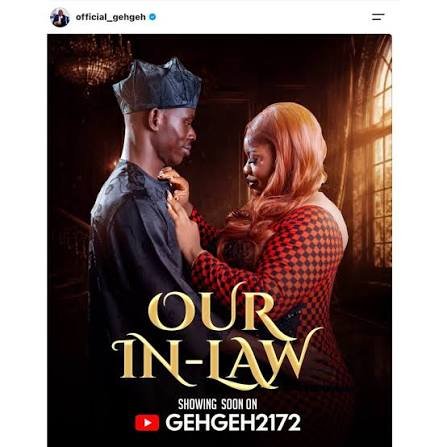
- Speculation intensified after a promotional poster for an upcoming movie titled Our In-Law surfaced, featuring GehGeh in the same traditional attire seen in the viral videos.

Throughout the weekend, videos and photographs circulated widely on Facebook, TikTok, Instagram and X, appearing to show GehGeh participating in an elaborate traditional marriage ceremony. The footage featured the social commentator dressed in traditional attire alongside a bride, surrounded by family members, guests and cultural performers as customary marriage rites were observed.
The clips quickly gained traction online, with several entertainment blogs and social media pages publishing congratulatory reports, while thousands of users debated whether the outspoken commentator had finally settled down despite previously expressing unconventional opinions about relationships and marriage.
The realistic quality of the footage added to the confusion. The multiple camera angles, elaborate decorations, authentic traditional rites and emotional interactions between those present made the ceremony appear indistinguishable from an actual wedding, leaving many viewers with little reason to question its authenticity.
As the rumours gathered momentum, GehGeh publicly denied that he had married, insisting he was neither legally nor traditionally wed. Rather than attributing the footage to a film production or content creation project, he initially claimed that the videos and photographs circulating online had been generated using artificial intelligence (AI).
His explanation, however, generated fresh controversy instead of putting the speculation to rest.
Although AI-generated videos have advanced significantly in recent years, many observers questioned whether existing technology could realistically create lengthy and convincing traditional wedding scenes involving numerous guests, multiple camera angles, culturally accurate ceremonies and seamless interactions without obvious signs of digital manipulation.
The AI explanation therefore prompted further questions about the true origin of the footage, with many social media users expressing scepticism over the claim.
Days later, the narrative shifted following the emergence of a promotional poster for an upcoming movie titled Our In-Law.
The poster featured GehGeh wearing the same traditional attire seen in the viral wedding clips alongside a female co-star and announced that the film would soon premiere on his YouTube channel, GEHGEH2172.
The promotional material strongly suggested that the widely circulated wedding scenes were filmed as part of the movie production rather than documenting an actual marriage ceremony.
If that is indeed the source of the footage, it would explain why the videos appeared convincing enough to deceive thousands of viewers. Contemporary Nollywood productions are increasingly known for recreating traditional ceremonies with remarkable realism, employing authentic costumes, decorations, musicians, cultural rites and large casts that closely resemble genuine celebrations.
When isolated clips from such productions are shared online without captions or proper context, they can easily be mistaken for real-life events, particularly when they spread rapidly across multiple social media platforms before any clarification is issued.
Despite the apparent explanation offered by the movie poster, questions remain over the conflicting accounts surrounding the incident.
Observers have questioned why GehGeh initially described the footage as AI-generated rather than immediately explaining that it originated from an upcoming movie.
The sequence of events has fuelled several theories online.
Some social media users believe the AI explanation may have been an attempt to distance himself from the marriage rumours before details of the movie became public. Others argue that the explanation only changed after promotional materials for Our In-Law surfaced online.
However, there is currently no independent evidence establishing why GehGeh initially chose to describe the footage as AI-generated or whether his first explanation was incomplete.
Neither GehGeh nor members of the film’s production team have publicly offered a detailed account explaining the differing narratives or clarifying the timeline of events.
The incident has also given rise to speculation that the viral wedding rumours may have formed part of a publicity campaign for the forthcoming movie.
The chronology has attracted attention because it follows a pattern that has occasionally been used in entertainment marketing, where convincing content is allowed to circulate online and generate widespread discussion before later being connected to an upcoming production.
In GehGeh’s case, highly convincing wedding videos spread rapidly across social media, generating extensive public discussion and media coverage. He subsequently denied getting married, attributing the footage to artificial intelligence, before a promotional poster later emerged showing the same wedding-themed imagery and costumes for Our In-Law.
While the sequence resembles some viral marketing campaigns employed within the entertainment industry, there is presently no evidence confirming that the incident was deliberately orchestrated as a publicity stunt. Likewise, there is no proof that GehGeh’s AI explanation formed part of any promotional strategy.
Read also:
- Peller Speaks on Wedding Anxiety, Jokes Fans Without Aso-Ebi Won’t Enter Venue
- Peter Okoye Hits Back At Critics Over Children’s Inability to Speak Any Indigenous Language
Without direct confirmation from GehGeh or the producers behind Our In-Law, such theories remain speculative.
The episode also highlights how easily scenes from film productions can be mistaken for genuine events in an era of rapid social media sharing. Modern Nollywood productions increasingly recreate traditional weddings with exceptional attention to detail, making them almost indistinguishable from real ceremonies. When clips from those productions are uploaded without context, viewers can understandably interpret them as authentic breaking news.
Based on the information currently available, there is no independently verified evidence that GehGeh recently got married. Equally, there is no conclusive evidence that the viral wedding footage was entirely AI-generated, despite his initial claim.
The emergence of promotional materials for Our In-Law remains the strongest publicly available indication that the viral wedding scenes originated from an upcoming film project rather than an actual marriage ceremony.
There is also no verified evidence proving that the incident was deliberately designed as a publicity stunt.
Taken together, the available evidence points to the likelihood that footage from Our In-Law circulated online without context, leading many people to conclude that GehGeh had married. Whether the misunderstanding resulted from the accidental release of movie scenes, an initial attempt to deflect attention from the rumours, or a broader promotional strategy cannot be determined based on the facts currently in the public domain.
Until GehGeh or the film’s producers provide a fuller explanation addressing the conflicting accounts and timeline of events, those possibilities remain matters of speculation rather than established fact.