
The federal government and the United Nations (UN) have launched a coordinated plan to transition Nigeria towards a nationally led humanitarian response system, with a strong emphasis on strengthening local institutions, mobilising domestic resources and reducing dependence on external funding while ensuring uninterrupted assistance to vulnerable populations.
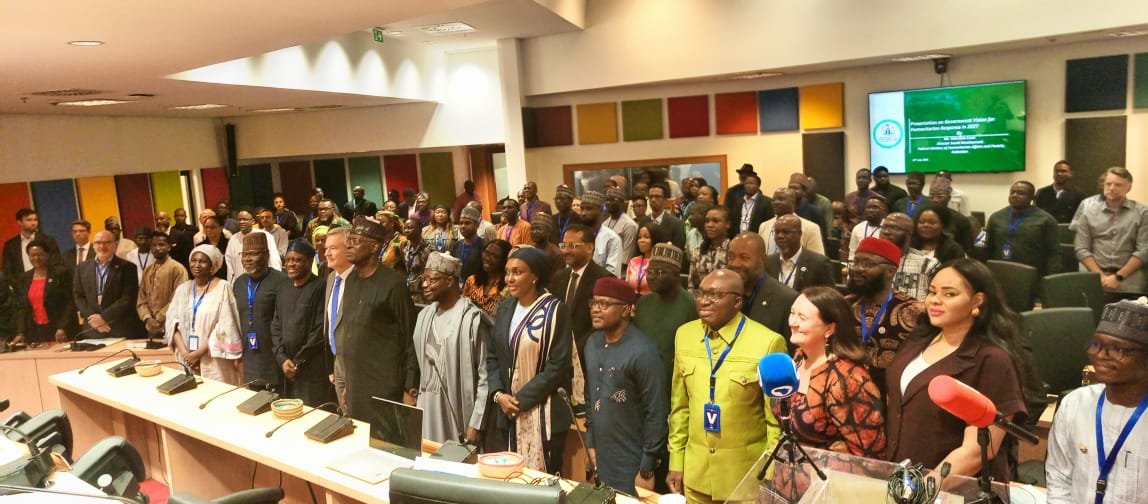
The commitment was made on Tuesday at the opening of the two-day joint Nigeria humanitarian transition planning workshop at the United Nations House in Abuja, where government officials, UN agencies, development partners, donor organisations and civil society groups gathered to develop a roadmap for the country’s humanitarian transition.

Declaring the workshop open, the Minister of Humanitarian Affairs and Poverty Reduction, Bernard Doro, described the initiative as a defining moment in Nigeria’s humanitarian journey, noting that the global humanitarian landscape is undergoing significant changes driven by shrinking donor funding and increasing calls for stronger national ownership of humanitarian programmes.
He said Nigeria’s decision to lead its humanitarian coordination architecture is not merely a response to declining international assistance but a deliberate strategy to build a sustainable system rooted in national institutions and resources.
According to the minister, the country continues to grapple with multiple humanitarian challenges, including insecurity, displacement, food insecurity, flooding, climate-related disasters, public health emergencies and other socio-economic shocks, all of which have increased pressure on available resources.
Read Also:
- FG Reaffirms Commitment To SDGs, Strengthens Partnership With UN On Poverty Reduction
- FG Unveils 11 NYSC Specialized Streams In Historic Reform, Corps Members to Choose Career-Focused Pathways
- FG Suspends Plan To Review WAEC Costs After Public Outcry, Orders Stakeholder Consultations
Despite these challenges, Doro commended the United Nations Office for the Coordination of Humanitarian Affairs (UNOCHA), development partners and humanitarian organisations for their years of support in strengthening emergency response, resource mobilisation and coordination across affected communities.
He acknowledged, however, that the era of predictable large-scale international humanitarian financing is gradually coming to an end.
“Several of our traditional partners have reduced or redirected their humanitarian budgets, and Nigeria, like many nations across the Global South, must now plan for a future in which international support, while still valued, can no longer be assumed as the primary pillar of our response,” he said.
To address the challenge, the minister said the federal government has established the One Humanitarian, One Poverty Response System (OHOPRS) as Nigeria’s unified national framework for humanitarian response, social protection and poverty reduction.
He explained that the initiative is designed to eliminate duplication, improve accountability and ensure that both domestic and international resources are coordinated under a single national system rather than fragmented interventions.
“The transition we are discussing today is not simply an administrative handover of coordination functions from the United Nations to government. It is the operationalisation of a Nigerian-owned system built to outlast the ebb and flow of donor cycles,” Doro stated.
He stressed that the Ministry of Humanitarian Affairs and Poverty Reduction is prepared to assume greater responsibility for coordinating humanitarian preparedness, emergency response and recovery efforts nationwide through the OHOPRS framework.
According to him, the ministry will work closely with relevant ministries, departments and agencies, state governments, humanitarian organisations, development partners and affected communities to ensure transparency, accountability, inclusiveness and evidence-based planning.
The minister also called for increased domestic financing of humanitarian programmes, urging federal and state governments, the private sector, philanthropic organisations and Nigerians in the diaspora to contribute towards building a self-sustaining humanitarian financing system.
He appealed to development partners to complement financial support with technical expertise that would help Nigeria establish innovative financing mechanisms, including expanding the National Social Registry and the National Social Safety Nets Programme (NASSP) Scale-Up structures.
Doro further said the government intends to strengthen the humanitarian development-peace nexus by integrating emergency response with long-term recovery, resilience-building, livelihood support and social protection initiatives.
He explained that such integration would reduce vulnerability while supporting sustainable national development.
Looking ahead, the minister disclosed that one of Nigeria’s major priorities for 2027 is for the Federal Ministry of Humanitarian Affairs and Poverty Reduction to lead the development of the country’s Humanitarian Needs and Response Plan under the OHOPRS framework, with continued technical support from the United Nations.
He described the proposed transition as a demonstration of Nigeria’s growing institutional capacity to coordinate and finance humanitarian interventions in line with global standards.
“As the government assumes greater leadership and financial responsibility, we remain committed to sustaining our strong partnership with the United Nations and all humanitarian actors,” he added.
Participants at the workshop are expected to define a common vision for humanitarian transition, identify institutions that will gradually assume greater leadership responsibilities, determine capacity-building needs and outline strategies for financing Nigeria’s humanitarian response under a more sustainable, nationally owned system.
Both the federal government and the UN expressed confidence that the transition would ultimately strengthen Nigeria’s ability to respond to future humanitarian crises while ensuring that vulnerable women, men and children continue to receive timely assistance and protection.