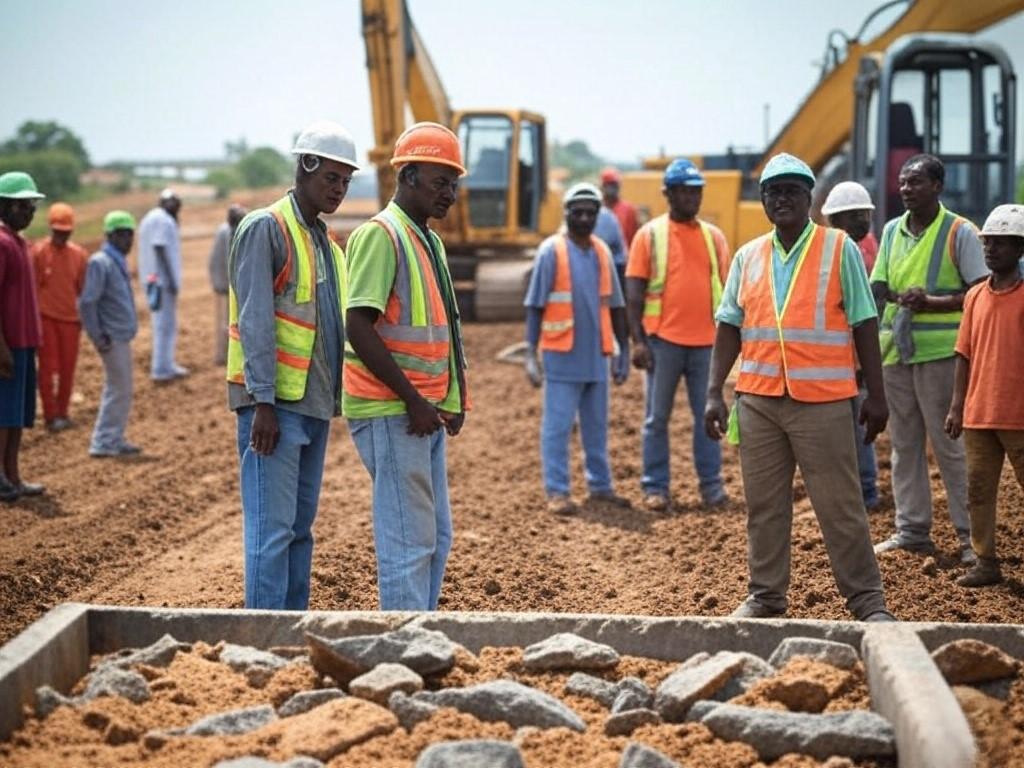
In a landmark demonstration of public-private partnership under the Federal Government’s Road Infrastructure Tax Credit Scheme, the Dangote Group has commenced construction of the 255-kilometre Mokwa–Lambata Road in Niger State.

This project allows the conglomerate to offset its tax liabilities by directly funding critical infrastructure, bypassing traditional government budgetary allocations.
Boosting Connectivity and Economic Growth
The Mokwa–Lambata Road project (sometimes referred to in sections as Mokwa-Tegina-Bida-Lambata) is expected to significantly enhance transportation links between the South-West, North-Central, and broader northern regions of Nigeria. It serves as a vital economic corridor, facilitating the movement of goods, agricultural produce, and people while reducing travel time and vehicle maintenance costs on previously dilapidated sections.
The road traverses key areas in Niger State, connecting major towns and linking with previously completed segments (such as Bida-Mokwa). It is anticipated to stimulate economic activities in agriculture, trade, and industry, while improving access to markets and social services for rural communities.
How the Tax Credit Scheme Works
Under the Road Infrastructure Development and Refurbishment Investment Tax Credit Scheme, eligible companies finance the construction or rehabilitation of critical federal roads and receive equivalent tax credits. This mechanism enables private sector capital to address Nigeria’s huge infrastructure deficit without immediate strain on public finances.
Dangote Group has been one of the most active participants, committing hundreds of billions of naira to multiple road projects nationwide (with reports indicating involvement in projects worth nearly ₦3 trillion across several initiatives). By advancing funds for construction, the company offsets its tax obligations directly.
This approach has previously delivered notable successes, including the Obajana-Kabba concrete road and other strategic corridors.
Project Significance and Expectations
Scale: Approximately 255 km, forming a strategic north-central link.
Impact: Expected to decongest existing routes, boost inter-state commerce, and support Niger State’s development agenda.
Execution: Dangote Industries is leading the project, leveraging its engineering capacity and resources for timely delivery.
Niger State Governor Mohammed Umaru Bago has expressed support for such interventions, highlighting their importance following incidents like recent tanker explosions that underscored the need for better road infrastructure.
Broader Context
The Tinubu administration has continued and expanded the tax credit framework, approving multiple road projects worth trillions of naira across states. This aligns with efforts to attract private investment into infrastructure while maintaining fiscal prudence.
Read also:
- CS-SUNN urges Adamawa to approve six-month maternity leave, commit N9bn to nutrition
- Capital importation increased by 380% to $6bn in Q3 2025 – NBS
- National Assembly to reconvene over 2027 presidential election date amid Ramadan controversy
Dangote’s involvement in the Mokwa–Lambata Road adds to its growing portfolio of tax-credit-funded projects, reinforcing the private sector’s role as a key partner in Nigeria’s infrastructure renaissance.
Industry watchers expect the project to create thousands of direct and indirect jobs during construction and generate long-term economic multipliers through improved logistics.
As construction begins, stakeholders anticipate accelerated progress on this critical artery, which could serve as another flagship example of how innovative financing models can transform Nigeria’s road network.
The Mokwa–Lambata initiative stands as a testament to the power of tax credit swaps in bridging infrastructure gaps and fostering national development.