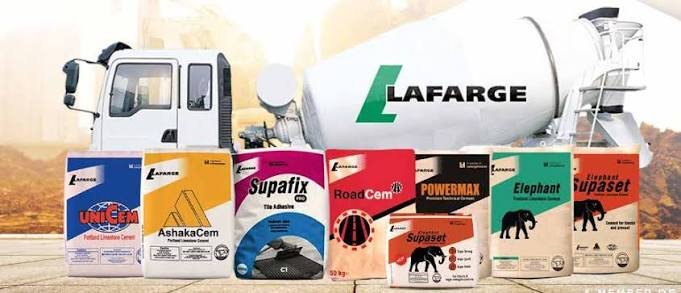
Rumours circulating across social media platforms claiming that Lafarge Cement (Lafarge Africa Plc) has been owned, seized, or nationalised by the Federal Government of Nigeria are completely false.
Key Highlight:

- The Senate approved Huaxin Cement’s $1 billion acquisition of Holcim’s majority stake in Lafarge Africa.
- Reports claiming the Federal Government owns or nationalised Lafarge Africa are false.
- Lafarge Africa remains a publicly listed company on the Nigerian Exchange.
- Nigerian shareholders retain their 16.19% stake, while workers are guaranteed job security for at least two years.
- The acquisition is expected to increase competition with Dangote Cement and BUA Cement in Nigeria’s cement market.
A definitive legislative decision confirmed that Lafarge Africa has instead been acquired by a Chinese manufacturing giant, Huaxin Cement Co. (operating via Hainan Huaxin Pan-African Investment Company Plc). The transaction represents a private commercial transfer between two foreign multinationals, valued at approximately $1 billion.
The Nigerian government does not own Lafarge Cement. The company remains a publicly traded entity on the Nigerian Exchange (NGX). Control has shifted from Europe to Asia, marking a historic private sector exit rather than a state nationalisation.
Senate Gives Final Clearance to $1 Billion Chinese Takeover
The false narratives gained traction amid an intensive corporate probe led by the National Assembly. Lawmakers raised alarms over transparency and the risk of rising foreign dominance in Nigeria’s critical infrastructure sectors.
Following a review by an ad hoc committee chaired by Senate Minority Leader, Senator Abba Moro, the Nigerian Senate approved the transaction. The legislative body confirmed that:
The Deal is a Foreign-to-Foreign Transfer: Swiss building materials conglomerate Holcim AG divested its 83.81% majority stake directly to China’s Huaxin Cement.
Read also:
- Adamawa Warns Against Defacement Of Public Infrastructure, Says Era Of Impunity Is Over
- Police Begin Enforcement Against Covered, Defaced Number Plates In Kano
- Ebuka Obi-Uchendu, Wife Cynthia Expect 3rd Child After 7 Years, Share Joyful Announcement
No Threat to National Security: The committee found no legal barriers or national security risks to halt the transition.
Workforce Stability Guaranteed: The Federal Competition and Consumer Protection Commission (FCCPC) secured legal assurances that the transaction will not result in staff retrenchment for at least two years.
What Happens to Nigerian Investors?
A core concern during the floor debates was the fate of local capital. Prominent lawmakers, including Senator Abdul Ningi, questioned aspects of the equity structure. However, the Securities and Exchange Commission (SEC) and the Bureau of Public Enterprises (BPE) clarified that the 16.19% equity stake held by Nigerian public and institutional investors remains entirely untouched, safe, and legally protected.
Historically, Lafarge Africa became a dominant player in the local landscape after acquiring majority stakes in three formerly state-owned cement plants during the government’s 2001–2002 privatisation exercises. This historical link is likely what triggered the confusion regarding current state ownership.
Industry Impact: A New Shakedown for Dangote and BUA
Rather than expanding the government’s footprint, the completion of this cross-border deal reshapes the competitive private sector. Huaxin Cement now commands four massive production hubs across Nigeria—located in Ewekoro, Sagamu, Ashaka, and Mfamosing—boasting an annual capacity of 10.5 million metric tonnes.
Market analysts note that the arrival of deep-pocketed Chinese operators will inject fierce competition against homegrown market leaders, Dangote Cement and BUA Cement, potentially triggering shifts in local consumer cement prices.