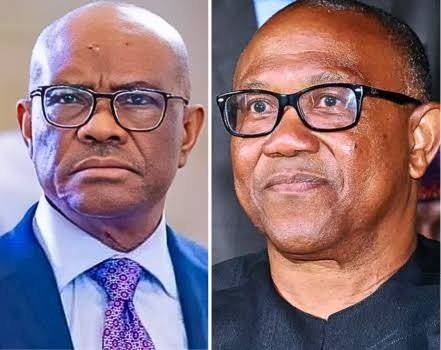
A fresh political confrontation has erupted between FCT Minister Nyesom Wike and former Labour Party presidential candidate Peter Obi, following claims that President Bola Tinubu failed to personally contact Oyo State Governor Seyi Makinde after the abduction of pupils and teachers in Oriire Local Government Area.
The exchange, which unfolded during Wike’s media parley on Thursday, has sparked nationwide debate over presidential responsibility, crisis management, and how leaders should respond during moments of national tragedy.
The controversy began after Obi disclosed that during a July 3 visit to Governor Makinde, the Oyo governor allegedly told him that President Tinubu had not called him more than 50 days after the school abduction. Obi described the alleged silence as disappointing, arguing that Nigerians deserve a president who demonstrates empathy and provides reassurance during periods of crisis.

Reacting to the claim, Wike dismissed the criticism as politically motivated and insisted that Obi had misunderstood how government functions.
According to the former Rivers State governor, the responsibility of initiating communication rests with the state governor whenever a major security incident occurs.
“If the President did not call Seyi, did Seyi call the President?” Wike asked.
He maintained that governors, often regarded as the chief security officers of their states, are expected to immediately brief the President on serious security developments rather than waiting for the Presidency to initiate contact.
“If something happens in my state, it is for me to call Mr President first and say this is what has happened. That is how government works. You cannot turn it the other way round,” Wike said.
His remarks have since divided public opinion.
While many Nigerians believe the President should personally reach out to governors and victims during national emergencies as a show of compassion and solidarity, others argue that effective governance is measured more by coordinated security responses than symbolic phone calls.
The disagreement has also reignited discussions about Nigeria’s security architecture. Although governors are widely referred to as the chief security officers of their states, they do not exercise direct operational control over the police, military or other federal security agencies, making cooperation between state governments and the Presidency essential during emergencies.
Read also:
- Roads Come Before Schools, Hospitals, Wike Replies Critics
- Peter Obi Says He Is Ready To Die For Nigerians Amid Growing Security Concerns
- Peter Obi demands N5bn damages, public apology from Kenneth Okonkwo over alleged defamation
Political observers say the latest Wike-Obi exchange reflects broader differences in leadership philosophy, with one side emphasising public empathy and visible presidential engagement, while the other prioritises institutional procedures and official communication channels.
Beyond the political exchanges, many Nigerians have urged leaders to refocus attention on the victims of the Oriire school abduction and intensify efforts to improve security across the country.
The controversy has also raised several questions that continue to dominate public discourse: Should governors be expected to contact the President first during security emergencies? Does the absence of a personal phone call constitute a failure of leadership? Should public displays of empathy carry as much weight as behind-the-scenes coordination? And ultimately, are political disagreements distracting from the urgent task of protecting lives and preventing future abductions?
As reactions continue to pour in, the Wike-Obi face-off has evolved beyond a disagreement over a phone call into a wider national conversation about leadership, accountability, and what Nigerians should expect from those entrusted with the country’s security.