The Lagos State government has attributed the persistent flooding experienced across the state to poor environmental practices, illegal land reclamation and unauthorised dredging, warning that human activities continue to worsen the impact of heavy rainfall.
Key Highlight:

- Lagos State Government says persistent flooding is largely caused by poor environmental practices, illegal land reclamation, and unauthorised dredging.
- Commissioner Dayo Bush-Alebiosu blamed indiscriminate waste disposal and commercial-driven illegal reclamation for worsening the impact of heavy rainfall.
- The commissioner also condemned the dumping of untreated human waste into the Lagos Lagoon, warning of serious environmental and public health consequences.
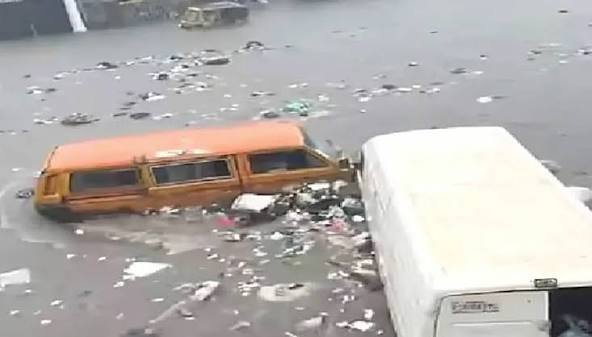
- Recent heavy rainfall has caused widespread flooding across several parts of Lagos, submerging roads, disrupting businesses, and leaving many residents and motorists stranded.
- The government urged residents and developers to adopt responsible environmental practices and comply with waterfront regulations to help reduce flooding and protect critical infrastructure.
Commissioner for Waterfront Infrastructure Development, Dayo Bush-Alebiosu, said indiscriminate waste disposal, illegal reclamation of waterfronts and unregulated dredging have continued to undermine government efforts to address flooding in the state.
Speaking on Channels Television’s The Morning Brief on Tuesday, the commissioner said the root cause of the flooding extends beyond rainfall to the actions of residents and developers.
“It is important to identify what the problem is in the first place, and the problem is nothing other than bad habits. Illegal reclamation and illegal dredging affect it on one hand, while poor habits affect it on the other hand,” he said.
Bush-Alebiosu explained that while illegal reclamation is largely driven by commercial interests, indiscriminate waste disposal results from poor environmental behaviour among residents.
“Those who dump refuse indiscriminately are not necessarily doing it for financial gain, but those reclaiming land illegally are doing so for commercial purposes. So, you have both sides contributing to the problem,” he added.
The commissioner also raised concerns over the disposal of untreated human waste into the Lagos Lagoon, describing the practice as both an environmental hazard and a public health risk.
“Some people even dump faeces into the lagoon. This is the same lagoon that feeds us. You’re eating fish that feed off faeces.
“All these things will eventually come back to affect us, and what we’re witnessing now is part of the consequence,” he said.
Lagos has witnessed widespread flooding in recent weeks following sustained rainfall, with several communities experiencing severe disruptions to transportation, commercial activities and daily life.
Read also:
- Taraba Begins Statewide Desilting Of Drainages, Bush Clearing To Combat Flooding
- Impact Of Climate Change: Governor Otu Links Cross River Flooding To Prolonged Rainfall, Orders Faster Road Projects
- Kunle Remi Sparks Debate After Blaming Nigerians’ “Dirtiness” for Lagos Flooding
- NiMet Raises Flash Flood Alert For 27 States As Peak Rainy Season Begins
The flooding submerged roads, inundated homes and left many motorists stranded, prompting criticism from residents who accused the state government of failing to provide a lasting solution to the recurring problem.
Areas frequently affected include Gbagada, Iyana Ipaja, Ikorodu Road, Ikeja, Maryland, Mushin, Ogudu, Lekki, Oshodi, Agege, Alimosho and Obalende.
Major highways, including sections of the Lagos-Ibadan Expressway, Lagos-Abeokuta Expressway, Apapa-Oshodi Expressway and Lekki-Epe Expressway, have also experienced flooding during periods of heavy rainfall.
The state government has repeatedly urged residents to adopt responsible environmental practices, including proper waste disposal and compliance with regulations governing waterfront development, as part of efforts to reduce flooding and protect critical infrastructure.