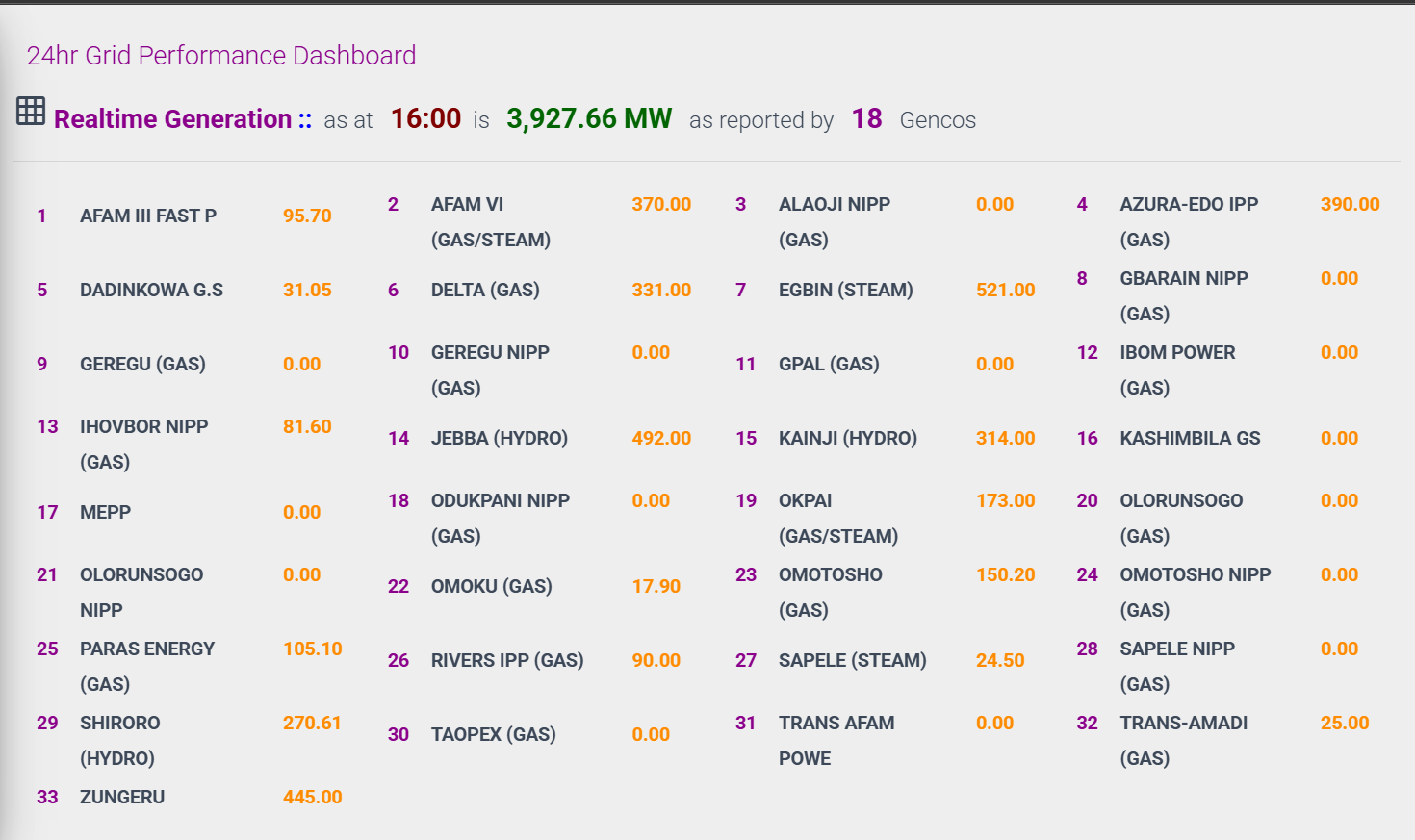
Nigeria’s electricity grid generated 3,927.66 megawatts (MW) of power as of 4:00 PM on Thursday, according to the latest data from the Nigerian Electricity System Operator (NISO) real-time dashboard.

The figure, reported by 18 electricity generating companies (Gencos), reflects the persistent constraints facing the nation’s power sector despite incremental improvements in some areas. While total output hovers below 4,000 MW for the afternoon period, it underscores the gap between installed capacity and actual generation in Africa’s largest economy.
Grid Performance Snapshot
The NISO 24-hour Grid Performance Dashboard provides a detailed breakdown of contributions from various power plants across the country: Top Performers (as of 16:00):
Egbin (Steam): 521.00 MW — Leading contributor
Jebba (Hydro): 492.00 MW
Zungeru: 445.00 MW
Afam VI (Gas/Steam): 370.00 MW
Azura-Edo IPP (Gas): 390.00 MW
Kainji (Hydro): 314.00 MW
Delta (Gas): 331.00 MW
Shiroro (Hydro): 270.61 MW
Read Also:
- Sahara Power commissions 180MW Afam II Power Plant in Rivers, boosts Nigeria’s energy grid, economic growth
- Engineers Urge FG To Fast-Track Power Reforms, Deliver 25,000MW Electricity Target
- Electricity Act Under Fire: States Accuse Senate Of Plotting Power Grab, Warn Of Threat to Electricity Reforms
Several plants recorded zero output at the time of reporting, including major facilities such as:
Alaoji NIPP
Gbarain NIPP
Geregu (Gas) and Geregu NIPP
Ihovbor NIPP (partial output at 81.60 MW)
Olorunsogo NIPP
Sapele NIPP
Trans Afam Power
This variability highlights ongoing issues with gas supply, maintenance, water levels for hydro plants, and technical constraints that frequently sideline significant portions of Nigeria’s installed generation capacity.
Broader Context
Nigeria’s total installed generation capacity exceeds 12,000 MW, but actual grid-delivered power has historically struggled to surpass 5,000 MW consistently due to a combination of factors:
Inadequate gas supply to thermal plants
Transmission infrastructure bottlenecks
High aggregate technical, commercial, and collection (ATC&C) losses
Liquidity challenges in the electricity value chain
The current 3,927.66 MW reading comes at a time when electricity demand is estimated to be well above 20,000 MW nationwide. Many Distribution Companies (Discos) continue to implement load shedding, leaving millions of homes and businesses reliant on expensive diesel and petrol generators.
Recent Sector Developments
The Nigerian power sector has seen several reform efforts in recent years, including the signing of the Electricity Act (Amendment) and various initiatives aimed at improving gas-to-power supply and attracting private investment. However, progress remains slow, with frequent national grid collapses still occurring. Stakeholders have repeatedly called for:
Accelerated investment in transmission and distribution infrastructure
Full implementation of cost-reflective tariffs
Resolution of the gas supply crisis
Greater decentralisation of the sector to allow states and private players more autonomy
Industry Reactions
Energy analysts note that while afternoon generation around 4,000 MW is not unusual, sustained output above 5,000–6,000 MW would be needed to make a meaningful difference to industrial productivity and household comfort during peak evening hours.“The grid is still operating far below potential,” said one power sector expert who reviewed the dashboard. “Hydro plants are performing relatively well, but many gas-fired stations remain underutilised due to fuel supply issues.”
Looking Ahead
As Nigeria continues its energy transition ambitions and explores renewable energy integration alongside traditional sources, real-time dashboards like NISO’s play a crucial role in promoting transparency and accountability in the sector. For now, the 3,927.66 MW generation figure serves as a reminder of the urgent need for structural reforms if the country is to meet its growing electricity needs and support economic development goals.