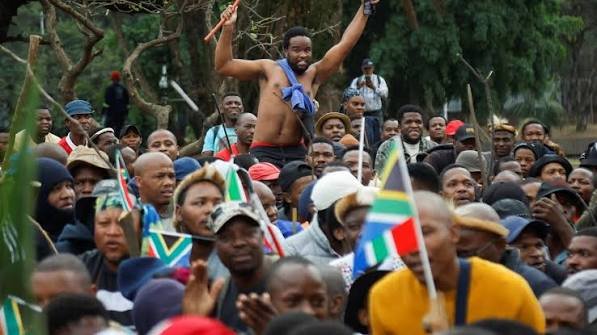
South African authorities deployed police officers across major cities on Tuesday, as nationwide anti-migrant protests got underway amid concerns they could turn violent.
Key Highlight:

5 Key Highlights
- Anti-migrant protests began nationwide as police were deployed across South Africa to maintain order amid fears of violence.
- President Cyril Ramaphosa urged peaceful demonstrations, reminding citizens that legally resident foreign nationals are protected by law.
- Police reported isolated violence, including looting, vandalism and arrests in Johannesburg and KwaZulu-Natal, despite most protests remaining peaceful.
- Thousands of migrants fled or were repatriated, with Nigeria evacuating about 600 citizens and Malawi reporting the return of around 7,000 nationals.
- Authorities warned against xenophobic violence, highlighting South Africa’s long-standing history of anti-foreigner attacks.
The demonstrations followed an unofficial deadline issued by anti-immigration campaigners demanding that undocumented foreign nationals leave the country.
President Cyril Ramaphosa appealed to protesters to remain peaceful and avoid intimidation, threats and violence.
The Ministry of Police said the protests were largely peaceful, although isolated cases of looting and attempted looting were reported.
In Johannesburg, shops in the city centre remained closed while security personnel maintained a strong presence.
Protesters reportedly threw bricks at residential buildings in Yeoville, an area with a large migrant population, while police arrested five people in Soweto over the alleged looting of a foreign-owned shop.
Another five suspects were arrested in Hammarsdale, KwaZulu-Natal, for allegedly breaking into a tuck shop.
Businesses in central Durban also shut their doors as police, supported by helicopters, monitored demonstrations in the coastal city.
Ahead of the protests, Ramaphosa met with protest leaders in an effort to reduce tensions.
While acknowledging concerns over immigration, he stressed that legally resident foreign nationals are protected under South African law.
“Some foreign nationals who live in South Africa are here lawfully. They work, study, raise families, invest in our economy and contribute positively to our society,” the president said, warning that the right to protest does not extend to acts of violence or vandalism.
Official figures indicate that South Africa hosts more than three million documented foreign nationals, while police say around 50,000 undocumented migrants have been arrested since January.
The protests have triggered a wave of departures by migrants fearing attacks.
Police said about 25,000 undocumented foreigners have already been repatriated, most of them from other African countries.
Nigeria evacuated 269 citizens on the eve of the demonstrations, bringing the total number of Nigerians flown home to about 600, with further evacuations expected.
Read also:
- Canada Knock South Africa Out of 2026 World Cup With Eustaquio’s Stoppage-Time Winner
- Ghana approves relief package for evacuated citizens of xenophobic attacks from South Africa
- Stranded Nigerians Protest Delays In Repatriation From South Africa
- Drake Stakes Over ₦1bn On Canada To Beat South Africa In World Cup Clash
In Durban, authorities began dismantling a transit camp that had housed thousands of migrants awaiting repatriation. Malawian officials reported that about 7,000 of their citizens had already returned home.
Many migrants said they were leaving reluctantly after facing hostility and growing fears for their safety.
Authorities authorised the marches in Durban, Johannesburg and several other cities but warned organisers that any violence would not be tolerated.
Xenophobic attacks have remained a recurring challenge in South Africa for years.
According to the African Centre for Migration and Society’s Xenowatch tracker, two people have been killed in xenophobic incidents this year, while more than 60 people died during widespread anti-foreigner violence in 2008.