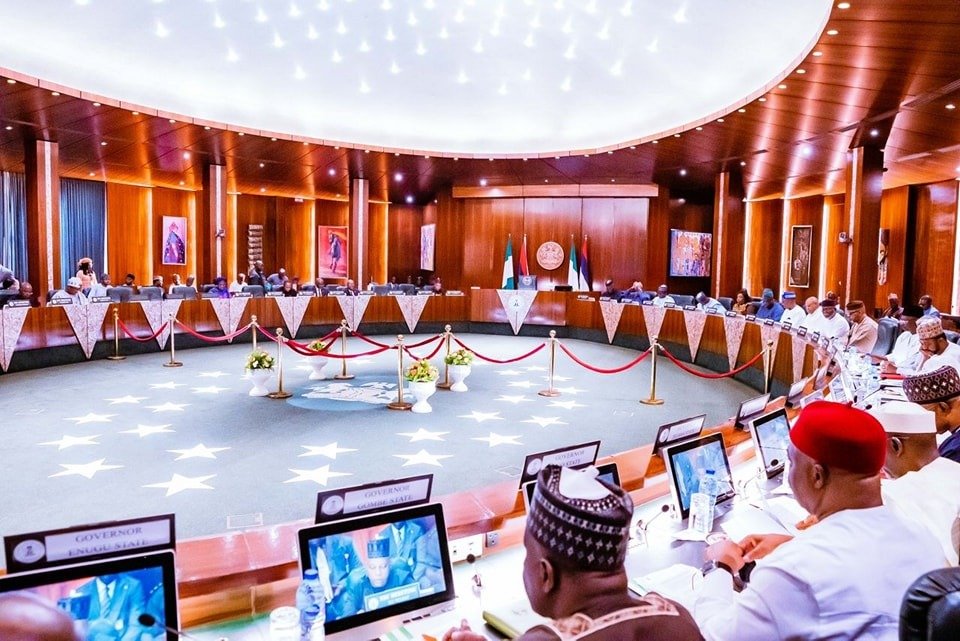
The Federal Executive Council (FEC), presided over by President Bola Tinubu, has approved a series of financing arrangements worth about $2.96 billion, €200 million and ₦215 billion to boost transportation, agriculture, power, infrastructure and micro, small and medium enterprises (MSMEs).
The Minister of Finance and Coordinating Minister of the Economy, Taiwo Oyedele, disclosed the approvals on Monday while briefing State House Correspondents after the FEC meeting in Abuja.
According to the minister, the approvals were drawn from 14 memoranda submitted by the Ministry of Finance and grouped under five strategic areas.

For transportation, FEC approved ₦215 billion to complete investments under the Presidential Compressed Natural Gas (CNG) initiative. The funding will cover CNG buses, electric vehicles, CNG-powered tricycles and vehicle conversion centres.
“The first one is to do with transportation, how to bring the cost of transportation down,” Oyedele said, adding that the approval would enable the completion of the remaining investments under the programme.
In the agriculture sector, the council approved financing arrangements totalling $900 million to support rural technical and vocational training, Special Agro-Industrial Processing Zones (SAPZ) and agricultural value-chain projects.
On power, the minister said FEC approved a $160 million facility for rural solar energy projects in Niger State. Under the arrangement, the Islamic Development Bank will provide $150 million, while the Niger State Government will contribute $10 million as counterpart funding.
For infrastructure, the council approved a $1.2 billion financing facility for Section Two of the Sokoto–Badagry Super Highway, a major corridor expected to improve connectivity, facilitate logistics and drive economic development across 11 states.
To support MSMEs, FEC also approved €200 million and $500 million in financing through the Development Bank of Nigeria (DBN) to expand access to affordable credit for small businesses.
“We always have to think about how to support that sector because supporting them is supporting ourselves and our country,” oyedele said.
Speaking on rising fuel prices, the minister disclosed that the Federal Government is engaging petroleum marketers and industry regulators to ensure pricing in the downstream sector reflects movements in global crude oil prices more transparently.
He explained that marketers often increase pump prices immediately when crude prices rise due to replacement costs but are slower to reduce prices when crude prices fall because of existing inventories.
Oyedele said the Federal Competition and Consumer Protection Commission (FCCPC) and the Nigerian Midstream and Downstream Petroleum Regulatory Authority (NMDPRA) are already addressing the issue under the Petroleum Industry Act.
He also highlighted measures introduced by the Tinubu administration to reduce transportation costs, including the suspension of Value Added Tax (VAT), excise duty and the surcharge on petroleum products.
Read also:
- Federal Executive Council approves key measures on infrastructure, economic stabilisation, national symbols
- FAAC Distributes N2.3 Trillion May Revenue To Federal, State And Local Governments
- South-South governors back Tinubu’s Executive Order on oil revenue remittance
According to him, fuel prices in neighbouring countries remain between 20 and 50 per cent higher because those taxes are still in place.
The minister further urged transport operators benefiting from the CNG programme, including recipients of subsidised vehicle conversion kits, to pass the savings on to commuters instead of charging the same fares as petrol-powered vehicles.
He said the Federal Government had made significant investments in the CNG programme and called on stakeholders to ensure Nigerians fully benefit from the intervention.
Related Stories: