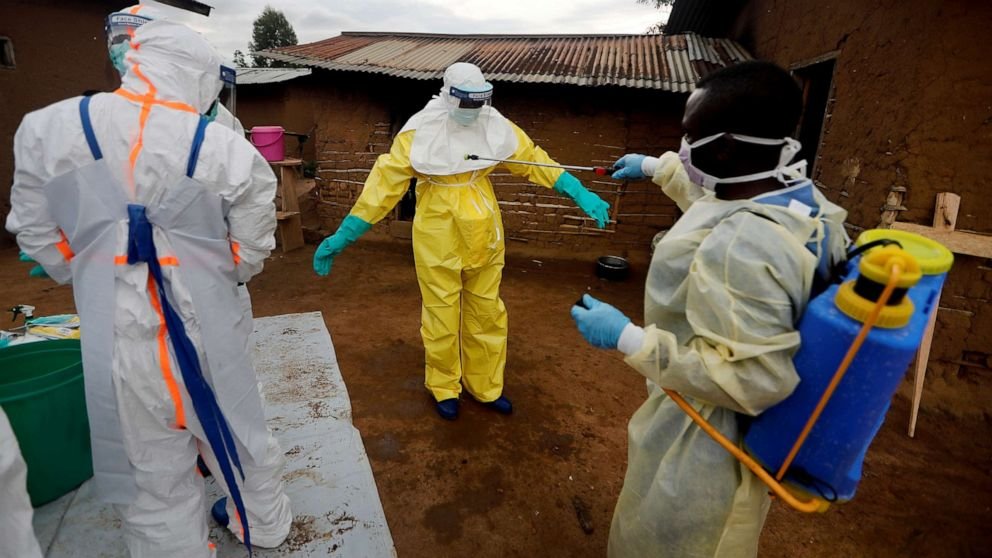
The Democratic Republic of Congo (DRC) has announced a total ban on mass gatherings in the capital, Kinshasa, and three other provinces as authorities intensify efforts to contain the growing Ebola outbreak.
The directive, signed by Interior Minister Jacquemain Shabani and issued to provincial governors on Sunday, prohibits political meetings, public marches, demonstrations and other events likely to attract large crowds.

The restrictions apply to Kinshasa, Tshopo, Haut-Uele and Bas-Uele provinces.
According to a Health Ministry situation update released on Monday, June 29, 2026, the country has recorded 1,274 confirmed Ebola cases and 360 deaths since the outbreak was declared on May 15.
Read also:
- Enugu, Stakeholders Meet To Close Ebola Surveillance, Contact Tracing Gaps
- WHO warns Ebola, Hantavirus outbreaks signal “dangerous times”
- 6 Americans exposed to Ebola during DR Congo outbreak
Although the epicentre of the outbreak remains in the eastern provinces of Ituri, North Kivu and South Kivu, the Interior Ministry said the measures are intended to prevent the virus from spreading to neighbouring regions and the densely populated capital.
The latest directive follows earlier containment measures, including a mandatory 21-day quarantine for travellers arriving from Ebola-affected areas and the suspension of sporting and social activities in Ituri.
However, the opposition has criticised the ban, describing it as unconstitutional and politically motivated.
Prince Epenge, spokesperson for the Coalition Article 64 (C64), alleged that the restrictions were designed to frustrate a planned anti-government protest scheduled for July 8 against proposed constitutional amendments.
Government officials have denied the allegations, insisting that the temporary ban is based solely on public health considerations and scientific advice aimed at protecting citizens from the highly contagious disease.