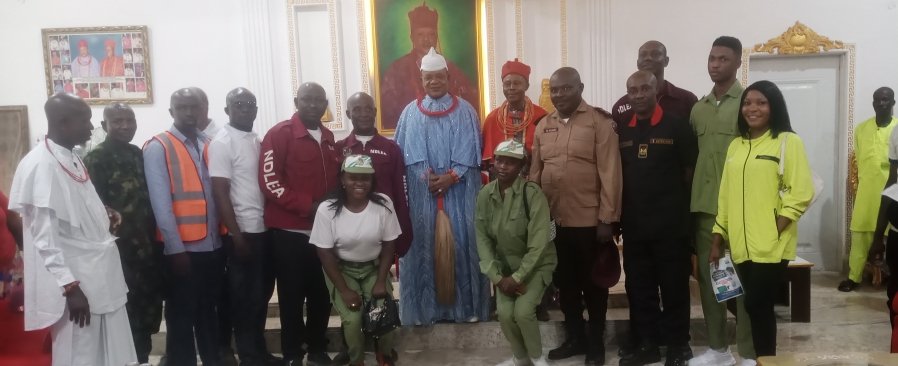
The National Drug Law Enforcement Agency (NDLEA), Ughelli Area Command, on Friday, intensified its campaign against substance abuse and illicit drug trafficking by rallying traditional rulers, religious leaders, government officials, security agencies, schools and community stakeholders to collectively tackle the growing drug menace in Delta State.
The grand finale of the 2026 International Day Against Drug Abuse and Illicit Trafficking, held at the Kingdom Hall, Ughelli, centred on the global theme: “World Drug Problem: Persisting Issues, New Challenges and Innovative Responses.”

Key highlights:
- NDLEA intensified its anti-drug campaign in Ughelli.
- Officials urged communities to support the fight against drug abuse.
- NDLEA stressed rehabilitation for users and prosecution for traffickers.
- Experts blamed youth drug abuse on unemployment and peer pressure.
- Stakeholders called for more awareness and prevention efforts.
Representing the Delta State Commander of the NDLEA, Hajiya Haliyu Hamidu, the Deputy State Commander, Shehu Garuba, described the event as a global campaign aimed at drawing attention to the dangers of drug abuse and illicit trafficking.
He said the annual observance serves as a reminder that everyone has a role to play in combating drug abuse, urging members of the public to become ambassadors in the campaign against illicit drugs.
Garuba dismissed claims that the activities of the NDLEA were not visible in Ughelli, noting that the presence and commendation of traditional rulers at the event reflected public recognition of the agency’s efforts.
Responding to allegations that suspects arrested by the agency are sometimes released after paying money, he explained that the NDLEA operates strictly within the provisions of the law.
According to him, the law distinguishes between drug users who require counselling and rehabilitation and drug traffickers who face prosecution.
He explained that individuals found in possession of drugs solely for personal use may, depending on the circumstances and legal provisions, undergo rehabilitation and reintegration rather than criminal prosecution.
On concerns over the rising incidence of drug abuse in Delta State, Garuba maintained that the agency remains committed to enforcing the law while carrying out sustained operations across the state.
He also appealed to young people, particularly those battling substance abuse, to seek help and embrace a drug-free lifestyle.
His message was simple: “Say no to drugs and yes to life.”
Earlier, the Ughelli Area Commander of the NDLEA, Ogboji Paul, said drug abuse and illicit trafficking continue to pose serious threats to public health, security and national development.
He noted that emerging psychoactive substances, the misuse of prescription medications and the growing influence of digital platforms in drug distribution have introduced fresh challenges that require innovative responses.
Read also:
- NDLEA Busts Nigerian-Mexican Drug Cartel, Dismantles Meth Lab in Oyo Forest
- NDLEA Arrests 262 Drug Offenders, Seizes 6,575kg Of Illicit Substances In Cross River
- NDLEA Call On Nigerians Battling Drug Addiction To Seek Help Through Its 24-Hour Counseling Service
Ogboji stressed that although the NDLEA remains committed to reducing both the supply and demand for illicit drugs through enforcement, public education, counselling, rehabilitation and community engagement, the agency cannot win the battle alone.
He called on parents, schools, religious bodies, healthcare professionals, community leaders, civil society organisations and government institutions to work together in protecting young people from substance abuse.
The area commander urged communities to eliminate the stigma associated with seeking treatment and instead encourage those struggling with addiction to access professional help.
Delivering the keynote lecture, Dr. Onovughe Felix, highlighted the devastating impact of drug abuse on individuals, families and society.
He identified unemployment, peer pressure, misinformation and poor parental care as some of the major factors driving drug abuse among youths.
The scholar warned that substance abuse contributes to cultism, armed robbery, kidnapping, political violence, school dropouts, broken homes and mental health disorders.
He disclosed that young people increasingly conceal drug abuse by mixing illicit substances with soft drinks and using coded names for various drugs, making detection more difficult.
Dr. Felix also outlined several preventive measures, including incorporating drug education into school curricula, creating employment opportunities, providing recreational facilities, strengthening community sensitisation and expanding media campaigns against illicit drug use.
He commended the efforts of the NDLEA, noting that the Ughelli Area Command has recorded notable operational successes and intensified public enlightenment campaigns in schools and communities.
The event featured goodwill messages from stakeholders, including the Chief Imam of Ughelli, Usman Mohammed Aboki, who encouraged residents to support the fight against drug abuse through moral guidance and community participation.
As part of activities marking the occasion, the NDLEA honoured individuals and institutions that have contributed significantly to the campaign against drug abuse.
.