The Nigerian Content Development and Monitoring Board (NCDMB on Oil Wealth) has urged African oil-producing countries to stop relying heavily on foreign expertise and instead use their vast hydrocarbon resources to build local technology capacity and strengthen industrial development across the continent.
Key Highlights:
- NCDMB urges Africa to convert oil wealth into technology development
- Over 120 billion barrels of crude and 800 trillion scf of gas identified as opportunity base
- Push for stronger local content policies across African oil economies
- Nigeria’s local content level now at 61 per cent in oil and gas sector
- Ghana seeks to learn from Nigeria’s NCDMB framework and reforms
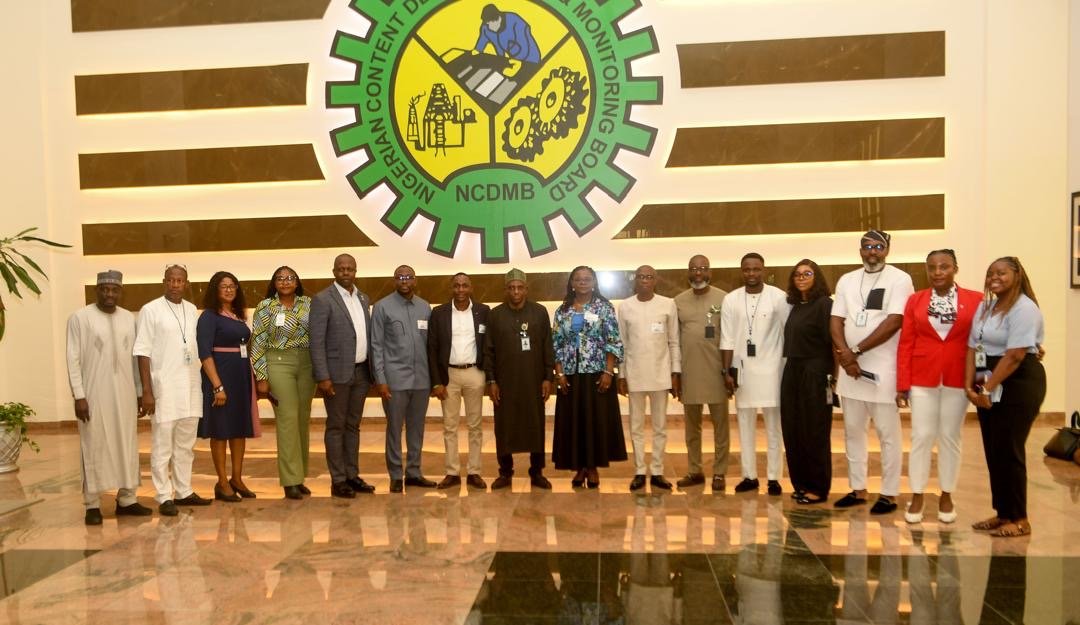
The Executive Secretary of the NCDMB, Engr. Felix Ogbe, made the call while receiving a delegation from the Ghana National Petroleum Corporation (GNPC) on a benchmarking and knowledge-sharing visit.

Speaking through the Director of Corporate Services, Dr. Abdulmalik Halilu, Ogbe said Africa’s growing oil and gas reserves present a strategic opportunity for economic transformation if properly harnessed.
He noted that the continent now holds over 120 billion barrels of crude oil and about 800 trillion standard cubic feet of natural gas, representing more than 10 per cent of global reserves.
Read Also:
- NCDMB’s oil, gas park scheme to come on stream Q4 2026
- NCDMB Science Quiz Competition: Kaiama Grammar School, FGGC Imiringi emerge champions in Bayelsa
- SNEPCo, NCDMB commission geosciences centre at UNILAG
According to him, African countries must shift focus from extraction alone to building local expertise, institutions, and technology systems that support the full value chain of the energy sector.
He stressed that local content development remains central to reducing dependency on imported technology while creating jobs for Africa’s rapidly growing youth population.
Ogbe explained that Nigeria’s local content journey began as a division under the former NNPC before evolving into the NCDMB, which now oversees implementation of local content policies in the oil and gas industry.
He said the board operates under a 10-Year Strategic Roadmap covering technical capacity development, compliance enforcement, business environment reforms, and market expansion.
He also highlighted the Nigerian Content Intervention Fund, managed through the Bank of Industry and NEXIM Bank, which provides single-digit interest loans to indigenous oil and gas service providers.
According to him, financing alone is not enough, stressing that local firms must also be given real opportunities to compete through policies such as the “First Consideration” framework for competent Nigerian companies.
Ogbe added that African countries must maintain global standards while implementing local content policies, noting that industrial growth must not compromise technical quality.
“Local content does not mean lowering standards,” he said, emphasizing alignment with international benchmarks.
Presenting an overview of Nigeria’s progress, Dr. Zuwairat Asekome of NCDMB said the implementation of the Nigerian Oil and Gas Industry Content Development Act has significantly increased in-country value retention to 61 per cent.
On behalf of the GNPC delegation, Mr. Eric Pwadura commended Nigeria’s achievements and expressed interest in adopting similar structures in Ghana.
He noted that while Ghana has local content legislation, it is still developing institutional depth comparable to Nigeria’s model.
Earlier, NCDMB spokesperson Dr. Obinna Ezeobi said Nigeria has continued to support other African countries, including Ghana, Angola, Mozambique, Senegal and Namibia, in building local content frameworks and partnerships.
He added that deeper regional cooperation is essential for technology transfer, industrial growth, and long-term value creation in Africa’s energy sector.