
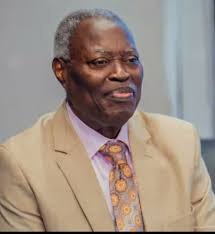
Founder and General Superintendent of the Deeper Christian Life Ministry, William Kumuyi, has firmly ruled out the possibility of any of his biological sons succeeding him as leader of the church, declaring that the ministry belongs to Jesus Christ and should never be treated as a family inheritance.
Key Highlights:
•William Kumuyi rejects the idea of family succession in Deeper Life Bible Church.
•Cleric says the church belongs to Jesus Christ, not any individual or family.
•Kumuyi insists he has no authority to hand over church leadership to his children.
•References apostles Peter, Paul, and John while explaining his position.
•Remarks spark debate on church succession and leadership continuity.
•Religious observers praise commitment to institutional leadership.
•Comments reignite discussion on succession planning in Nigerian churches.

Speaking on the issue of succession, Kumuyi emphasized that spiritual leadership should not be viewed as a hereditary right or personal property that can be transferred from parent to child.
Read Also:
- Kumuyi in Ondo for powerful crusade, says God’s grace upon Akeredolu
- Deeper Life: Kumuyi slams choristers for male ‘jackets’, worldly dance
- Spyro blasts Clerics over silence on Nigeria’s insecurity
According to the respected cleric, Deeper Life Bible Church is a divine institution established for God’s purpose, and therefore no individual has the authority to determine its future leadership based on family relationships.
Kumuyi Rejects Family Succession
Kumuyi stated that he would never hand over the leadership of the church to any of his biological sons because the ministry does not belong to him.
“The reason why I will never hand over Deeper Life Church to any of my biological sons is because the church doesn’t belong to me. It’s Jesus’ church. Nobody has the right to hand it over to his son,” he said.
The renowned preacher stressed that leadership succession within the church should be guided by divine direction and established institutional processes rather than family ties.
Biblical Examples Cited
Explaining further, Kumuyi drew examples from the early Christian Church, noting that prominent apostles did not transfer spiritual leadership positions to their biological relatives.
“Peter did not hand over to his son. Apostle Paul had no son or wife, and John did not hand over the church to his sons,” he stated.
His comments underscore his long-held belief that church leadership should be based on spiritual calling, competence, and God’s guidance rather than blood relationships.
Reactions Trail Kumuyi’s Remarks
The statement has generated widespread reactions among church members, religious leaders, and social media users.
Many praised Kumuyi’s position, describing it as a demonstration of commitment to institutional integrity and responsible church governance.
Supporters argue that his stance reinforces the principle that religious organizations should outlive their founders and be guided by established structures rather than family interests.
However, some commentators maintain that if any of Kumuyi’s children are eventually considered qualified through the church’s recognized processes, they should not be excluded solely because they are members of the founder’s family.
Growing Debate on Church Succession
The issue of leadership succession has become increasingly important within Nigeria’s religious landscape as many prominent church founders advance in age.
While some ministries have adopted family succession models, others have established governance systems involving church boards, councils of elders, and senior clergy to determine future leadership.
Analysts say Kumuyi’s remarks are likely to reignite discussions about accountability, transparency, and institutional continuity within large faith-based organizations.
Deeper Life’s Legacy
Founded in 1973, Deeper Life Bible Church has grown into one of Africa’s largest evangelical ministries, with a presence across Nigeria and several countries around the world.
Under Kumuyi’s leadership, the church has become widely known for its emphasis on holiness, conservative Christian doctrine, discipleship, and extensive evangelistic outreach programmes.
By publicly rejecting the idea of hereditary leadership, Kumuyi reaffirmed his conviction that the future leadership of Deeper Life should emerge through the church’s established structures and God’s leading rather than biological connections.
His comments continue to generate discussions among religious scholars, church members, and governance advocates who view the issue as central to the long-term sustainability of major religious institutions.