British multinational Shell continued operating a major oil pipeline in Nigeria for years even though it knew it was causing widespread pollution, despite a warning from its own staff and its own technical standards, internal documents obtained by the BBC show.
Key points:

Key Points
- A report presented in a UK court alleges that Shell plc continued pumping oil through a leaking pipeline in Nigeria’s Niger Delta for about five months despite evidence of pollution.
- The allegations relate to two major oil spills in the Bodo community in 2008, which caused extensive environmental damage.
- Experts told the court that the spills severely affected mangrove forests, waterways, and local livelihoods dependent on fishing and farming.
- Community representatives claim Shell failed to adequately clean up the pollution and should be held responsible for the resulting environmental and economic losses.
- Shell disputes some of the claims, arguing that oil theft, sabotage, and illegal refining activities are significant contributors to pollution in the Niger Delta.
The files, including emails and presentations, reveal that a senior Shell executive cautioned as early as 2008 about the risks of continuing to pump millions of barrels of unrefined fuel through one of the company’s main pipelines, while it was subject to massive and destructive uncontrolled theft and infrastructure failures.
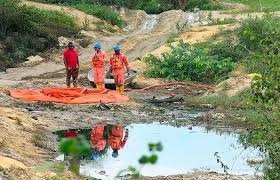
Across Nigeria’s oil-rich southern Niger Delta, decades of oil spills have left a landscape deeply scarred, with wetlands increasingly coated in crude and contaminated sediment.
The BBC obtained the internal documents after Shell disclosed them as part of ongoing legal proceedings in the UK brought by communities living around the creeks and mangroves of the Niger Delta, who want Shell to be liable for the pollution caused by more than 100 leaks stemming from theft and illegal refining of oil between 2011 and 2013 that have damaged their health, environment and livelihoods.
The 60-mile (96.5km) Nembe Creek Trunk Line runs near the riverine community of Bille, which is made up of 45 islands, from inland oilfields to a coastal processing site for exporting.
The pipeline, which Shell sold last year, was one of its biggest, most expensive, and ultimately most problematic bits of infrastructure in Nigeria.
It was capable of carrying up to 150,000 barrels of oil a day, but was repeatedly hit by spills and targeted by illegal oil thieves.
In court papers, the oil firm argues that most of the pollution has been caused by “large-scale oil theft, sabotage” and dozens of illegal refineries, and that its Nigerian subsidiary invested heavily over many years to reduce the risk of and response to spills.
In places like Bille, which the BBC visited last week, residents describe once-rich fishing grounds turning toxic and unusable.
“Before 2011, here was a beautiful area. People play here and go into the river,” 64-year-old fisherman Balafama Augustus Bruce told the BBC.
A claimant in the case against Shell, Bruce said that before the spills, he was able to catch a variety of fish, including sardines, catfish, tilapia, and even oysters, but most are hard to find now, or if caught, appear deformed.
Read also:
- Lagos bags ₦200bn, Delta ₦143bn, Rivers ₦124bn in latest FAAC distribution
- Naira holds steady at ₦1,373/$ as forex market maintains stability
- US, Iran launch new strikes as drones hit Kuwait airport
- Renaissance tops Africa’s oil, gas producers chart
“We used to fish around here. But because of the damage the spills have caused, nobody is fishing here again.
“Because of that, I’ve become poor. I eat from hand to mouth.”
The communities via the ongoing international lawsuit against Shell are seeking $1billion (£742m), including $250 million in compensation and $750 million to clean up the environmental damage.
According to the UN, since 1958, when Shell sent its first shipment of oil from Nigeria, at least 13 million barrels, or 1.5 million tonnes of crude oil, have been spilled in at least 7,000 incidents.
Campaigners have long tried to hold multinational oil firms accountable for environmental damage.
A vocal critic of Shell was Ken Saro-Wiwa, one of Nigeria’s leading writers, who was notoriously executed by the then-military government in 1995, after leading demonstrations against the pollution in his Ogoniland region of the Niger Delta.