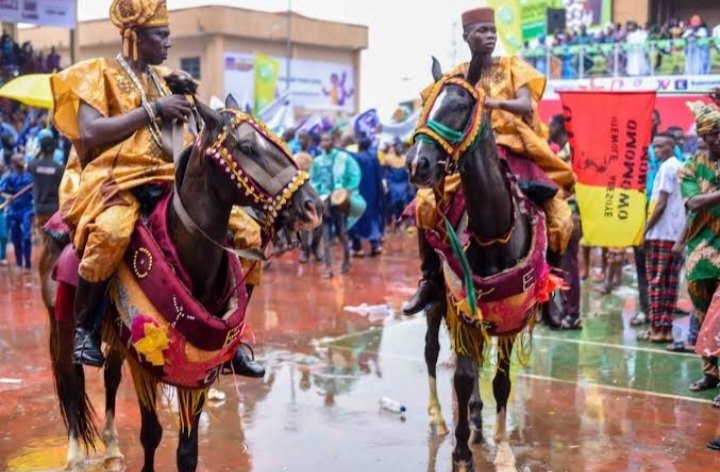
The colourful and glamorous Ojude Oba Festival remains one of Nigeria’s most celebrated cultural events, attracting thousands of visitors yearly to Ijebu-Ode in honour of the Awujale, the traditional ruler of Ijebuland.
Key Highlights:
- The Ojude Oba Festival is held annually in Ijebu-Ode to honour the Awujale of Ijebuland.
- The festival began in the 19th century when early Muslim converts visited the king after Eid-el-Kabir celebrations.
- It later evolved into a major cultural event promoting unity, heritage and Yoruba traditions.
- The celebration is known for horse-riding displays, colourful parades and performances by age-grade groups called “regberegbe.”
- Today, the festival attracts tourists, celebrities and dignitaries from across Nigeria and beyond.
The festival, whose name translates to “the king’s forecourt,” is held annually on the third day after Eid-el-Kabir and symbolises unity, royalty, heritage and cultural pride among the Ijebu people.

Historical accounts trace the roots of the festival to the late 19th century when early Muslim converts in Ijebuland began visiting the palace of the Awujale to show appreciation for the freedom to practise Islam peacefully.
Read Also:
- Over 100 Million people expected for Ojude Oba Festival
- Inaugural Nigerian Food, Culture Festival holds Dec. 16-17 in Lagos
- Nothing Beats a Good Lung
One widely accepted account connects the origin of the celebration to Chief Balogun Kuku, an influential Ijebu leader who embraced Islam and later organised relatives, supporters and friends to pay homage to the monarch after Eid celebrations.
What began as a modest religious gathering gradually evolved into a grand cultural festival recognised across Nigeria and beyond.
The festival is primarily organised to honour the Awujale of Ijebuland, Oba Sikiru Kayode Adetona, while also promoting peace, communal harmony and the preservation of Yoruba cultural heritage.
The celebration is famous for its spectacular horse-riding displays, traditional music, coordinated family processions and colourful parades by age-grade groups known as “regberegbe.”
Over the years, the festival has expanded beyond its Islamic roots and now attracts Christians, traditional worshippers, tourists, celebrities and dignitaries from different parts of the world.
Beyond entertainment, the Ojude Oba Festival has become a major platform for promoting Yoruba culture, tourism and social bonding among Ijebu sons and daughters globally.
Cultural enthusiasts often describe the festival as one of Africa’s most visually stunning cultural gatherings because of its elaborate traditional attire, coordinated family appearances and rich display of heritage.
Today, the festival stands not only as a celebration of culture and royalty but also as a symbol of identity, pride and unity for the Ijebu people.