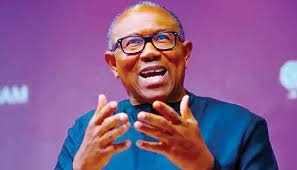
Former Labour Party Presidential Candidate, Peter Obi has called on Nigerians to hold political leaders accountable over the country’s persistent electricity crisis and broader governance failures, insisting that citizens must no longer accept poor leadership as normal.
Key Highlights
•Peter Obi criticises Nigeria’s poor electricity generation
•Former Labour Party candidate compares Nigeria with South Africa’s power supply
•Obi urges Nigerians to speak out against bad governance
•Says citizens have democratic power to hold leaders accountable
•Warns future generations should not continue suffering from poor leadership
•Remarks spark reactions amid Nigeria’s economic and electricity challenges

Speaking at the NDC event, Obi compared Nigeria’s electricity generation capacity with that of South Africa, noting that South Africans openly protest despite generating over 40,000 megawatts of electricity, while Nigeria generates significantly less power with limited public resistance.
According to him, Nigerians must become more vocal in demanding improved governance and better living conditions.
Read Also:
“I was in South Africa, they have over 40k megawatts of electricity and yet people are complaining they have no power when we have just 4k in Nigeria and we’re not complaining,” Obi stated.
The former governor of Anambra State stressed that the country’s current situation is unsustainable and warned against leaving future generations trapped in the consequences of poor governance.
Obi also argued that Nigerians possess the constitutional and democratic power to challenge political leaders and demand accountability at all levels of government.
“This is the time for us to come out to complain. What I’m seeing now, I can change it. Those who refuse to count our votes, we’ll count them with it. Our children cannot go on like this, this country must work, people can no longer take us for granted,” he added.
The remarks by Peter Obi have continued to generate debate across social media and political circles, particularly amid rising concerns over electricity shortages, economic hardship, unemployment, and governance issues in Nigeria.