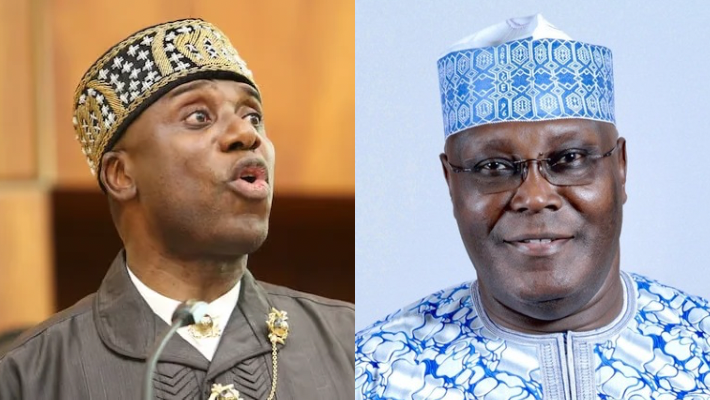
The ADC Presidential Primary entered a decisive stage on Monday as former Vice President Atiku Abubakar and former Rivers State Governor Rotimi Amaechi emerged as the leading contenders for the African Democratic Congress (ADC) presidential ticket ahead of the 2027 general election.
Key Highlights
- ADC Presidential Primary ongoing across 8,809 wards nationwide
- Atiku Abubakar secures endorsements from multiple ADC state chapters
- Rotimi Amaechi challenges Atiku on electability and general election appeal
- Mohammed Hayatu-Deen pushes technocratic and reform-driven agenda
- ADC leadership promises transparent and credible primary process
- Opposition coalition pledges unity ahead of 2027 presidential election

The high-stakes ADC Presidential Primary also features economist and former banker Mohammed Hayatu-Deen, although political momentum appears to favour the two established political heavyweights.
The ADC had earlier cleared all three aspirants following a screening exercise conducted in Abuja, paving the way for direct primaries across the country’s 8,809 wards.
Party leaders, led by National Chairman Senator David Mark, assured members of a transparent and credible process as the opposition coalition seeks a strong candidate capable of challenging President Bola Tinubu and the ruling APC in 2027.
Read Also:
- Kwankwaso allegedly agrees to be Obi’s running mate ahead of ADC presidential primary
- ADC unveils timetable for primaries, fixes May 25 for presidential primary
- ADC faction clears 1,657 aspirants for primaries, disqualifies 212
Atiku Gains Momentum With Multiple Endorsements
As voting progressed, Atiku Abubakar continued to enjoy strong support from several ADC state chapters, including Adamawa, Bauchi, Delta, Niger, Enugu, and Ogun states.
Party leaders backing the former vice president described him as an experienced politician with the national reach and political structure required to confront Nigeria’s economic and security challenges.
In Bauchi State, ADC Chairman Shu’aibu Dankama reportedly described Atiku as a competent and tested leader capable of repositioning the country.
Early ward-level reports also indicated that Atiku was recording strong performances in several voting areas, further strengthening his position in the ADC Presidential Primary.
Political observers attributed his growing advantage to his extensive political network, decades of experience, and strategic role in building the current opposition coalition involving figures such as Nasir El-Rufai and other political stakeholders.
Amaechi Questions Atiku’s Electability
Rotimi Amaechi, however, has remained vocal throughout the contest, insisting that the ADC Presidential Primary should focus on electability rather than political history.
The former Minister of Transportation argued that although Atiku has repeatedly secured party nominations in previous elections, he has yet to translate those victories into winning a presidential election.
Amaechi projected himself as a stronger and fresher alternative, highlighting his achievements in infrastructure and transportation during his years in public office.
He also secured backing from sections of ADC youth groups and stakeholders in oil-producing communities within the Niger Delta, where supporters view him as a viable southern candidate for the presidency.
Despite earlier agreements among aspirants to avoid personal attacks, the contest has witnessed sharp exchanges over zoning, political experience, and electoral viability.
Hayatu-Deen Pushes Reform Agenda
Meanwhile, Mohammed Hayatu-Deen has continued to campaign on a platform centred on competence, economic reforms, and fresh leadership ideas.
The respected economist and banker reportedly attracted support from some stakeholders in the South-West who favour progressive and technocratic leadership.
Although his support base appears smaller compared to Atiku and Amaechi, analysts believe his participation has added policy depth and intellectual substance to the ADC Presidential Primary.