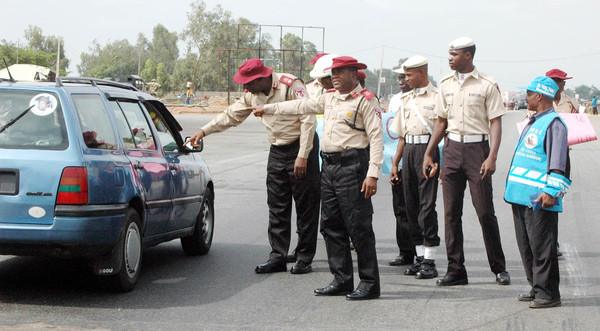
The Federal Road Safety Corps (FRSC) has apprehended and prosecuted 35 drivers for using fake diplomatic number plates and overloading in Enugu State.
Fourteen drivers were apprehended and prosecuted for fake diplomatic number plate violations and 21 drivers for overloading.

Key Highlights:
The FRSC Corps Marshal, Shehu Mohammed, disclosed this on Friday, while speaking on the ongoing ‘Operation Guduma‘ in Enugu State.
Represented by the FRSC Corps Commander, Dorothy Ikpeme, the corps marshal said that ‘Operation Guduma’ is about closing two critical gaps: security risks from fake diplomatic plates and safety risks from overloading.
According to him, both directly endanger lives and undermine law enforcement.
The corps marshal said that the operation’s targeted enforcement is aimed at eliminating the illegal use of diplomatic/fake number plates.
He noted that the operation would also clampdown on the menace of overloading and mixed loading on highways.
“The corps frowns at the misuse of diplomatic plates which poses a serious security threat by obstructing investigations, while overloading and mix-loading continue to cause avoidable crashes and loss of lives,” he said.
Read Also:
- Court restrains Police, FRSC from imposing fines over third-party insurance
- Easter: FRSC bars 3 drivers over high alcohol levels in Calabar
- Easter: FRSC deploys 569 personnel, Patrol Vehicles to manage traffic, ensure safety in Enugu
The FRSC boss noted that the operation would focus on apprehension and prosecution of vehicles using diplomatic plates illegally, and fake number plates, such as NYCN, NUP, AMB, UN-AMB, PEACE AMBASSADOR and NANS among others.
“The operation, which will last for five days, will lead to improved traffic flow on high-density corridors and increased visibility of FRSC patrol teams to deter violations in the state.
“The operation is involving deployment of patrol vehicles, ambulances, tow trucks, and motorbikes, working closely other security agencies,” he said.
He noted that the operation remains a warning and an opportunity for vehicle owners to correct vehicle documentation and negative loading practices, adding: “The goal is safer roads, not conflict.”