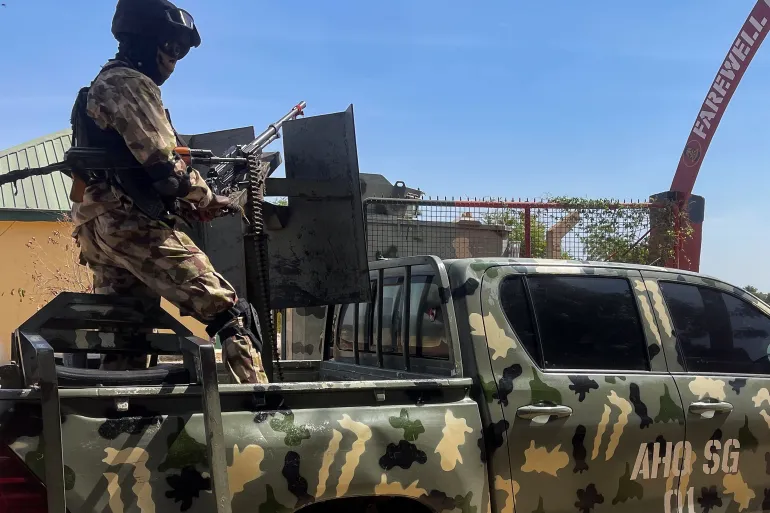
The reported killing of Abu-Bilal al-Minuki, described by U.S. President Donald Trump as the “second in command of ISIS globally” and “the most active terrorist in the world,” has renewed global debate on the effectiveness of leadership decapitation in counterterrorism operations.
Key Highlights:
- Killing Abu-Bilal al-Minuki is a tactical win, not a final solution.
- Islamic State West Africa Province and Boko Haram may respond with retaliatory attacks.
- Terror groups in the Lake Chad Basin are decentralized and adapt quickly.
- Success depends on intelligence and regional cooperation, including United States Africa Command.
- Long-term peace depends more on governance and development than military strikes.

The strike, which reportedly took place in the Lake Chad Basin, a vast transnational zone spanning Nigeria, Chad, Niger, and Cameroon, also claimed the lives of several of his close lieutenants, according to security sources. While the development has been hailed as a major operational success, analysts caution that the long-term impact of eliminating high-value targets like al-Minuki depends less on the strike itself and more on what follows.
Read Also:
- Sheikh Gumi describes killing Of ISIS commander as “religious obligation”
- Military reveals fresh details of slain ISIS commander’s activities in Nigeria
- Nigerians react over killing of senior ISIS commander
Security and intelligence communities widely describe ISIS not as a conventional military hierarchy, but as an “adaptive network” capable of surviving leadership losses by reorganising its structure. In this model, the elimination of a commander does not necessarily dismantle the group’s operations. Instead, it often triggers redistribution of authority across decentralized cells, allowing continuity even under pressure.
Following such high-profile eliminations, extremist organisations typically experience three immediate shifts: Fragmentation of cells, smaller units operate more independently, making detection and disruption more difficult. Short-Term Retaliatory Attacks: Groups often escalate violence to project strength and resilience. Succession Struggles: Competing factions may emerge, either weakening coordination or intensifying radicalisation.
Security analysts warn that while leadership targeting disrupts command structures, it rarely dismantles the ideological foundation that sustains extremist movements. A recurring concern in counterterrorism operations is the risk of reduced operational pressure following the elimination of a high-value target. Experts caution that easing military pressure prematurely can create a vacuum that insurgent groups quickly exploit.
In many cases, surviving operatives may, launch revenge-driven attacks to reassert relevance, intensify propaganda campaigns, portraying slain leaders as martyrs, and shift towards asymmetric warfare, including kidnappings, ambushes, and coordinated bombings. This pattern has been repeatedly observed across the Sahel and Middle East, where ISIS and Al-Qaeda affiliates have regrouped after leadership losses.
In Nigeria, security experts say groups such as Boko Haram and ISIS West Africa Province (ISWAP) have historically shown similar adaptive behaviour when military pressure weakens or becomes inconsistent. Despite the risks, counterterrorism analysts maintain that targeted elimination of terrorist leaders remains a critical pillar of global security operations. They said removing experienced commanders interrupts, logistics, coordination, and battlefield planning.
Leadership losses often reduce morale and increase mistrust within terrorist ranks. Captured communications, devices, and documents frequently provide actionable intelligence for follow-up operations. High-ranking operatives often manage international funding channels, recruitment pipelines, and arms trafficking networks. Institutions such as the U.S. Department of Defense have consistently argued that leadership targeting when combined with sustained ground operations significantly degrades the long-term operational capacity of extremist organisations.
Nigeria’s counterinsurgency campaign, particularly in the North-East, has increasingly relied on cooperation with international partners, especially the United States. Security and defence sources say the partnership is driven by operational necessity and intelligence superiority. The United States provides advanced surveillance capabilities, including satellite monitoring, drone reconnaissance, and signals intelligence that significantly enhance battlefield awareness for Nigerian forces.
Through programmes linked to the U.S. Africa Command, Nigerian troops also receive specialised training in counter-insurgency operations, explosive ordnance disposal, and urban combat tactics. Military assistance packages further include armoured vehicles, communications equipment, and reconnaissance tools essential for modern warfare.
Analysts note that terrorist organisations such as ISIS operate transnationally, making intelligence sharing and coordinated tracking of financial and logistical networks critical to disrupting their operations. This collaboration is not limited to Nigeria, but forms part of broader regional security frameworks involving institutions such as the African Union and multinational coalitions across the Sahel region.
Experts stress that the killing of a terrorist leader should be viewed as a tactical victory, not a final solution. Without sustained governance, community stabilisation, and deradicalisation efforts, military gains risk being temporary. ISIS has increasingly shifted its operational focus to Africa, with estimates suggesting that nearly 90% of its attacks now occur in sub-Saharan regions. Its Nigeria-based affiliates remain among the most active globally.
President Bola Tinubu reportedly described the operation that eliminated al-Minuki as a “daring joint strike” that delivered a significant blow to the terrorist network. However, analysts caution that the true measure of success lies beyond the battlefield. Across multiple conflict zones, the aftermath of leadership eliminations has shown that the most critical phase of counterterrorism begins after the headlines fade within communities vulnerable to recruitment, fear, and renewed cycles of violence.