The newly inaugurated President of the Ijaw National Congress (INC), High Chief Macdonald Igbadiowei, has pledged to pursue the creation of Toru-Ebe and Oil Rivers States, saying the move is necessary to address what he described as long-standing political marginalisation of the Ijaw ethnic nationality in Nigeria.
Key Highlights:
- New INC President vows to push for creation of Toru-Ebe and Oil Rivers States.
- Calls for expanded political representation for Ijaw communities across Nigeria.
- Advocates increase of Bayelsa local government areas from 8 to 24.
- Promises legal and constitutional action on issues affecting Ijaw people.
- Outgoing INC leadership highlights five years of reform and international recognition.
Igbadiowei made the pledge shortly after taking the oath of office at the inauguration of the ninth executive council of the INC held in Warri, Delta State.

He said the proposed states would help expand political space and correct what he called structural exclusion affecting Ijaw communities, particularly in Ondo and Edo states.
“We shall pursue to a logical conclusion the creation of Toru-Ebe and Oil Rivers states in order to create more political space and address the marginalisation of the Ijaw people,” he said.
Read Also:
- Eradiri rallies support for new INC leadership
- Ijaw group cautions INC to obey court orders on election of new executives
- Gov Diri urges INC to suspend new exco inauguration as over leadership crisis, court dispute
The INC president outlined a broad agenda focused on unity, youth empowerment, political restructuring, environmental protection, and improved welfare for Ijaw communities across the Niger Delta.
He also called for the expansion of Bayelsa State’s local government structure from eight to 24, arguing that the current arrangement limits political and economic opportunities for the people.
According to him, the INC will also pursue enforcement of the Supreme Court ruling on delineation in the Warri Federal Constituency and seek redress for perceived injustices affecting Ijaw communities in various parts of the country.
“Our land is richly blessed with natural resources and accounts for over 80 percent of Nigeria’s foreign exchange earnings, yet our people remain marginalised, excluded, and deprived of control over these resources,” he said.
He warned that environmental degradation, youth unemployment, and cultural erosion remain major challenges facing Ijaw communities.
Igbadiowei further stated that the INC would use lawful and constitutional means to address the plight of the Ibeno community in Akwa Ibom State, which he said had suffered neglect linked to oil operations in the area.
He urged unity among Ijaw stakeholders and called on traditional rulers, elders, and youth leaders to support the new executive council in achieving its goals.
“This is a time for a new beginning. Let us speak with one united voice and build an Ijaw nation that future generations will be proud of,” he added.
Earlier, outgoing INC President Prof. Benjamin Okaba described his five-year tenure as both challenging and transformative, noting that the organisation had regained visibility and international recognition.
He said his administration helped reposition the INC through advocacy, intellectual engagement, and institutional strengthening, including admission into the Unrepresented Nations and Peoples Organisation (UNPO).
Okaba, however, noted persistent financial and structural challenges, urging the new leadership to prioritise reconciliation and strengthen the organisation’s funding base and global advocacy efforts.
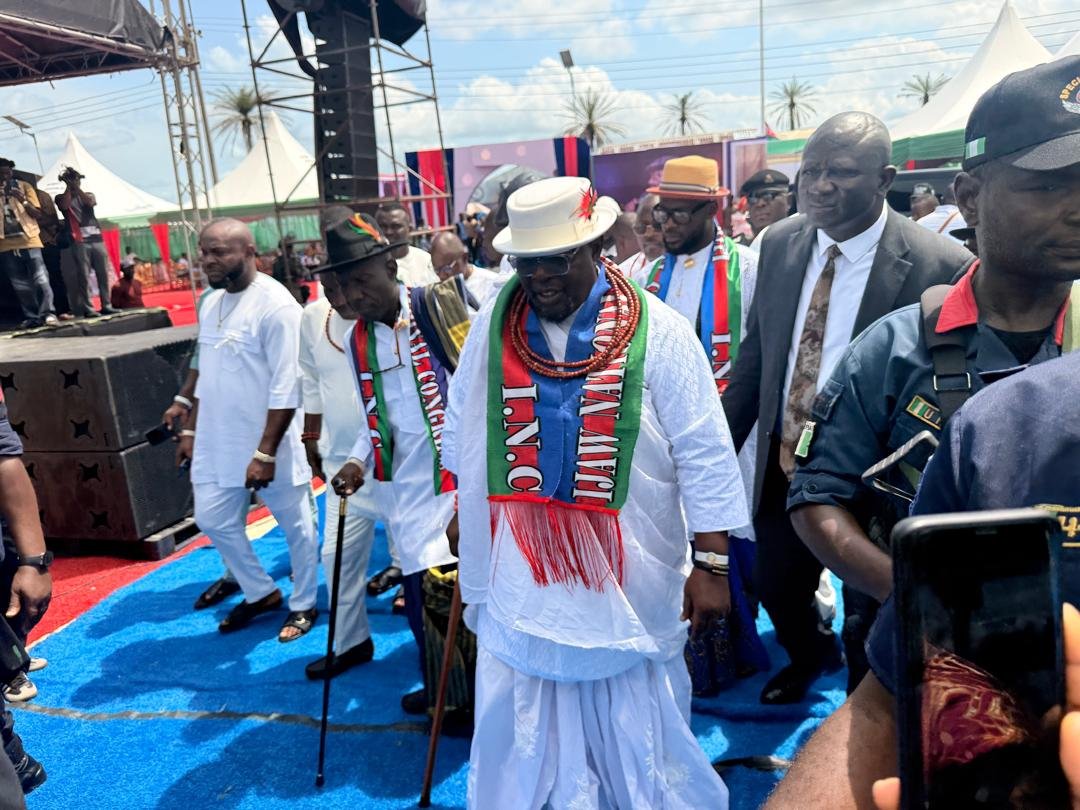
The inauguration ceremony attracted traditional rulers, youth groups, women organisations, and delegates from across Ijaw communities.