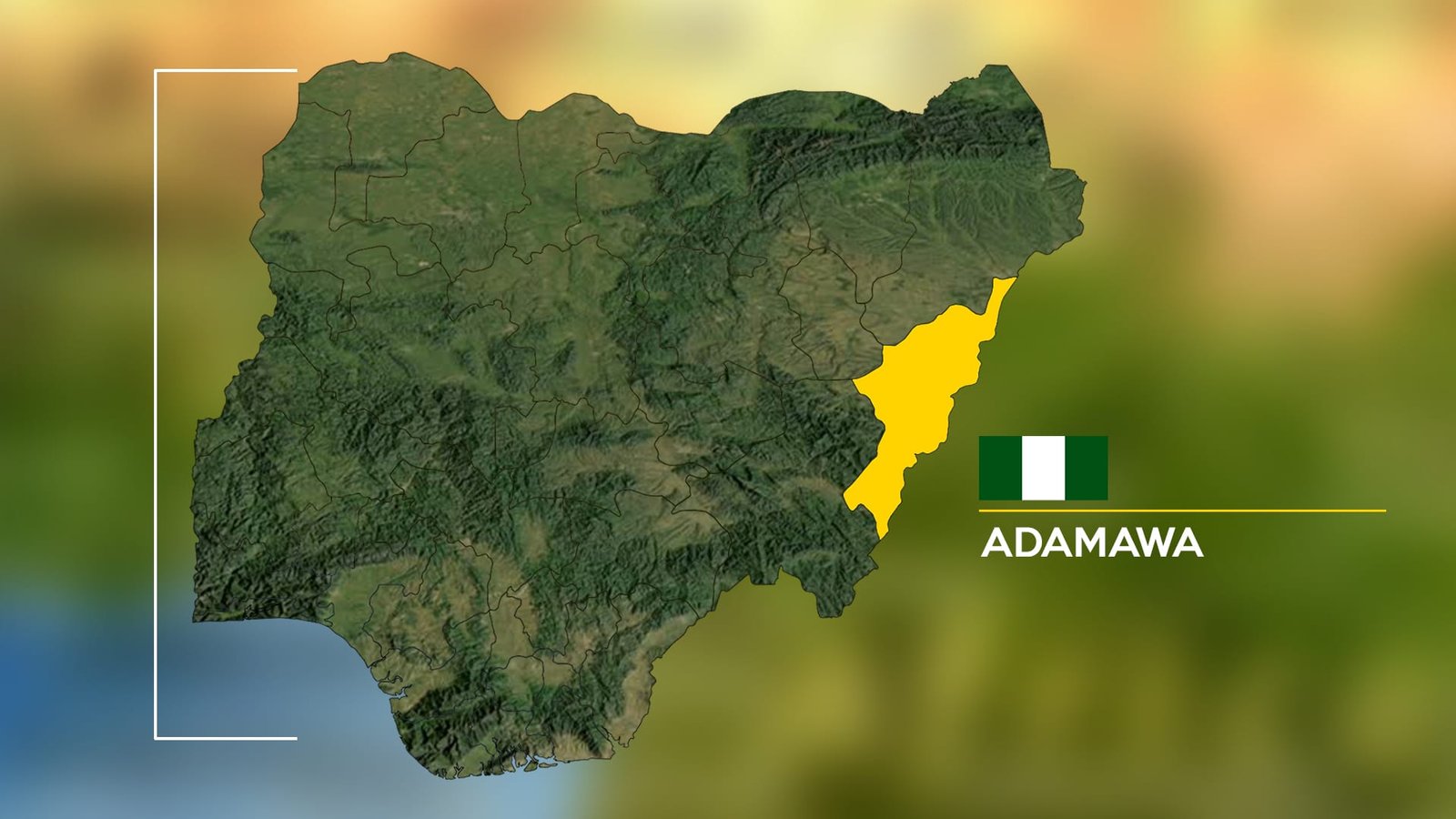
The explosive nature of Adamawa State politics can be seen by keen observers from the intense political rivalry that has become synonymous with political gladiators in the state based on the contending interests. In 1991, the Atiku Abubakar -late Bala Takaya inconclusive gubernatorial election that was later cancelled was taken literally without much interrogation, even as the political incident threatened the security of the state.
In 2023, a more severe version of the 1991 incident again occurred. Political pundits called it a civilian coup against democracy when the Resident Electoral Commissioner, Hudu Ari, tried to oust Governor Ahmadu Fintiri, from a minority ethnic group in the state, in an orchestrated attempt to plant Senator Binani, a Fulani as governor. On the surface, it looked like the two leading political parties (APC versus PDP) in the state slugging it out to claim the top job in Adamawa State, but deep down, there was an undercurrent as was the case in 1991.
It was this recurrent event in the state’s political outcomes that has prompted an examination of the politics of Adamawa State, to unearth the true reasons behind the constant politically motivated election turmoil in the state during each election circle. For a state, that is multi-religious and with over 85 indigenous ethnic groups, the opposition to give the state a Fulani identity after Gongola State was split into two on August 27, 1991, has created a deep fear of marginalisation and subjugation in the psyche of the overwhelming 85 ethnic nationalities who by this new imposed identity became minorities in their ancestral home state.

The new identity of the mother Gongola State (now Adamawa) has sparked off various movements to reverse the change, resulting in the birth of movements like the Adamawa Northern Christian Elders’ Forum, the Adamawa Elders’ Council, the Adamawa Unity Forum (AUF) and now, the Gongola Peoples’ Forum (GPF).
Consequent upon the emergence of these pressure groups, it became crystal clear that the thread of the recurrent election turmoil, particularly at the governorship level in the state was not a party thing, but a deliberate and calculated attempt by the majority ethnic nationalities to resist domination by the minority Fulbe ethnic group which was the last to arrive the state in 1804, while by the 1750s, the indigenous ethnic nationalities had established themselves in the area later to be known as Gongola and were thriving.
Giving credence to the fear of the majority indigeneous ethnic nationalities of being politically subjugated by the minority Fulbe ethnic group, the National Chairman of the Gongola Peoples’ Forum (GPF), Markus Natina Gundiri, speaking through the forum’s National Mobilisation Secretary, Mr. Ibrahim Bebetu, accused the Fulani of taking over the state through a ‘cult’ like power behind the scene using the invisible hand of the Sokoto Caliphate. The Fombina kingdom, he said, created by Haman Adama, the flagbearer of the 19th century jihad in the state to whom the state by military fiat was named after, was used as founder of the state to hijack its ownership for the Fulanis, making the rest of the majority ethnic nationalities subjects in their own state.
According to Gundiri, after the jihad, the Fulani kingdom established by Haman Adama collaborated with the British colonisers “to place them as rulers over our people who were indigenous here before they arrived!” He asserted that, “because of their selfish arrangement with the British, the politics of Adamawa State since then became a struggle to reassert the indigenous peoples identity against the minority Fulani.”
“So, as you can see, our politics here is the politics of identity against domination by a feudal system that operates on a highly classified systemic racism. But now, with the consciousness established by the GPF amongst our peoples, they’re threatened. That’s why they wanted to steal the 2023 gubernatorial election by force. Their money could not help as before, so, they infiltrated the federal electoral body in the state through the commissioner! Too bad for them.”
He further revealed: “Our people now know the truth and are after their identity as indigenous peoples of Gongola, not the dirty money for vote buying. Of course, our people are ready to collect their money because they now know that the money is from our commonwealth that’s being shared based on feudal previllages, a tradition that has impoverished them, the majority in their ancestral land. So, be rest assured that Adamawa politics is and has been politics of struggle for indigenous collective identity against feudalism and so long as they continue to work for their feudal system without regard to our freedom, elections will continue to be explosive.
” We are not backing down. Anybody who wants to be our governor must recognize our majority status, our cultural identity and leadership. Above all, he or she must be indigenous here and must believe in democracy not feudal sophism.”
The indigenous ethnic nationalities in the state, he explained, are not against the Fulani tribe, but are against their feudal system which the indigenous ethnic nationalities believe work against their overall identity and prosperity. Furthermore, the majority indigeneous ethnic groups have zero tolerance for religious discrimination. This tolerance for all religious leanings is a core principle of the GPF, which acknowledges that citizens have the constitutional right to religious freedom.
A Fulani acquittance who is aspiring to contest the 2027 governorship election, said that since the creation of the state only two Fulanis have ruled as governors, naming Bamanga Tukur and Muritala Nyako as the beneficiaries. In puncturing the allegation of political dominance, he argued that politics is a game of numbers and strategy. “You don’t wait to be given elective positions on the plater of gold, you have to work for it. I therefore don’t see any reason some people are talking about domination in a democracy.”
He accused the GPF of attempting to introducing identity politics into the state, saying that identity politics has adverse effects for the nation’s democracy. Pressed to explain why all the presidential candidates, ministers and presidents from the north are mostly Fulani, he said no one in a democracy is stopped from contesting or lobbying for appointive positions, adding that “I believe in negotiation rather than gang up.”
As things stand, it’s becoming obvious that the indigenous ethnic nationalities in Adamawa State, through organizations like the GPF, will be a pivotal role, and may be the beautiful bride to be courted by politicians seeking elective office as the 2027 general elections draw closer.
Read also:
- Coalition vows to end ‘Feudal Politics’ in Adamawa, backs Fintiri’s legacy
- GPF takes anti-partisan campaign across Adamawa, preaches unity, self-determination
- 2027: Adamawa in search of a grassroots politician
The GPF has become prominent and vocal in championing the crusade for political, cultural, social and economic recognition for the peoples of the Gongola region, especially since Governor Fintiri created additional chiefdoms and emirates in the state. Before Governor Fintiri broke the feudal yoke by creating the new chiefdoms and emirates, subjects of Fombina Emirates used to ride hours on horses and trecked from unbelievable distances to pay homage on sallah days to the Lamido of Adamawa!
For the 2027 polls, the GPF and other pressure groups, notably the Adamawa People’s Forum (AUF) which has established a reconable tradition on the political tuff of the state, the 3kT, and all cultural associations of the 85 ethnic nationalities in the Adamawa State, hold the ace in deciding who succeeds Governor Fintiri at the end of his tenure. Political actors seeking to govern the state may ignore at their own peril.
Joseph Fisayo, a public affairs analyst and commentator writes from Abuja.