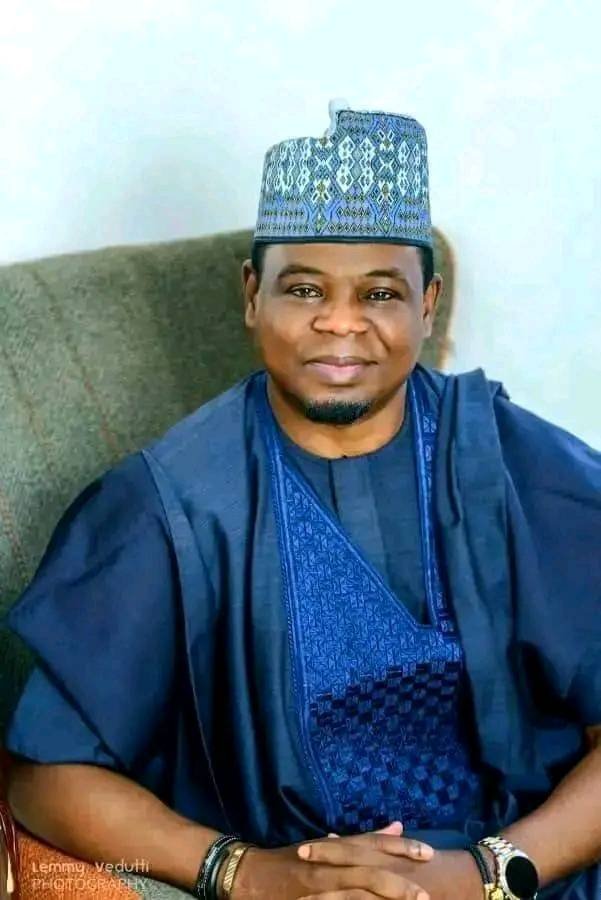
The resignation of Maurice Vunobolki from the All Progressives Congress (APC) is sending ripples through Adamawa State’s political landscape, raising fresh concerns about internal party democracy and the credibility of ongoing political processes ahead of future elections.
Vunobolki, a gubernatorial aspirant under the APC, formally announced his resignation on Monday, April 13, 2026, during a press briefing, bringing to an abrupt end his short-lived return to the party.
His decision, he said, was driven by “recent developments” that he believes undermine fairness, transparency, and the promise of a level playing field within the party.

The development marks a significant turnaround for the politician, who only rejoined the APC on February 23, 2026, alongside supporters spread across all 21 local government areas of Adamawa State.
His defection from the Peoples Democratic Party (PDP) at the time was widely seen as a strategic move ahead of the state’s political cycle.
Vunobolki said his return to the APC was based on assurances tied to the state’s political leadership, including Governor Ahmadu Fintiri.
However, he now claims those assurances have been honored.
Central to Vunobolki’s grievances are allegations that the internal mechanisms of the APC in Adamawa State have been compromised.
He accused a committee tasked with designing the framework for the party’s congresses of being dominated by aspirants allegedly backed by the government, thereby skewing the process in their favour.
He also pointed to alleged irregularities in the party’s membership registration exercise.
According to him, there were instances where individuals’ National Identification Numbers (NINs) were used without their consent to inflate delegate strength in key areas such as Yola North, claims that, if substantiated, could raise serious questions about the integrity of the process.
He referenced his experience during the 2019 APC primaries, where he reportedly spent ₦20 million on nomination forms to contest for the Adamawa South senatorial seat but was ultimately sidelined.
He attributed that outcome to the alleged imposition of automatic tickets for incumbent lawmakers.
By drawing parallels between past and present experiences, the former aspirant suggested a pattern of internal practices that, in his view, prioritise imposition over democratic competition.
Political observers say Vunobolki’s resignation could have broader implications for the APC in Adamawa, particularly if it triggers further defections or weakens party cohesion at a critical time. His call for supporters across the state to also withdraw from the party adds another layer of uncertainty to the unfolding situation.
While the APC has yet to officially respond to the allegations, the development highlights ongoing debates about internal democracy within political parties in Nigeria—an issue that continues to shape voter confidence and electoral outcomes.
Read also:
- Vunobolki enters Adamawa governorship race, raises stakes within APC
- Shettima welcomes Gov. Fintiri to APC, declares him party leader in Adamawa
- Fintiri declared APC leader in Adamawa, vows to deliver state in 2027
Despite his departure, Vunobolki maintains that his political journey is far from over. He emphasized that his decision was the result of extensive consultations and a desire to align with a platform that guarantees fairness and equal opportunity.
He reiterated his commitment to democratic ideals, stressing that political power must reflect the will of the people rather than be determined through manipulation. He also assured supporters that a new political direction would soon be unveiled.
As Adamawa’s political scene continues to evolve, Vunobolki’s next move, and the response from both the APC and other political stakeholders, will be closely watched.