
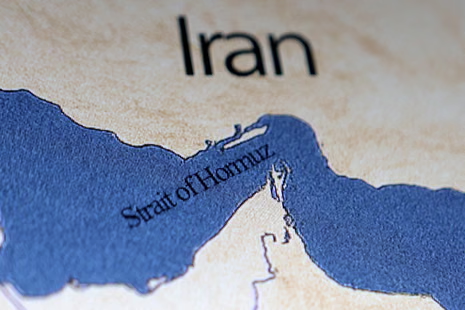
The Strait of Hormuz has been completely shut to oil shipments despite a U.S.-backed ceasefire, raising concerns over compliance and deepening instability in global energy markets.
Maritime analysts report that no oil tankers have passed through the strategic waterway in recent days, leaving thousands of vessels stranded and waiting for clearance.

The disruption highlights the fragility of the truce between the Donald Trump administration and Iran, which had hinged on reopening the critical shipping lane.
Industry tracking data shows a backlog of more than 3,000 vessels near the strait, including oil tankers and cargo ships. While limited transit has occurred, most operators remain unwilling to risk passage due to ongoing security threats.
The crisis has left an estimated 20,000 seafarers stranded across the Persian Gulf, according to maritime authorities. Analysts cite fears of naval mines, missile strikes, and drone attacks as key reasons for continued disruption, even without active hostilities.
Read Also:
- Iran accuses U.S. of ceasefire violation as tensions rise over Strait of Hormuz
- UAE backs US-led coalition to protect Strait of Hormuz as tension rises in Iran
- UK-led 40-nation coalition pushes diplomatic solution to reopen Strait of Hormuz amid global energy crisis
Shipping companies are also facing sharply increased war-risk insurance costs, further discouraging movement through the region. As a result, cargo is being rerouted through alternative ports in Oman and the United Arab Emirates, leading to longer delivery times and higher logistics costs.
Iran has reportedly imposed additional conditions on passage through the strait, including proposals to levy fees on oil shipments, a move seen by analysts as leverage in ongoing geopolitical negotiations.
The International Maritime Organization has raised concern over the scale of disruption, warning of broader implications for global trade stability.
The Strait of Hormuz accounts for roughly 20% of global oil supply, making the continued closure a major risk factor for international energy prices and supply chains.
Despite ongoing diplomatic efforts, including expected talks between U.S. and Iranian officials in Pakistan, the situation remains unresolved.
While direct military confrontation has eased, uncertainty over maritime security continues to cast doubt on the stability of one of the world’s most critical oil corridors.