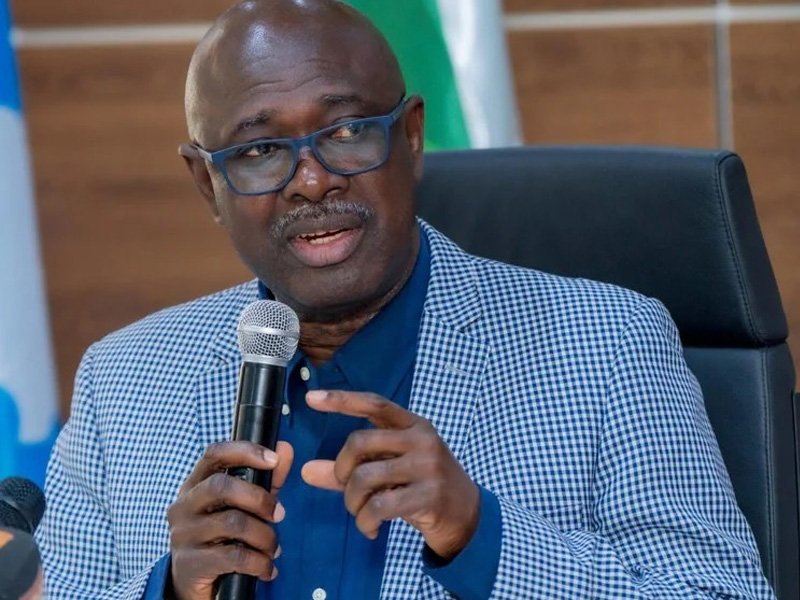
Nigeria’s renewed drive to position itself as a top destination for global oil and gas investment will take centre stage next month as the Minister of State for Petroleum Resources (Oil), Heineken Lokpobiri, is set to speak at the Invest in African Energy Forum in Paris.
His participation at the forum comes at a time when Nigeria’s oil and gas sector is witnessing renewed momentum, driven by fresh investments, policy reforms, and increased project activity.

In 2025, the country approved 28 new field development plans valued at about $18.2 billion, unlocking an estimated 1.4 billion barrels of crude reserves.
This progress is largely attributed to structural reforms, particularly the implementation of the Petroleum Industry Act, which has improved transparency and fiscal stability.
Alongside enhanced security measures and operational efficiency, the changes have supported a recovery in crude oil production, now estimated at between 1.6 and 1.7 million barrels per day.
Read Also:
- Ewhrudjakpo: NDDC halts projects commissioning in Niger Delta, as Lokpobiri, PANDEF eulogise late Bayelsa Dep Gov
- Lokpobiri clarifies remark on Frontier Exploration fund
- Local Content: Lokpobiri commends Tamrose for growing vessel fleet
Nigeria’s upstream sector is also evolving, with divestments by international oil companies paving the way for greater participation by indigenous firms.
This shift has contributed an additional 200,000 barrels per day to national output, signaling increased local capacity and resilience.
In the downstream segment, the operational ramp-up of the Dangote Refinery, with a capacity of about 650,000 barrels per day, marks a significant milestone.
The facility is expected to meet domestic fuel demand while boosting exports of refined products across Africa.
Ongoing infrastructure upgrades, including work on the Trans-Niger Pipeline, further support the sector’s expansion.
Gas development is also gaining prominence, with projects like the Ajaokuta–Kaduna–Kano Gas Pipeline aimed at improving domestic utilisation and supporting industrial growth, in line with energy transition goals.
For European investors seeking reliable and diversified energy partners, Nigeria offers a compelling mix of scale, proximity, and evolving opportunities.
Lokpobiri’s appearance at the forum is expected to showcase upcoming licensing rounds, investment-ready assets, and partnership prospects across the oil and gas value chain.
As global investors increasingly turn to Africa, Nigeria’s reform-driven approach positions it as a key player, with the Paris forum serving as a critical platform for engagement, deal-making, and long-term collaboration.