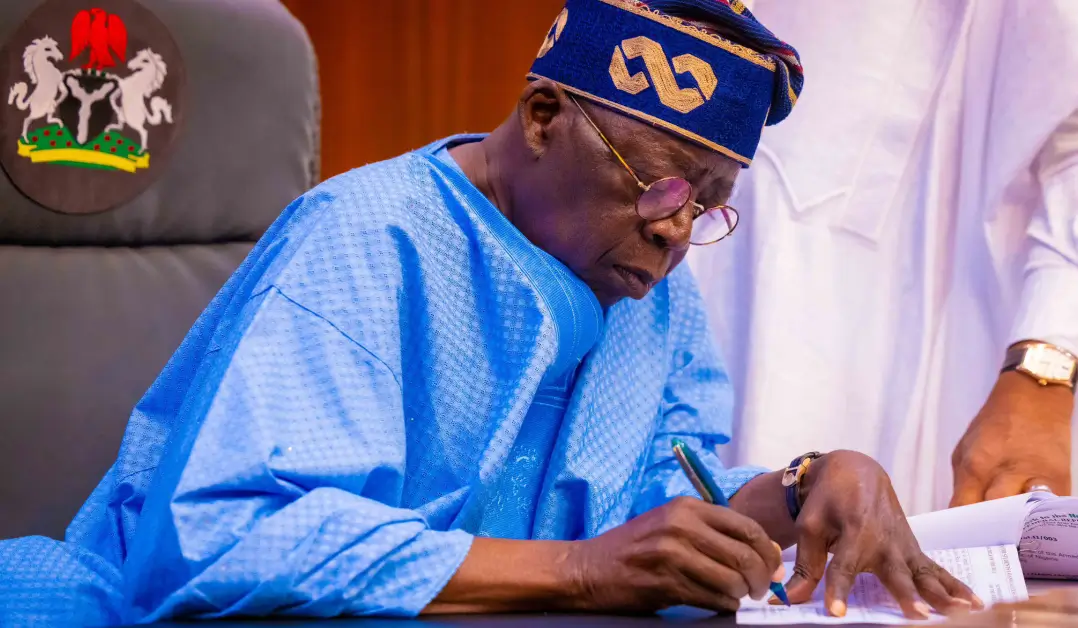
President Bola Tinubu has approved a N3.3 trillion payment plan to clear longstanding debts owed to electricity generation and gas supply companies, in a major effort to stabilise Nigeria’s struggling power sector.
The Presidency said the decision followed a comprehensive verification of liabilities accumulated between 2015 and 2025 under the presidential power sector financial reforms programme.

The move is expected to ease the chronic liquidity crisis that has hindered electricity generation and supply nationwide.
Nigeria’s power sector debt, estimated at about N6 trillion by operators, stems largely from structural issues that emerged after the 2013 privatisation.
Under the current framework, generation companies (GenCos) sell electricity to the Nigerian Bulk Electricity Trading Plc, which then supplies distribution companies (DisCos).
However, poor revenue collection, inadequate metering, electricity theft, and below-cost tariffs have left DisCos unable to fully pay for power supplied, creating a funding gap that has cascaded across the value chain.
According to a statement by presidential spokesman Bayo Onanuga, the N3.3 trillion represents a “full and final settlement” of verified obligations.
So far, 15 power generation companies have signed agreements covering N2.3 trillion.
The federal government has already raised N501 billion to kick-start the payments, with N223 billion disbursed and additional releases in progress.
Officials say the intervention will improve cash flow across the sector, enabling GenCos to maintain operations and settle debts to gas suppliers an issue that has frequently disrupted power generation.
Read Also:
- Tinubu approves AI surveillance system to combat insecurity in Plateau
- Tension in Niger Delta over pipeline surveillance contracts: Group writes Tinubu
- Tinubu names new PTDF Boss, renews TCN Chief’s tenure
Special Adviser on Energy, Olu Verheijen, described the initiative as a step toward restoring investor confidence and improving system reliability.
She noted that the programme is part of broader reforms, including metering expansion and service-based tariffs tied to supply quality.
Despite an installed capacity of about 13,000 megawatts, Nigeria typically generates between 4,000 and 5,500 MW due to gas constraints, grid instability, and aging infrastructure.
Transmission, managed by the Transmission Company of Nigeria, remains a major bottleneck, while high technical and commercial losses continue to plague distribution.
The government expressed optimism that clearing the debt backlog will unlock investment, boost generation, and ultimately deliver more stable electricity to homes and businesses.
Tinubu also signalled a second phase of reforms expected later this year, aimed at strengthening the entire electricity value chain and ensuring long-term sustainability.
The administration maintains that improved power supply is critical to economic growth, job creation, and reducing the cost of doing business in Nigeria.