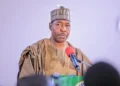
The Taraba State Government has graduated the first cohort of its National Health Fellows Programme and inducted a new set of participants, in a move aimed at strengthening primary healthcare delivery and promoting youth-led solutions.
The ceremony, held at the state secretariat in Jalingo, signalled more than a routine handover. It underscored the administration’s broader commitment to addressing gaps in healthcare access, particularly in rural communities.

A key feature of the programme is the deployment of young professionals across the state’s 16 local government areas, where they support service delivery, community outreach, and public health initiatives.
The Commissioner for Health, Bordiya G. Buma, described the graduation of the pioneer cohort as a significant milestone. He noted that within a year, the fellows had shown capacity to tackle pressing healthcare challenges in underserved areas.
Read Also:
- Displaced Tiv Christians protest in Taraba, demand justice, return to ancestral homes after 7 years
- SEMA reaffirms transparency in distribution of relief materials to Taraba flood victims
- APC congress dispute heads to court as Taraba power struggle deepens
According to him, their work has contributed to noticeable improvements in primary healthcare, including increased awareness of essential services and stronger engagement between health workers and local communities.
“This moment reflects the impact young people can make when given the right opportunities,” he said, commending the fellows for their dedication and innovation.
Bridging healthcare gaps
Like many parts of Nigeria, Taraba continues to face disparities in access to healthcare, especially in hard-to-reach locations. The fellowship programme is designed to address this challenge by leveraging human resources to complement existing infrastructure.
By placing trained fellows directly within communities, the initiative seeks to narrow the gap between policy decisions and implementation at the grassroots level.
Observers say such models are gaining relevance as governments explore more sustainable and cost-effective approaches to improving health outcomes.
Reports from the field indicate that the pioneer cohort contributed to better coordination of services, increased community participation in health programmes, and improved trust in primary healthcare centres.
With the onboarding of a second cohort, expectations are high that these gains will be sustained and expanded. Dr. Buma urged the new fellows to build on the foundation laid by their predecessors and approach their responsibilities with commitment and purpose.
He reaffirmed the commitment of Governor Agbu Kefas to youth empowerment, describing the programme as a strategic investment in both human capital and the state’s healthcare system.
Call for collaboration
Stakeholders at the event also stressed the importance of collective action in improving healthcare delivery.
The Executive Secretary of the State Primary Health Care Agency, Nuhu Tukura, emphasised that achieving better health outcomes requires the involvement of communities, development partners, and institutions—not just healthcare professionals.
Similarly, the State SWAp Desk Officer, Reuben Nwunuji, highlighted the impact made by the pioneer fellows and encouraged the new intake to surpass those achievements.
He also disclosed that discussions are ongoing regarding the possible absorption of fellows into the federal civil service, a step that could enhance motivation and ensure continuity.
For many of the graduating participants, the fellowship has been both a learning experience and an opportunity to make meaningful contributions. Several expressed appreciation to the state government and relevant agencies for the platform, noting that their field experience improved their skills and deepened their understanding of community health needs.
As the programme transitions into a new phase, the focus remains on sustaining progress, scaling impact, and adapting to the evolving healthcare demands of the population.