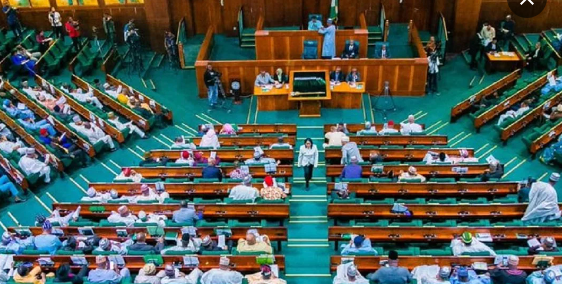
The House of Representatives has commenced a major push to reform the country’s planning and budgeting system as part of broader efforts to steer the economy towards a $1 trillion valuation.
The initiative will take shape through a high-level national policy dialogue designed to bring together key actors from government, the private sector, and policy institutions to rethink Nigeria’s fiscal strategy.
The two-day engagement is scheduled for April 14–15, 2026, at the Bola Ahmed Tinubu International Conference Centre in Abuja.

Chairman of the House Committee on National Planning and Economic Development, Rep. Gboyega Isiaka, said the dialogue is aimed at resolving longstanding inconsistencies between national development plans and actual budget implementation, an issue he noted has significantly constrained sustainable growth.
According to Rep. Isiaka, Nigeria’s current growth rate of 3.54 percent falls short of what is required to meet its long-term economic ambitions.
He stressed that a departure from “business-as-usual” is necessary, calling for a more deliberate alignment between planning and execution.
“Growth must be accelerated and anchored on a structured, implementable national development framework,” he said, adding that previous planning efforts have often failed due to weak execution, lack of continuity, and limited adaptability to changing economic realities.
Also speaking, the Deputy Chairman of the House Committee on Budget and National Planning, Rep. Clement Jimbo, highlighted the central role of strategic planning in national development, warning that ineffective planning systems could undermine economic progress.
Read also:
- House Of Reps committee to host inaugural downstream week to reform Nigeria’s petroleum sector
- Reactions as House of Reps Deputy Speaker vows APC will take over Abia State in 2027
- House of Reps to host 11th WAAPAC conference in Abuja
He disclosed that the upcoming dialogue will explore innovative approaches, including performance-based budgeting, aimed at improving transparency, efficiency, and accountability in public spending.
“What we need is a system that reflects our realities while delivering measurable results,” Rep. Jimbo stated.
Analysts say the reform effort comes at a critical time as Nigeria seeks to strengthen fiscal discipline, improve public sector efficiency, and unlock sustainable growth pathways capable of supporting its ambitious $1 trillion economy target.
The outcome of the policy dialogue is expected to shape future legislative and fiscal reforms, potentially redefining how Nigeria plans, allocates, and implements its national budget.