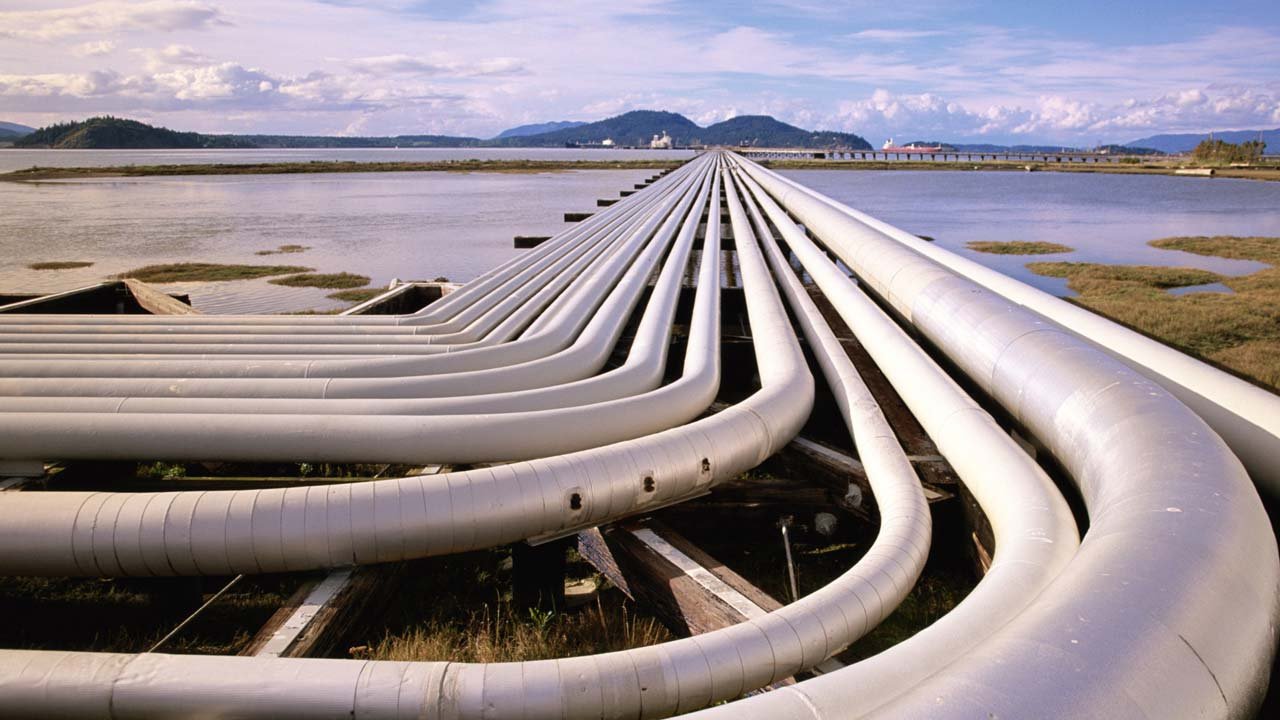
To say that crude oil is the mainstay of Nigeria economy is like stating the obvious because the resource accounts for over 80 percent of the country’s Gross Domestic Product (GDP). Nigeria has been rated as Africa’s highest producer of crude oil by the Organization of Petroleum Exporting Countries (OPEC).. However, that rating has suffered some reverses in recent years as the country failed to sustain the momentum in it’s crude output.

The nation’s crude ouput began to witness a downward trend at the height of militant activities in the Niger Delta region, where most critical oil assets are domiciled as disgruntled youths targeted oil installations while venting their anger over perceived injustice against the region by the government and the oil majors. The amnesty programme declared by the federal government was a measure calculated to save Nigeria’s economy from total collapse as the militants targeted the pipelines, from where they siphoned crude, refine and sell to their international and local collaborators.
On the heels of the amnesty programme, the government also launched an inter- agency task force, codenamed, ‘Operation Pulo Shield’, comprising the armed forces, police, Department of State Services (DSS)and the Nigeria Security and Civil Defense Corps,(NSCDC) generally known as the joint task force, tasked with the responsibility of combing the creeks and mangroves of the Niger Delta to check the activities of pipeline vandals and those engaged in illegal refining of petroleum products.
Read Also:
- VP Shettima urges strategic asset privatization, launches critical risk analysis report
- Nigeria’s capital importation surges 88% to $23.2bn in 2025 – NBS Report
- Body calls for collective efforts to rescue comatose LG system
Now renamed ‘Operation Delta Safe’, while the organizational structure remains the same, one major limitation associated with the operation is that it lacked community participation as its command structure and personnel are often made up of persons who are unfamiliar with the peculiar terrain of the Niger Delta, hence putting a cog on their operational efficiency. Allegations of compromise with local and international oil thieves have also been pervasive against the officials of the joint task force.
Apparently not satisfied with the result from the joint task force whose activities are also devastating the environment as they often engage in the unhealthy practice of destroying seized petroleum products by either setting them ablaze or spilling the products, the government of late President Muhammadu Buhari came up with the idea of pipeline surveillance contracts. The practice entails engaging some non state actors in a mouth watering contract of securing some stretch of pipelines to ensure that oil thieves and pipeline vandal do not have access to burst the pipes and steal crude oil.
Two notable companies, Pipeline Infrastructure Nigeria Limited (PINL) and Tantita Security Services Nigeria Limited (TSSNL) are currently tasked with this responsibility by government in the region. The companies as learnt are being supervised by the office of the national security adviser in collaboration with the Nigeria National Petroleum Company Limited (NNPCL). The companies on their part engage locals along the pipeline right of way as guards who patrol and monitor the pipelines and furnish the companies with intelligent reports on the goings on along the pipelines .
This way they are able to checkmate the activities of unscrupulous economic saboteurs who burst the pipes and steal crude oil. Testimonies from the surveillance companies, community stakeholders and the NNPCL during stakeholders engagement sessions reveal an upswing in the crude output since the surveillance companies took the center stage. The PINL for instance devised a robust engagement with stakeholders along the Trans Niger Pipeline on the Eastern Corridor, it’s area of operation,where it showcases its operation for scrutiny so as to ensure that while it is focused on securing the pipelines, the host communities make reasonable input and as well benefit from its operations.
Available records show that both the PINL and TSSNL have a robust corporate social responsibility(CSR) framework tailored towards impacting very positively on the host communities. Nonetheless, while the government through its supersing agencies is expressing relief over the activities of the surveillance companies, there is a groundswell of antagonism and opposition against what the government thought is a game changer on the quest to turn around the crude output and in effect recoup huge foreign exchange there from.
Some school of thought argue that handing over such a sensitive activity of securing oil pipelines to non state actors is suicidal and smacks of a vote of no confidence on the nation’s formal security architecture. A civil society organisation, the Global Network for Good Governance and Rights Concern Initiative expressing total disapproval of the surveillance contracts called on President Bola Tinubu to discontinue the multi-billion naira surveillance contract.
In a statement issued in Warri, Delta State, the organisation’s Executive Director, Dennis Mene, said the continued reliance on a private non-state actor to safeguard critical national infrastructure sends the wrong signal about the capacity and credibility of Nigeria’s statutory security agencies. According to the group, the responsibility of protecting oil pipelines and other strategic national assets constitutionally rests with government security institutions, including the armed forces and the Nigerian Navy, which are established and funded to defend the nation’s territorial and economic interests.
The organisation noted that while the surveillance contract may have contributed to reducing pipeline vandalism in some areas, its continued renewal without a transparent review process could undermine institutional accountability and weaken public confidence in the country’s formal security architecture. It further raised concerns over the lack of clarity surrounding the procurement process for the contract, questioning whether the arrangement followed open and competitive bidding procedures consistent with public procurement laws.
The group also warned that the concentration of such a lucrative contract within a single network of operators in the Niger Delta has generated growing dissatisfaction among other ethnic nationalities and host communities in the region who believe they have been excluded from meaningful participation in the protection of resources located within their ancestral territories. “National assets should not be protected through arrangements that create perceptions of exclusion or monopoly,” the statement said. “Security of oil infrastructure must reflect fairness, inclusiveness and respect for the diverse communities that host these resources.”
To address these concerns, the organisation urged the federal government and the Nigerian National Petroleum Company Limited to adopt a more inclusive and decentralised pipeline surveillance framework that will involve qualified stakeholders from all oil-producing communities under a transparent and competitive process. It added that such a system would not only strengthen accountability but also promote broader community participation, reduce tensions among ethnic groups and enhance long-term stability in the Niger Delta. The group therefore appealed to President Tinubu to review the current arrangement and ensure that future pipeline protection initiatives are anchored on transparency, institutional capacity and equitable representation of all host communities in the region.
Yet another Niger Delta group, the United Niger Delta Congress, (UNDC) is insisting that all oil-producing communities must benefit from pipeline surveillance contracts, calling on the Federal Government to decentralise pipeline surveillance contracts across oil-producing communities. Julius Mallam-Obi, UNDC national president, said the current arrangement where the pipeline security is entrusted in the hands of a few companies violates section 257 of the Petroleum Industry Act (PIA), which states that host communities must be directly involved in protecting oil facilities located on their ancestral lands. He identified Tantita Security Services, Maton Engineering Nigeria Limited, and Pipeline Infrastructure Nigeria Limited (PINL) as companies involved in the pipeline surveillance framework.
Mallam-Obi contended that the extant pipeline security framework is fuelling resentment and undermining unity in the region. “The present structure reflects an unhealthy concentration of opportunity and influence, leaving many oil-producing ethnic nations with little or no meaningful participation,” he asserted. The federal government, he said, has spent enormous public funds on pipeline surveillance over the years, yet crude output has not appreciably increased. “This contradiction raises a fundamental national question: how can Nigeria be spending billions on pipeline security while oil production continues to underperform?” he asked.
He raised concerns about transparency and accountability in the management of surveillance contracts, asking authorities to investigate crude oil losses around export terminals. Mallam-Obi called on the federal government to conduct a comprehensive audit of all pipeline surveillance contracts, publish the beneficiaries and financial scope of the agreements, and ensure equitable participation of host communities. The UNDC president urged the senate and house of representatives to exercise their oversight powers by launching a transparent investigation into the pipeline surveillance system.
He said decentralising surveillance contracts across oil-bearing communities would strengthen intelligence gathering, improve the protection of crude infrastructure and create economic opportunities for youths and women in the region. Mallam-Obi said the group’s demands were not directed against any ethnic group but aimed at ensuring fairness, transparency and sustainable peace in the Niger Delta.
Some observers however attribute the growing agitation for decentralization of the pipeline surveillance contract to envy by some ex agitators who believe that one of them, Government Ekpemupolo (Tompolo) has been unduly patronized by government. Tompolo is said to be the chairman and chief executive officer of Tantita Security Company, one of the pipeline surveillance companies. According to the observers, the agitation for decentralization or outright cancellation of the surveillance contracts is being sponsored by some of the ex-agitators even when they lack the requisite capacity to handle such very important security assignment.
“Once again, they are seeing the security contract as a piece of cake that should go round irrespective of what is at stake for the government and country”, quipped a community leader at one of the stakeholders engagement organized by one of the security contractors recently. The community leader added that the agitators for decentralization want to replicate what they did in the creeks where they set up camps and government was forced into negotiation with each camp leader.
However, amidst the hue and cry over the pipeline surveillance contracts, there are yet strong voices urging government to ignore the nay sayers and hold on to the new found approach in pipeline security. One of such voices is Amaechi Okonkwo, a journalist and oil industry analyst. In a piece titled “Why sustaining pipeline surveillance contract is critical to Nigeria oil recovery “, he highlighted Nigeria’s struggles over the years to achieve an even keel in our crude output Amaechi urges the government and those holding the levers of power in the oil industry to hug the new found approach in pipeline security even as a serendipity.
According to Amaechi “The implications of maintaining pipeline surveillance contracts extend far beyond the oil fields as crude oil remains Nigeria’s primary source of foreign exchange and a major contributor to government revenue. He pointed out that every barrel lost to theft represents a direct hit to national earnings, fiscal stability, and the country’s ability to fund critical infrastructure. “Improved pipeline security has already contributed to increased production levels, higher export volumes, and renewed investor confidence. Allowing these gains to slip would not only undermine economic recovery but also send negative signals to global markets”, Amaechi stressed.
The focus according to the analyst must remain firmly on protecting what already exists. “Pipeline infrastructure is the backbone of the nation’s energy system. Without it, production targets, revenue projections, and economic plans become unattainable. The lesson from the Niger Delta is unmistakable: when pipelines are secured, production rises, communities benefit, and the economy strengthens.
“Conversely, when surveillance weakens, losses return. For policymakers, operators, and stakeholders alike, the priority is clear—sustain, strengthen, and scale pipeline surveillance contracts as a cornerstone of Nigeria’s energy security strategy”
The government is in a better position to appraise the gains or otherwise of the pipeline surveillance contract system. At present, it was gathered that 1.8 million barrels per day production level has been attained even as 2026 target is 2.5 mpd. The government is aware of what the production level was before the security contractors were empanelled just as it could also project the value the security contractors would add to achieve the targeted production level. This will ultimately guide decisions whether to sustain the status quo or do away it.