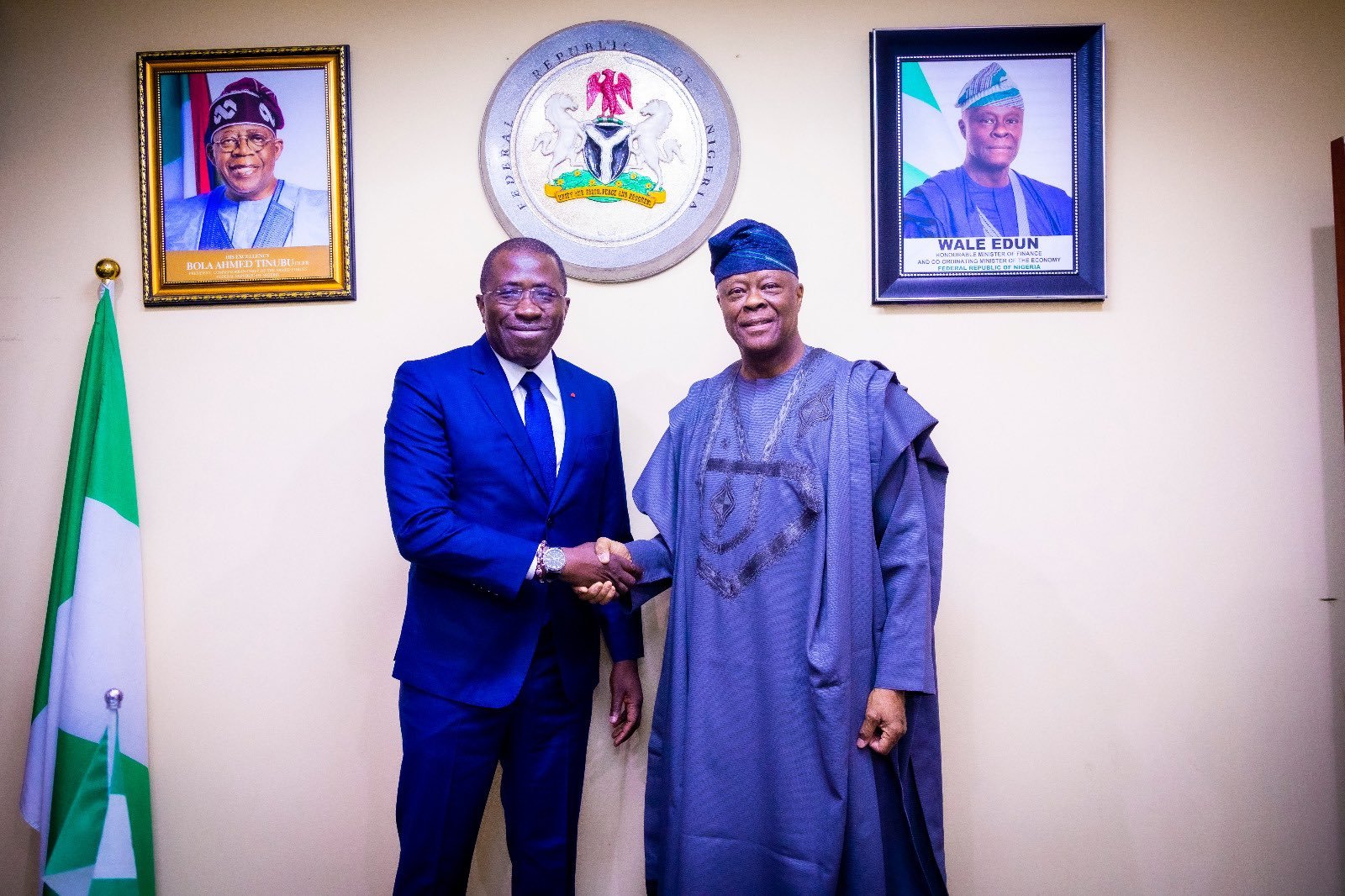
Nigeria’s Minister of Finance and Coordinating Minister of the Economy, Wale Edun, on Friday hosted the Executive Director for Africa Group III at the International Monetary Fund, Dr. Quattara Wautabouna, in Abuja, in what officials described as a strategic push to deepen economic collaboration across West Africa.
The closed-door meeting, held in the nation’s capital, focused on strengthening ties between Nigeria and the IMF within the Economic Community of West African States (ECOWAS), amid growing concerns over fiscal instability, debt pressures, and sluggish growth across member states.

Read also:
- Naira trades ₦1,350–₦1,370 at official market as CBN interventions support FX stability
- Dangote Refinery cuts Petrol price to N1,200/Litre, signals relief amid global Oil market uncertainty
- Maduro returns to US Court as legal battle intensifies
According to details released by the Federal Ministry of Finance, discussions centered on policy coordination, regional economic stability, and frameworks for shared growth across the sub-region.
“We recognize the critical role of continued collaboration with the IMF in supporting economic stability, advancing growth, and addressing challenges that affect the ECOWAS region as a whole,” Edun said during the meeting.
The minister’s remarks come as Nigeria continues to grapple with inflationary pressures, currency volatility, and mounting public debt—issues that have increasingly placed the country under the scrutiny of multilateral financial institutions.
Wautabouna, who represents several West African countries within the IMF structure, reiterated the Fund’s commitment to strengthening partnerships across its Africa Group III constituency. He stressed that coordinated economic policies among ECOWAS nations remain essential to building resilience against external shocks and achieving sustainable growth.
Sources familiar with the meeting said both parties also explored reforms aimed at improving fiscal governance, tightening public financial management systems, and driving inclusive economic expansion across the region.
The engagement underscores Nigeria’s positioning as a key economic anchor within West Africa, even as critics argue that the country’s domestic economic challenges could undermine its leadership role in the sub-region.
Friday’s meeting signals Abuja’s continued reliance on multilateral institutions for policy guidance and financial stability, a stance that has drawn mixed reactions from economic analysts wary of the long-term implications of IMF-aligned reforms on vulnerable populations.