

• Advert Rates
  • Careers
  • About Us
  • Contact Us
  • Digital Store
Saturday, March 21, 2026
The Trumpet Newspaper Nigeria
No Result
View All Result
  • Home
  • News
    • Breaking News
    • Headlines
    • Metro
    • Health
  • Politics
  • Business
    • Ecommerce
    • Economy
    • Start-up
  • Entertainment
  • Sports
  • Opinion
    • Religion
    • Columnists
    • Contributors
    • Editorial
  • Global
    • Climate
    • Culture
    • Tourism
    • Technology
    • Weather
    • Social Media
  • e-Edition
  • Home
  • News
    • Breaking News
    • Headlines
    • Metro
    • Health
  • Politics
  • Business
    • Ecommerce
    • Economy
    • Start-up
  • Entertainment
  • Sports
  • Opinion
    • Religion
    • Columnists
    • Contributors
    • Editorial
  • Global
    • Climate
    • Culture
    • Tourism
    • Technology
    • Weather
    • Social Media
  • e-Edition
No Result
View All Result
The Trumpet Newspaper Nigeria
No Result
View All Result
ADVERTISEMENT
Home Global

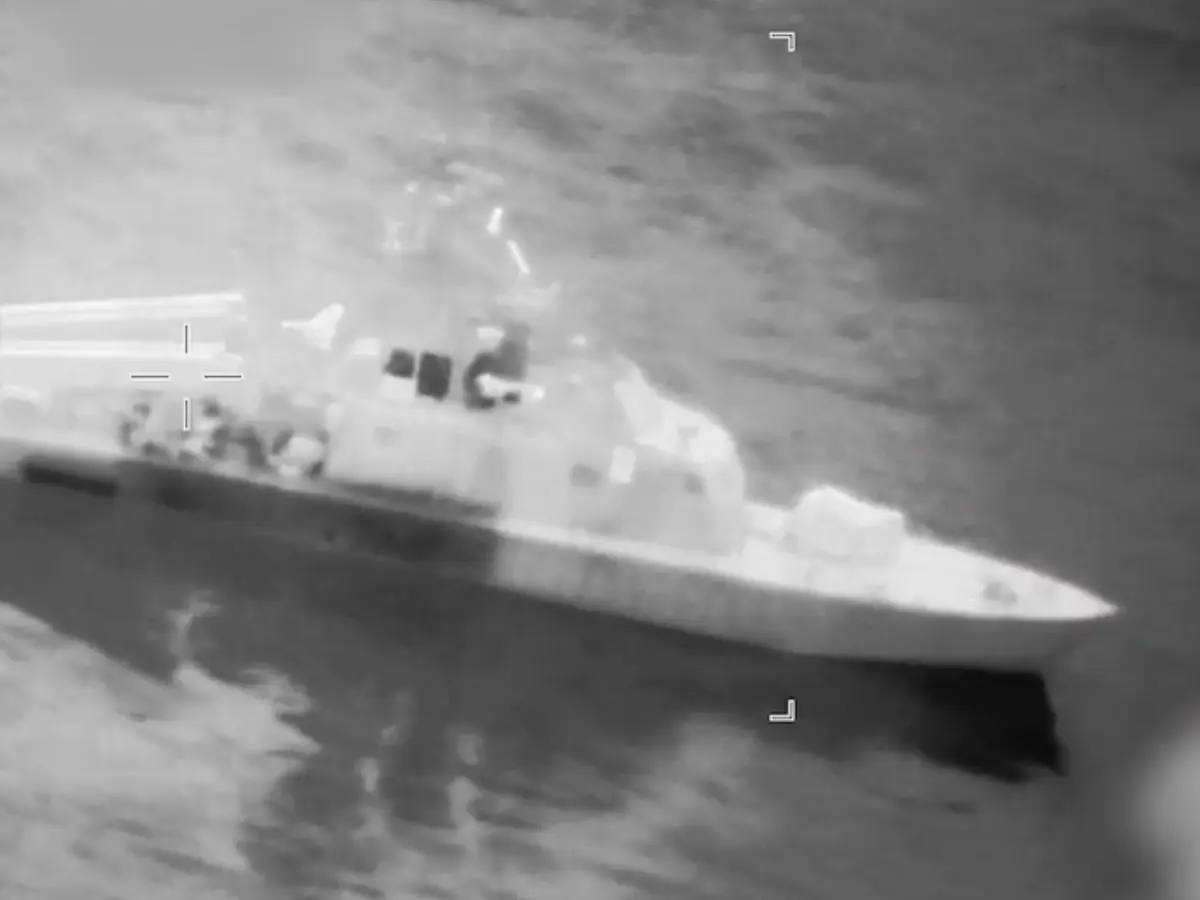
Strait of Hormuz at center of global crisis as U.S. pushes security plan with limited support

Paul Joseph by Paul Joseph
March 21, 2026
in Global
Reading Time: 3 mins read
1
Strait of Hormuz at center of global crisis as U.S. pushes security plan with limited support
0
SHARES
14
VIEWS
Share on FacebookShare on TwitterShare on LinkedinShare on WhatsAppShare on Pinterest

The narrow but strategic Strait of Hormuz has once again become the focal point of global tension, as the United States intensifies efforts to secure the vital waterway amid escalating confrontation with Iran, a move that has drawn support from only a handful of nations, most notably Argentina.

The Strait of Hormuz, located between Iran and the Arabian Peninsula, is widely regarded as the world’s most important energy chokepoint. At its narrowest, it is just about 33 kilometers wide, yet it carries an enormous share of global energy supply.

ADVERTISEMENT

Roughly 20 million barrels of oil per day about one-fifth of global consumption pass through the strait, alongside significant volumes of liquefied natural gas.

In total, the route facilitates hundreds of billions of dollars in energy trade annually and serves as the primary export corridor for major oil producers including Saudi Arabia, Iraq, Kuwait, Qatar, and the UAE.

Any disruption to this passage has immediate global consequences. Analysts warn that even limited interference can send oil prices soaring, trigger inflation, and destabilize economies heavily dependent on imported energy particularly in Asia, where most shipments are destined.

The ongoing tensions involving the U.S. and Iran have already demonstrated the fragility of the strait. Shipping traffic has plummeted dramatically amid fears of missile strikes, naval clashes, and mine-laying operations. In some instances, vessel movement has nearly halted entirely, raising alarm across global markets.

Recent developments show the scale of the crisis. Oil prices have surged past $100 per barrel, with warnings they could climb even higher if disruptions persist.

In Iraq, one of the region’s largest oil producers, exports have been severely affected, forcing production cuts and threatening national revenue.

Experts say a full-scale conflict between the United States and Iran in the Strait of Hormuz could trigger the largest energy supply shock in modern history, surpassing even the oil crises of the 1970s.

Around 20% of global oil supply could be disrupted almost instantly, with ripple effects across fuel prices, transportation, manufacturing, and food supply chains.

Against this backdrop, Washington has intensified calls for an international coalition to secure the waterway and ensure the free flow of oil. U.S. officials argue that keeping the Strait of Hormuz open is essential not only for energy markets but for global economic stability.

Read also:

  • Trump unveils new U.S. Military strategy against Iran, signals ‘decisive phase’ in Middle East operations
  • Investors laud Nigeria’s financial sector reforms at London Africa Capital Forum
  • King Charles hails Nigerian Jollof, celebrates cultural impact at State Banquet

However, the response from traditional allies has been cautious. Several members of NATO have declined direct military involvement, citing concerns about escalation and the risk of a broader Middle East war.

This reluctance has exposed divisions within the Western alliance, leaving the United States with a significantly smaller coalition than expected.

Amid the hesitation, Argentina has emerged as one of the few countries openly backing the U.S. position. Under President Javier Milei, the country has adopted a sharply pro-Western foreign policy, aligning itself closely with Washington and Israel.

Milei has gone further by labeling Iran a “terrorist regime,” signaling strong ideological and strategic support for U.S. efforts in the region. Officials say Argentina’s stance reflects a broader commitment to democratic alliances and global security cooperation.

While Argentina’s military role may be limited, its political backing carries symbolic weight, highlighting a shift in global alignments at a time when traditional alliances appear fractured.

The battle over the Strait of Hormuz is no longer just a regional issue, it is a defining test of global economic stability and geopolitical power.

With energy markets on edge, shipping routes under threat, and alliances strained, the stakes could hardly be higher.

Whether the United States can secure broader international support or whether nations like Argentina remain among a small group willing to stand with Washington may determine the course of both the conflict and the global economy in the months ahead.




Previous Post

Olympic Champion Lin Yu-ting cleared for Women’s boxing return after eligibility review

Next Post

Gas explosion rocks Calabar, injures residents, destroys property in Cross River

Paul Joseph

Paul Joseph

Next Post
Gas explosion rocks Calabar, injures residents, destroys property in Cross River

Gas explosion rocks Calabar, injures residents, destroys property in Cross River

About The Trumpet

The Trumpet is a Nigerian based national news media, owned, trademarked and operated by Elomaz Communications Limited with headquarters in FCT-Abuja and regional offices in Lagos and Delta States

Follow Us

Resources

  • Home
  • News
    • Breaking News
    • Headlines
    • Metro
    • Health
  • Politics
  • Business
    • Ecommerce
    • Economy
    • Start-up
  • Entertainment
  • Sports
  • Opinion
    • Religion
    • Columnists
    • Contributors
    • Editorial
  • Global
    • Climate
    • Culture
    • Tourism
    • Technology
    • Weather
    • Social Media
  • e-Edition

Recent News

Gas-laden truck explodes in Lagos, killing 2 victims

Gas-laden truck explodes in Lagos, killing 2 victims

March 21, 2026
Eid Iftar: Governor Otu felicitates Muslims, warns scrap vandals of imminent crackdown

Eid Iftar: Governor Otu felicitates Muslims, warns scrap vandals of imminent crackdown

March 21, 2026
  • Cookie Policy
  • Disclaimer
  • Contact us
  • About Us
  • Cookie Policy
  • Disclaimer
  • Contact us
  • About Us

© 2025 The Trumpet News Papers - Developed by VIS Nigeria.

No Result
View All Result
  • Home
  • News
    • Breaking News
    • Headlines
    • Metro
    • Health
  • Politics
  • Business
    • Ecommerce
    • Economy
    • Start-up
  • Entertainment
  • Sports
  • Opinion
    • Religion
    • Columnists
    • Contributors
    • Editorial
  • Global
    • Climate
    • Culture
    • Tourism
    • Technology
    • Weather
    • Social Media
  • e-Edition

© 2025 The Trumpet News Papers - Developed by VIS Nigeria.

We use cookies on our website to give you the most relevant experience by remembering your preferences and repeat visits. By clicking “Accept All”, you consent to the use of ALL the cookies. However, you may visit "Cookie Settings" to provide a controlled consent.
Cookie SettingsAccept All
Manage consent

Privacy Overview

This website uses cookies to improve your experience while you navigate through the website. Out of these, the cookies that are categorized as necessary are stored on your browser as they are essential for the working of basic functionalities of the website. We also use third-party cookies that help us analyze and understand how you use this website. These cookies will be stored in your browser only with your consent. You also have the option to opt-out of these cookies. But opting out of some of these cookies may affect your browsing experience.
Necessary
Always Enabled
Necessary cookies are absolutely essential for the website to function properly. These cookies ensure basic functionalities and security features of the website, anonymously.
CookieDurationDescription
cookielawinfo-checkbox-analytics11 monthsThis cookie is set by GDPR Cookie Consent plugin. The cookie is used to store the user consent for the cookies in the category "Analytics".
cookielawinfo-checkbox-functional11 monthsThe cookie is set by GDPR cookie consent to record the user consent for the cookies in the category "Functional".
cookielawinfo-checkbox-necessary11 monthsThis cookie is set by GDPR Cookie Consent plugin. The cookies is used to store the user consent for the cookies in the category "Necessary".
cookielawinfo-checkbox-others11 monthsThis cookie is set by GDPR Cookie Consent plugin. The cookie is used to store the user consent for the cookies in the category "Other.
cookielawinfo-checkbox-performance11 monthsThis cookie is set by GDPR Cookie Consent plugin. The cookie is used to store the user consent for the cookies in the category "Performance".
viewed_cookie_policy11 monthsThe cookie is set by the GDPR Cookie Consent plugin and is used to store whether or not user has consented to the use of cookies. It does not store any personal data.
Functional
Functional cookies help to perform certain functionalities like sharing the content of the website on social media platforms, collect feedbacks, and other third-party features.
Performance
Performance cookies are used to understand and analyze the key performance indexes of the website which helps in delivering a better user experience for the visitors.
Analytics
Analytical cookies are used to understand how visitors interact with the website. These cookies help provide information on metrics the number of visitors, bounce rate, traffic source, etc.
Advertisement
Advertisement cookies are used to provide visitors with relevant ads and marketing campaigns. These cookies track visitors across websites and collect information to provide customized ads.
Others
Other uncategorized cookies are those that are being analyzed and have not been classified into a category as yet.
SAVE & ACCEPT