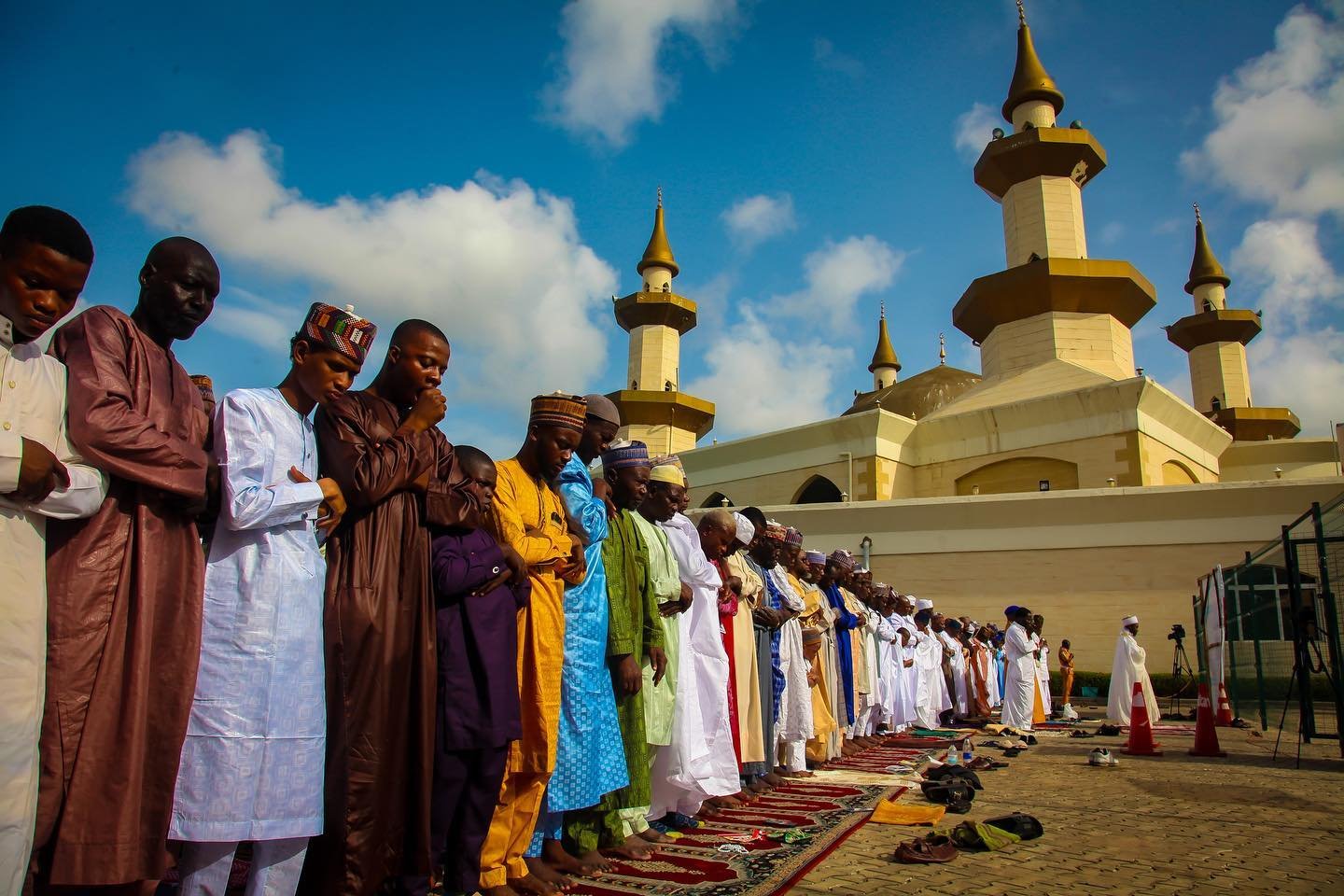
Confusion and tension rippled through parts of Sokoto on Thursday after a controversial move by Islamic scholar, Sheikh Musa Lukuwa, who reportedly led his followers in observing Eid-el-Fitr prayers ahead of the officially recognised date.
The unexpected action has stirred debate and unease within the Muslim community, as it directly contradicts the authority of the Sultan of Sokoto, Muhammadu Sa’ad Abubakar III, who traditionally determines the end of Ramadan and the timing of Eid celebrations in Nigeria based on verified moon sighting.

Eyewitness accounts described a charged atmosphere as worshippers gathered under Lukuwa’s directive, performing Eid prayers, while many others across the state and the country were still observing the final days of fasting.
The unusual development reportedly triggered heated arguments in some communities, with residents divided over which authority to follow.
Some adherents of the cleric defended the decision, insisting they were acting on their own interpretation of Islamic guidelines.
Read also:
- Sallah: Rivers Police assure tight security as NSCDC deploys 1,230 personnel
- Environmentalist warns against rising junk food culture in Nigeria
- Bandit violence claims lives of 3 officers, vigilante chairman in Taraba
Others, however, criticised the move as disruptive and capable of undermining unity among Muslims, particularly during a significant religious celebration meant to foster harmony.
Religious observers say the incident is not entirely new but reflects a recurring fault line within segments of the Muslim community over moon sighting and the calculation of Islamic dates. Still, the open defiance of the Sultan’s widely recognised authority has amplified concerns this time around.
“This is beyond just moon sighting; it’s about order, leadership, and cohesion,” a local resident said, noting that disagreements of this nature can easily escalate if not carefully managed.
As reactions continue to pour in, community leaders are said to be making efforts to calm tensions and prevent the situation from degenerating further.
Authorities have yet to issue an official statement, but the development has already sparked wider conversations about religious authority, interpretation, and unity in Nigeria.
For many, what should have been a moment of celebration has instead exposed deep divisions leaving uncertainty, arguments, and a lingering question: who decides when a nation celebrates?