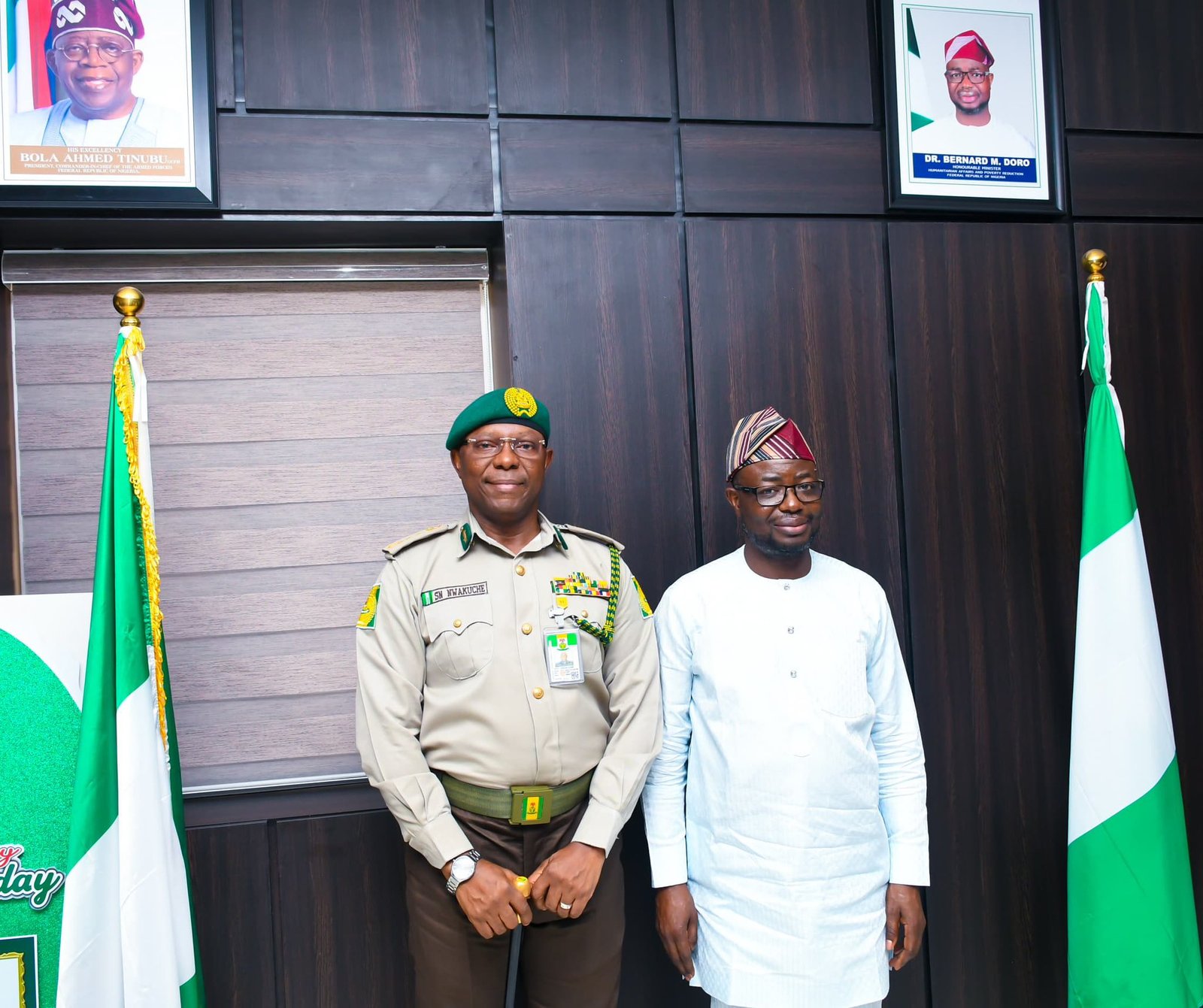
The Federal Government has stepped up efforts to improve the rehabilitation and reintegration of inmates as part of a broader strategy to expand inclusive social protection across Nigeria.
This was disclosed in a statement issued by Janet McDickson, Director of Information and Public Relations at the Federal Ministry of Humanitarian Affairs and Poverty Reduction.

According to the statement, the Minister, Bernard M. Doro, made this known during a courtesy visit by the Comptroller-General of the Nigerian Correctional Service, Sylvester Ndidi Nwakuche, and his management team to the ministry in Abuja.
The minister described the engagement as timely and strategic, stressing the need to prioritise vulnerable groups, particularly inmates who are often excluded from social intervention programmes. He said safeguarding the dignity and welfare of all Nigerians remains a shared responsibility.
Read Also:
- FG declares March 19, 20 as public holidays for Eid-el-Fitr celebration
- $6bn fraud: How Agunloye reduced FG’s stake in Mambilla power project -Witness
- FG approves N2bn take-off grants for new federal polytechnic in Abuja, science university in Epe
Doro commended the Nigerian Correctional Service for its continued focus on inmate welfare, rehabilitation and reintegration, noting that the agency’s work reflects a strong commitment to institutional reform.
He also revealed that the ministry is implementing reforms to improve the targeting, transparency and impact of social intervention programmes. He noted that past challenges in reaching intended beneficiaries highlight the need for closer collaboration with institutions such as the Correctional Service.
A key aspect of the discussion was the integration of correctional data into the National Social Register Nigeria, which currently captures over 19.7 million households through a community-based, geo-referenced system. The minister said this step would improve inclusivity and ensure that inmates and ex-inmates benefit from government support schemes.
Doro further outlined the ministry’s poverty graduation framework, which is designed to move beneficiaries from short-term assistance to long-term economic stability. The approach combines skills acquisition, access to productive assets, business mentorship, financial inclusion and continuous monitoring.
He acknowledged that previous interventions often suffered from weak follow-up systems, leading to a relapse into poverty among beneficiaries. The current model, he said, places emphasis on sustained support and measurable outcomes.
The minister welcomed proposals from the Correctional Service, including vocational training, certification programmes, agricultural initiatives and strategies to reduce re-offending. He also approved the creation of a joint technical committee to oversee implementation.
In his remarks, Nwakuche praised the ministry’s openness to collaboration and stressed the importance of coordinated efforts in strengthening rehabilitation programmes and post-release support.
Also speaking, the Permanent Secretary of the ministry, Olubunmi Olusanya, highlighted the role of inter-agency cooperation in addressing the needs of vulnerable populations. He noted that correctional centres serve both custodial and rehabilitative functions, aligning with the ministry’s mandate.
The meeting was attended by senior officials from both organisations, underscoring a renewed push to align correctional reforms with national social protection policies.