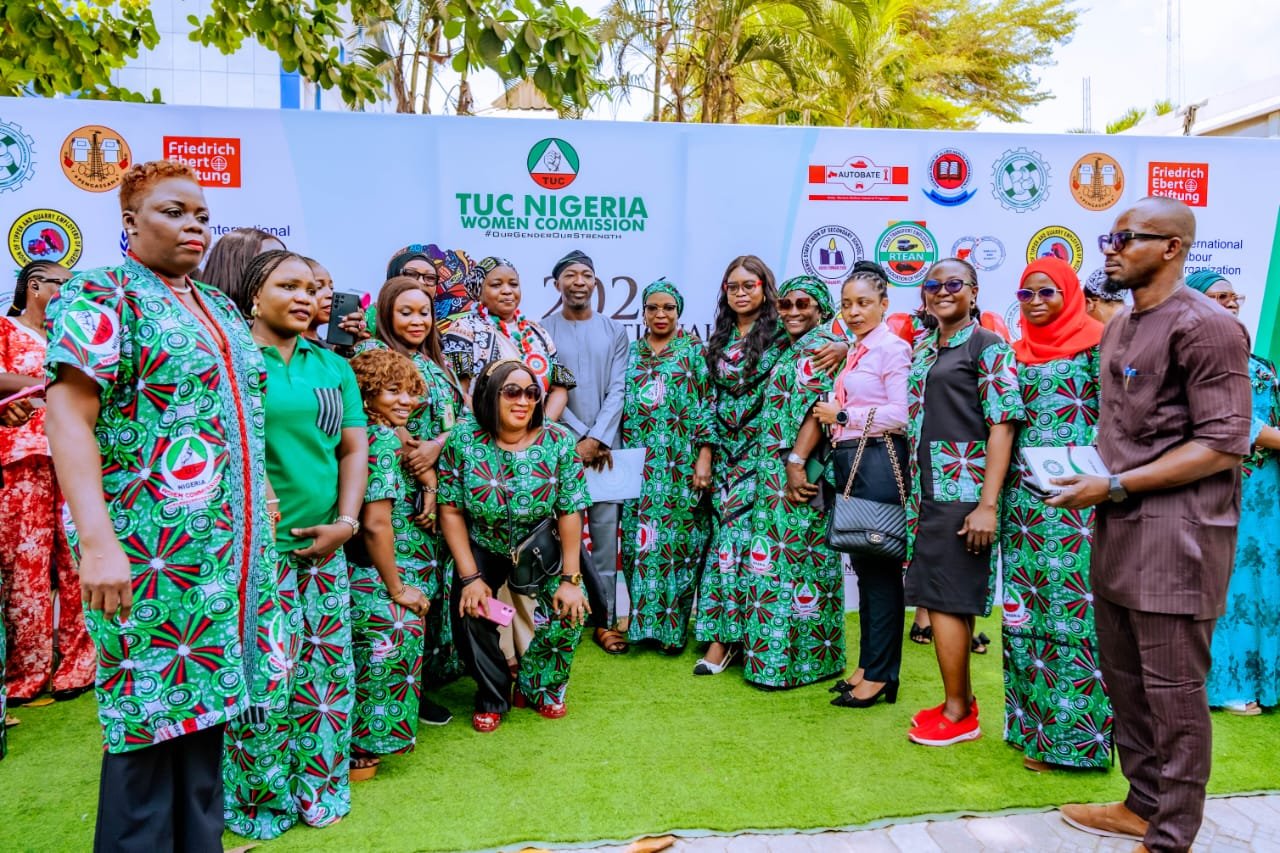
Managing Director and Chief Executive Officer of the Nigeria Social Insurance Trust Fund (NSITF), Oluwaseun Faleye, has declared that empowering women is not simply a moral obligation, but an economic and social necessity.
He made the assertion at this year’s celebration of the International Women Day, organized by the Trade Union Congress (TUC) Women Commission in Abuja.
Faleye, who was the special guest of honour at the event described the theme of the 2026 commemoration: “Empowering Women: The Path to Equal Rights and Social Justice,” as both timely and significant.

“When women are empowered with equal opportunities, fair wages, safe working conditions, and access to social protection, societies become more stronger and economies grow more resilient,” he submitted.
The NSITF boss commended the TUC Women Commission for consistency in championing the cause of women within the labour movement and doe creating a platform that amplifies the voices, concerns, and aspirations of women across our workplaces and communities.
Faleye, while acknowledging the contributions of Nigerian women to national development, however, lamented that many women still faced barriers limiting their access to opportunities.
He affirmed the fund’s commitment to promoting a safe workplace for women and all workers.
The managing director urged a reaffirmation of commitment by stakeholders to “building a future where every woman has opportunity to work in a safe environment, earn a fair income, and participate fully in decision-making processes that shaped our economy and society.”
Read also:
- Group calls for visible action towards equality, women empowerment
- Gov. Fintiri reaffirms commitment to youth, women empowerment
- Oborewori: Women empowerment key to economic growth, inaugurates World Bank NFWP committee
President-General of the Trade Union Congress, Comrade Festus Osifo, agreed with Faleye’s assertion, noting that women remain pivotal contributors to our workplaces, our communities, and our nation’s progress.
He rued the inequalities facing women even as he revealed that the TUC had taken bold steps to end inequalities and institutionalize gender inclusion.
Also, Vanessa Phala Moyo, Country Director for International Labour Organization (ILO) in Nigeria, stated that the International Women Day offers the world an annual opportunity to recognise women’s achievements, confront persistent inequalities, and reaffirm our collective commitment to social justice.
She called attention to “structural barriers that continued to hinder women’s full enjoyment of rights in the world of work”, which she said, should call all to action.