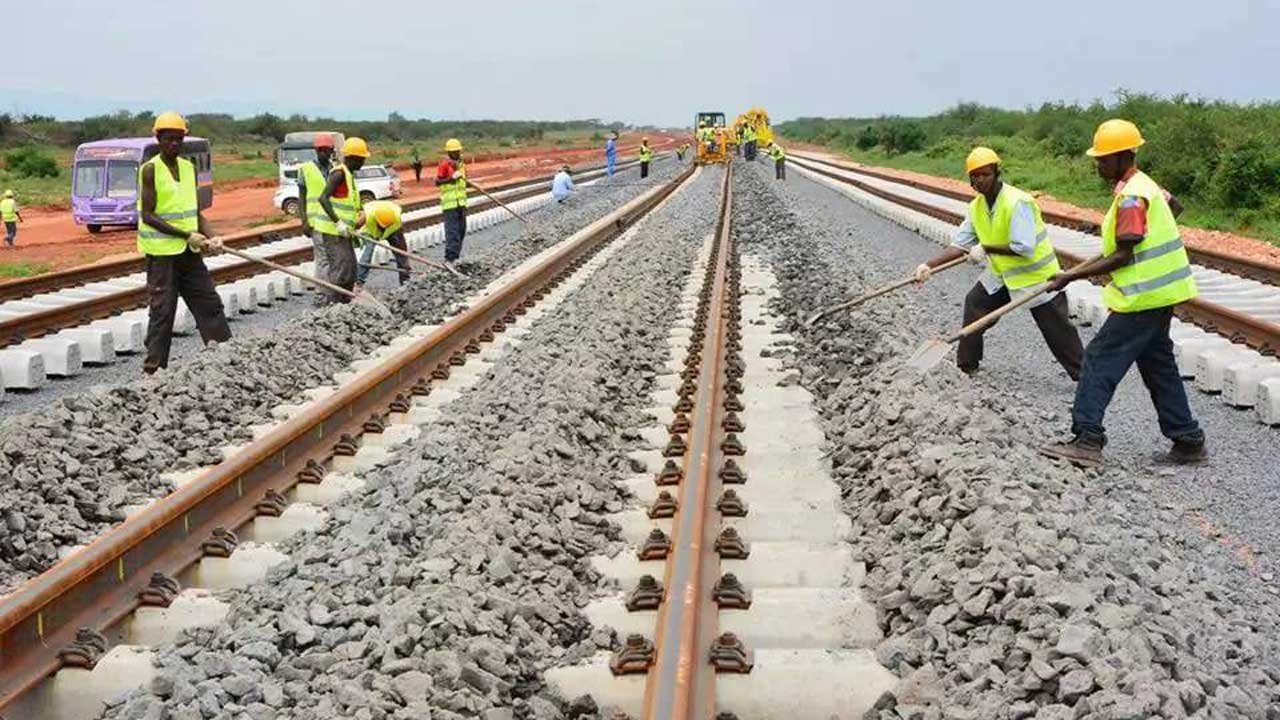
The Federal Government is set to expand Nigeria’s railway network with plans to award a contract linking the Abuja to the Itakpe–Warri rail corridor, a move aimed at strengthening connectivity between the South-South region and the Federal Capital Territory.
The Managing Director of the Nigerian Railway Corporation, Kayode Opeifa, disclosed the plan while speaking during an interview with Arise News. He said the proposed rail link forms part of the Federal Government’s broader national railway development roadmap designed to connect major cities across the country.

According to Opeifa, the extension from Itakpe to Abuja will create a direct rail connection that allows passengers and cargo to move easily from the South-South region to the nation’s capital once completed.
He explained that the central rail corridor currently runs from Warri to Itakpe, with plans also underway to extend the Warri end of the line to the Warri Port to strengthen cargo movement and logistics operations.
“The Warri–Itakpe line is working, and there is a plan to connect the Warri end to the port. In 2026, the contract will also be awarded to connect the Itakpe end to the Federal Capital Territory. That will automatically connect people from the South-South straight to Abuja,” he said.
Read also:
- Abuja Residents Alerted: Major crisis simulation exercise at Idu Train Station today
- NRC resumes Warri–Itakpe Train Services Wednesday after weeks of suspension
- Yuletide: Passengers storm train stations for free ride
The NRC boss noted that the rail sector in Nigeria is expanding steadily and plays a critical role in economic growth by improving logistics, supporting trade and linking farmers, manufacturers and businesses to markets.
He added that the railway system also helps reduce poverty by creating easier access to employment opportunities and improving transportation for goods and passengers across the country.
Opeifa acknowledged that derailments have occurred on some rail lines but stressed that such incidents are common in rail operations around the world and should not be viewed as a failure of the system.
He cited several incidents recorded globally in recent months and explained that derailments can result from factors such as human error, weather conditions, technical faults or aging infrastructure.
“In the rail sector, derailments occur around the world. What is important is how quickly the system responds and restores services,” he said.
He disclosed that the NRC successfully handled three major derailments recorded in 2025, including incidents in Kaduna State and along the Warri–Itakpe corridor, noting that engineers and technicians restored the affected locomotives and tracks within weeks.
According to him, Nigerian engineers played a major role in repairing the damaged locomotives and restoring train operations.
“We were able to bring them back. One was restored within 24 hours, another took 21 days, and another took 28 days. The locomotives involved were retrofitted by Nigerian engineers and technicians,” he said.
Opeifa also dismissed allegations of financial mismanagement within the corporation, saying such claims should be addressed through the appropriate legal and investigative processes.
He maintained that his focus remains on repositioning the Nigerian Railway Corporation to meet global best practices and deliver reliable railway services for Nigerians.
The NRC managing director further revealed that the government is expanding rail connections nationwide, including new links from Lekki Deep Sea Port to Kajola in the western corridor and to cities such as Benin City, Onitsha and Aba in the eastern corridor.
He said these rail lines are designed to handle both passenger transport and cargo movement, which will strengthen trade and logistics across the country.
Opeifa added that Nigeria’s railway system is gradually being modernised through improved signalling systems, new metro rail projects and continued upgrades from narrow gauge to standard gauge tracks.
He cited ongoing projects such as the Lagos–Ibadan rail service, the Abuja–Kaduna line and planned metro systems in Lagos, Kano and Kaduna as part of efforts to build a modern national railway network.
According to him, the long-term goal of the Federal Government is to connect every major city in Nigeria through rail transport once funding and project execution are completed.