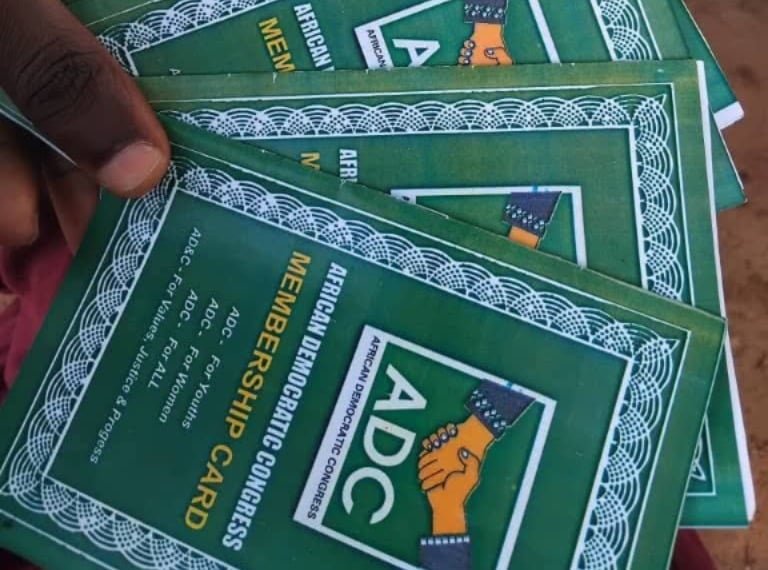
The African Democratic Congress is under pressure following viral claims that its electronic membership registration system has been compromised, allowing prank registrations of prominent global and Nigerian figures.
The controversy erupted after a Facebook post alleged that individuals successfully registered names such as former U.S. President Donald Trump, Russian President Vladimir Putin, and Nigerian President Bola Tinubu using fabricated National Identification Numbers. The post, shared widely on social media, also claimed that other public figures were added to the party database without their consent.
Among those allegedly registered were footballer Bruno Fernandes, separatist leader Nnamdi Kanu, and activist Omoyele Sowore. The post further suggested that traders in Lagos were carrying out multiple false registrations to inflate the party’s membership figures.

The allegations have sparked debate over the integrity of digital political platforms in Nigeria, particularly as political parties begin to position themselves ahead of the 2027 general elections. Critics argue that any weakness in membership systems could damage public confidence and provide grounds for post-election disputes.
In response, the ADC denied operating any official online registration portal at this time. Party spokesperson Bolaji Abdullahi stated that the authentic electronic registration system is still under development and warned Nigerians against fraudulent websites seeking sensitive data such as Bank Verification Numbers and Permanent Voter Card details.
According to the party, a 20-member committee has been constituted to restructure and secure its membership process. The committee includes prominent activists such as Aisha Yesufu and Gbadebo Rhodes-Vivour. Abdullahi said the ADC is tracking fake accounts and intends to remove any unauthorized entries once the official system is launched.
The dispute comes at a time of growing political realignment. The ADC has recently attracted high-profile figures, including former Labour Party presidential candidate Peter Obi, as it seeks to present itself as a credible alternative to the ruling All Progressives Congress.
Read also:
- Kwankwaso set for ADC defection on March 2 as 2027 election battle intensifies
- Gov. Okpebholo blames attack on ADC leaders on internal party conflict
- ADC stalwart asks ICPC to charge El- Rufai in court or release him
The APC has also dismissed separate claims of irregularities in its own digital membership drive. APC National Publicity Secretary Felix Morka described allegations circulating online as deliberate attempts to distract from internal challenges within opposition ranks.
Political observers note that the episode reflects wider concerns about cybersecurity and data protection within Nigeria’s political space. As parties increasingly rely on online platforms for mobilisation and recruitment, the risk of manipulation remains a critical issue.
So far, the Independent National Electoral Commission has not announced any formal investigation into the matter. However, the controversy has renewed calls for stricter oversight of political party databases and clearer digital verification standards.
While the ADC insists that unauthorised registrations will be purged once its verified system goes live, the episode underscores the fragile nature of public trust in Nigeria’s evolving digital political infrastructure as the 2027 elections draw closer.