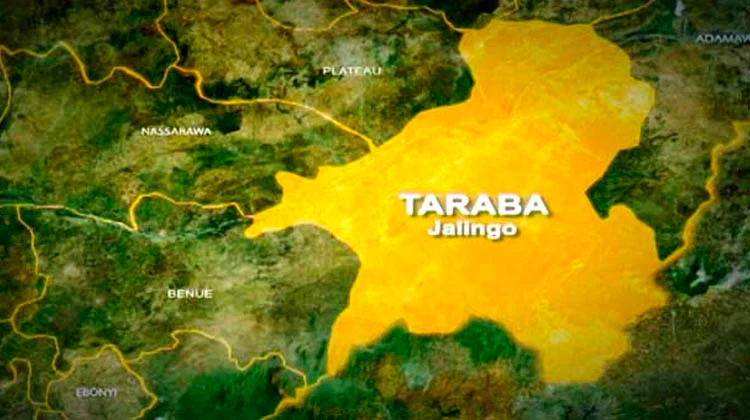
Tension is mounting in Taraba State following the arrest of Reverend Bazel Yoila by operatives of the Department of State Services (DSS), with the state government and church leaders offering sharply differing accounts of the incident.
Rev. Yoila was picked up in the early hours of Sunday at his residence in Jalingo, the state capital, in an operation that has since generated widespread debate across traditional and social media platforms.

Defending the action, the Taraba State Government insisted that the arrest was lawful and necessary to forestall a possible breakdown of law and order.
In a statement released Wednesday by the Commissioner for Information and Re-Orientation, Barrister Zainab Usman Jalingo, the government said security agencies acted proactively in the interest of public peace.
Read Also:
- Taraba Government launches project to end gender-based violence
- Taraba Governor cracks down on illegal sale of government land
- Catholic Priests, religious leaders stage protest over killings in Taraba, demand swift government action
The statement was issued in response to what officials described as “misleading” reports and commentaries suggesting that the arrest was unjustified. According to the government, the DSS intervened after a viral video allegedly showed Rev. Yoila making statements capable of inciting unrest.
In the footage, the cleric was reportedly heard warning that “the state will be on fire” if the government continued its involvement in a reconciliation process within the United Methodist Church in Nigeria (UMCN). Authorities said such remarks constituted a serious threat that could not be ignored.
“The reconciliation process was initiated in good faith as a peace-building effort,” the statement read, stressing that the government’s role had been neutral and aimed at preventing internal church disagreements from escalating into broader communal tensions.
However, the arrest has drawn criticism from retired Bishop of the Global Methodist Church of Nigeria (GMCN), Rev. John Wesley, who described the operation as “unprofessional.” Wesley argued that Rev. Yoila, as a Nigerian citizen, deserved to be treated with dignity and due respect.
Reacting to Wesley’s remarks, the state government expressed disappointment that the retired bishop criticized security agencies without addressing what it termed the “highly inflammatory and reckless” nature of the statements attributed to Rev. Yoila.
Officials further disclosed that the matter is now before a court of competent jurisdiction and urged all parties to refrain from actions or commentary that could prejudice the ongoing judicial process. The government reaffirmed its commitment to upholding the rule of law and respecting the independence of the judiciary.
As public reactions continue to trail the arrest, the Taraba State Government also appealed to media organizations and commentators to adhere to professional ethics by verifying information from credible and official sources before publication. It warned that sensational or one-sided reporting could undermine efforts to maintain peace in the state.
The unfolding situation has placed the spotlight on the delicate balance between freedom of expression, religious leadership, and state security, an issue observers say may continue to generate debate as the legal process progresses.