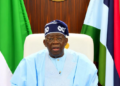
In a seismic shift for Nigeria’s oil and gas sector, President Bola Ahmed Tinubu signed Executive Order 9 on February 13, 2026, mandating the direct remittance of all oil and gas revenues to the Federation Account Allocation Committee (FAAC). This directive, aimed at plugging long-standing revenue leakages, promises to unlock massive funds for the federation, potentially injecting over N14.57 trillion into federal, state, and local government coffers. But while proponents hail it as a transparency triumph, critics warn of disruptions to the Petroleum Industry Act (PIA) framework, job losses, and investor jitters. Drawing from expert insights and stakeholder reactions, this exclusive analysis unpacks how Order 9 could reshape Nigeria’s economic landscape. Unlocking the Vault: How Order 9 Channels Billions to FAAC at its core, Executive Order 9 eliminates “unjustified multiple layers of deductions” that have historically siphoned revenues away from the Federation Account.
It directs that all Royalty Oil, Tax Oil, Profit Oil, Profit Gas, and other entitlements under Production Sharing Contracts (PSCs), Profit Sharing Contracts, and Risk Service Contracts be paid straight into FAAC, bypassing the Nigerian National Petroleum Company Limited (NNPCL).

This includes suspending NNPCL’s 30% management fee on profit oil and gas, as well as the 30% allocation to the Frontier Exploration Fund (FEF).
The financial windfall is staggering. Based on 2025 data, the order could redirect approximately N14.57 trillion—encompassing N906.91 billion in NNPCL’s management and exploration fees, N7.55 trillion in oil royalties, N611.42 billion in gas flaring penalties, N4.905 trillion in Petroleum Profits Tax and Hydrocarbon Tax, and N596.61 billion from the Midstream and Downstream Gas Infrastructure Fund.
For 2026 alone, estimates suggest an injection of over N1.42 trillion into FAAC, providing immediate liquidity for national priorities.
President Tinubu framed this as a constitutional imperative, invoking Sections 5 and 44(3) of the 1999 Constitution to restore entitlements to all tiers of government.
This influx could turbocharge FAAC distributions, which allocate revenues across Nigeria’s 36 states, 774 local governments, and the federal center. In practical terms, it means more funds for infrastructure, social services, and debt servicing—critical in a nation grappling with fiscal pressures amid global oil volatility. Ripple Effects on Nigeria’s Economy: A Boon for Stability or a Short-Term Fix? Economically, Order 9 is positioned as a cornerstone of Tinubu’s Renewed Hope Agenda, aiming to grow Nigeria’s economy to $1 trillion by 2030 through fiscal prudence.
By centralizing revenues, it curbs leakages that have eroded trillions over the years, enhancing debt sustainability and economic stability.
Analysts project a boost in sub-national earnings, enabling states and local governments to tackle chronic underfunding in areas such as education and healthcare.
However, the broader impact is nuanced. Nigeria’s GDP grew by 3.84% in 2024, buoyed by oil sector reforms. Still, challenges persist: oil production hovers at 1.28 million barrels per day (mbd), below OPEC quotas, due to vandalism, ageing infrastructure, and under-investment.
While Order 9 could free up funds for diversification—such as agriculture mechanization and SME financing—it risks short-circuiting long-term sector investments if NNPCL’s operational autonomy is overly constrained.
Critics argue that redirecting funds to FAAC might improve short-term liquidity but undermine the PIA’s goal of making NNPCL a competitive commercial entity, potentially stunting oil output growth and exacerbating dependency on hydrocarbons.
Inflationary pressures from prior reforms, like fuel subsidy removal, remain a concern. The order’s emphasis on transparency could attract foreign investment, but uncertainty might deter it, especially amid a depreciated naira (around 1,500 to the USD by late 2024).
Overall, the economic analytical impact hinges on implementation: successful execution could stabilize budgets and reduce borrowing, but missteps might amplify fiscal distortions. Shaking Up NNPCL and IOCs: From Revenue Manager to Pure Commercial Player. For NNPCL, Order 9 is transformative—and potentially debilitating. The company loses its role in deducting and managing fees, including the 30% management charge and FEF oversight.
Read also:
- FAAC shares N1.969 Trillion for December 2025 as Federal, State, Local Governments reach consensus
- Why PENGASSAN opposes direct remittance of Oil revenue to FAAC
- Historic Windfall: FAAC splashes record-breaking N2.2 Trillion revenue across Nigeria
This repositions NNPCL strictly as a commercial enterprise under the PIA, stripping it of “concessionaire” powers that influenced costs.
Proponents say this ends NNPCL’s history of retaining and spending federation revenues unchecked, a “win” for Nigeria’s fiscal policy.
But it could strain finances: the suspended 2% deduction (from PSCs) funds salaries and obligations, raising redundancy risks for thousands.
International Oil Companies (IOCs) like Shell, ExxonMobil, and TotalEnergies, operating under PSCs, face indirect effects. The order alters fiscal flows in joint ventures, redirecting profits and taxes directly to FAAC.
This could create contractual uncertainties, blurring the PIA’s investor-friendly distinctions and weakening confidence in Nigeria’s fiscal stability.
While tax incentives in related decrees aim to boost gas investments, the redirection of flare penalties to FAAC might tension sector-specific funding.
IOCs may push for clarifications to avoid disputes, especially as Nigeria seeks to ramp up production to pre-COVID levels.
Labour Pushback: Why NUPENG and Affiliates oppose the move. The Nigeria Union of Petroleum and Natural Gas Workers (NUPENG), alongside its senior staff counterpart PENGASSAN, has voiced strong opposition, viewing Order 9 as an assault on the PIA’s foundations.
PENGASSAN, in particular, labels it a “direct attack” on Sections 8, 9, and 64 of the PIA, arguing that using an executive order to override federal law sets a dangerous precedent.
They warn of job losses for over 4,000 workers, as NNPCL’s reduced revenues threaten payroll and obligations.
NUPENG’s stance echoes broader labour concerns seen in recent disputes, such as those with Dangote Refinery over union rights.
Unions fear the order erodes the PIA’s investor safeguards, potentially scaring off capital and stalling sector growth.
Festus Osifo, PENGASSAN President, emphasized that the directive contradicts Tinubu’s investment attraction efforts, risking redundancies and instability.
While NUPENG hasn’t issued a specific statement on Order 9, its history of advocating for worker protections aligns with calls to retract the order to preserve PIA gains. Expert Voices: Balancing reform zeal with sector realities. Industry experts offer mixed verdicts. Oil and gas analyst Jide Pratt praises the order for halting NNPCL’s unchecked spending, calling it a revenue “win.”
Dr Wisdom Enang, a senior energy consultant, highlights implications for the Niger Delta, noting potential boosts to local allocations but risks to NNPCL’s commercial viability.
The Africa Oil & Gas Report questions if it’s a “structural recalibration or fiscal short-circuit,” warning of blurred lines between commercial and fiscal roles.
Economists like those from Coface emphasize the need for broader diversification, as oil remains Nigeria’s economic lifeline despite subpar production.
World Bank officials laud Tinubu’s reforms as global benchmarks, aligning with a 7% growth target.
Yet, some analysts caution that without complementary PIA amendments, the order could perpetuate distortions, urging dialogue with stakeholders to mitigate fallout. In conclusion, Tinubu’s Order 9 is a high-stakes gamble: it could flood FAAC with trillions, fortifying Nigeria’s fiscal backbone, but at the risk of sector upheaval. As probes into past revenues unfold, the true test will be whether this unlocks sustainable prosperity or sparks unintended economic turbulence.