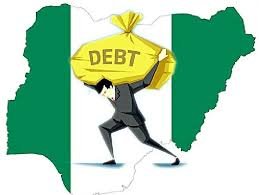
Nigeria’s total public debt has risen to N153.29 trillion as of September 30, 2025, according to new data released by the Debt Management Office. The latest figure marks another increase in the country’s debt profile and has renewed debate over debt sustainability amid ongoing economic reforms.
The new total represents a rise from N152.40 trillion recorded at the end of June 2025 and N149.39 trillion at the close of March 2025. The steady climb reflects continued borrowing to finance fiscal deficits, infrastructure projects, security operations and social intervention programmes under President Bola Tinubu’s administration.

Domestic borrowing remains the dominant component of Nigeria’s debt stock. Federal Government bonds, Treasury bills and Sukuk instruments have been widely issued in the local market to plug revenue gaps. External debt has also expanded, supported by multilateral loans from institutions such as the World Bank and the African Development Bank, as well as bilateral funding arrangements.
Currency volatility has further inflated the debt figure in naira terms. Although Nigeria’s total public debt in dollar terms has hovered just below the 100 billion dollar mark in recent quarters, fluctuations in the exchange rate have pushed up the local currency equivalent. By mid-2025, external and domestic obligations combined were estimated at about 99.66 billion dollars.
Read Also:
- NMDPRA launches technical working group to boost investment in Nigeria’s Midstream, Downstream Oil sector
- Cardoso lauds AU approval of Nigeria’s permanent seat on African Monetary Institute board
- How to turn risks to opportunities in Nigeria’s oil industry by SNEPCo
The Federal Government accounts for more than 90 percent of the total public debt, while states and the Federal Capital Territory hold the remaining share through subnational borrowing.
Rising debt service obligations remain a central concern. A significant portion of federal revenue is now devoted to servicing loans, leaving limited fiscal space for education, healthcare, infrastructure expansion and job creation. Data from the World Bank show that Nigeria’s exposure to the International Development Association stood at 18.7 billion dollars by the end of 2025, placing the country among the largest borrowers in that category.
Government officials maintain that borrowing is tied to long-term economic reforms. They argue that investments in transport infrastructure, energy, and security are essential to stimulate growth, improve productivity and expand the tax base. The administration has also pledged to strengthen revenue collection, implement tax reforms and diversify exports to ease pressure on public finances.
However, critics warn that the pace of debt accumulation signals structural weaknesses in revenue generation and expenditure management. Civil society groups and opposition figures have called for greater transparency in loan utilisation, stricter borrowing controls at federal and state levels, and accelerated diversification away from oil-dependent revenues.
As Nigeria approaches the 2026 budget cycle, the N153.29 trillion debt mark shows the delicate balance between financing development and maintaining fiscal stability. With global interest rates still elevated and domestic revenue growth under strain, policymakers face mounting pressure to contain deficits while sustaining economic momentum.
The Debt Management Office insists that Nigeria’s debt levels remain within acceptable thresholds by international standards. Yet the upward trend has placed debt sustainability at the centre of economic policy discussions, with analysts watching closely for signs of fiscal consolidation in the months ahead.